CM Bhupendra Patel Hails Cooperatives on Int'l Day

Synopsis
Gujarat Chief Minister Bhupendra Patel marked International Day of Cooperatives by crediting PM Modi and Cooperation Minister Amit Shah for advancing the 'Sahkar se Samriddhi' mission, and reaffirmed Gujarat's cooperative heritage in dairy, agriculture and banking as a model for rural self-reliance.
Key Takeaways
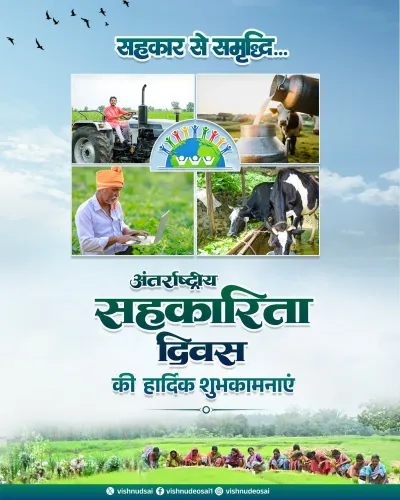
Gujarat CM Bhupendra Patel extended greetings on International Day of Cooperatives , observed on the first Saturday of July.
Patel described cooperation as part of Gujarat's DNA , citing the state's success in dairy, agriculture, and banking cooperatives.
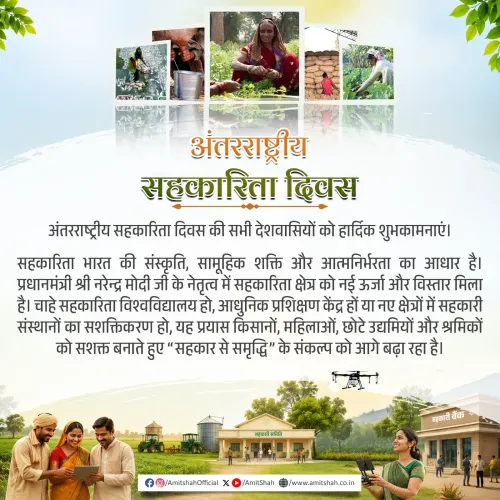
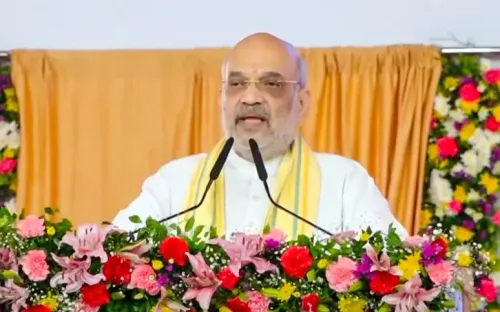
He credited PM Narendra Modi's guidance and Amit Shah's leadership as India's first Cooperation Minister for spreading the 'Sahkar se Samriddhi' vision nationwide.
The Ministry of Cooperation was created in July 2021 , the first dedicated ministry of its kind in India's history.
Gujarat's Amul cooperative , founded in 1946 , remains a foundational national model for rural cooperative enterprise.
Patel expressed confidence that the cooperative sector will play a key role in achieving Viksit Gujarat and Viksit Bharat goals.
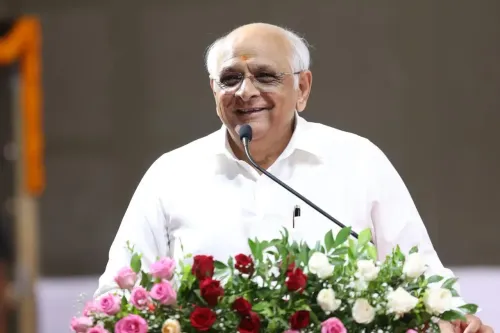
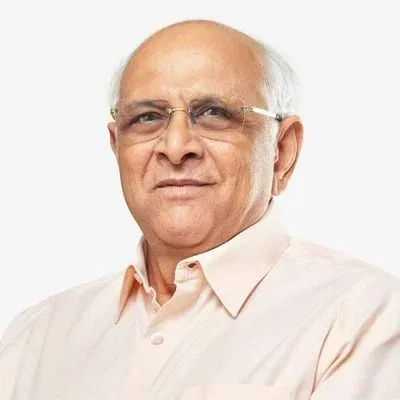
Gujarat Chief Minister Bhupendra Patel on Saturday, 5 July 2026 extended greetings on International Day of Cooperatives, reaffirming the state's deep-rooted cooperative tradition and its centrality to India's rural economic vision. Patel credited the national 'Sahkar se Samriddhi' (Cooperation for Prosperity) mission to the guidance of Prime Minister Narendra Modi and the leadership of Union Minister Amit Shah, India's first dedicated Cooperation Minister.
Context
Posting in Gujarati, Patel wrote: 'સહકારિતા એ ગુજરાતના DNA માં છે' — 'Cooperation is in Gujarat's DNA.' He described how the cooperative model, spanning dairy, agriculture, and banking, has given fresh strength to the rural economy and charted a new path of self-reliance (aatmanirbharta). The message was posted on the occasion of International Day of Cooperatives, observed annually on the first Saturday of July.
Patel also expressed confidence that the cooperative spirit would grow stronger and contribute significantly to realising the vision of a 'Viksit Gujarat' (Developed Gujarat) as part of a broader 'Viksit Bharat' (Developed India) goal.
Policy Backdrop
The Ministry of Cooperation was established by the Government of India in July 2021 — the first such dedicated ministry in the country's history — with Amit Shah appointed as its inaugural minister. The ministry was created to provide focused administrative and policy support to India's vast cooperative ecosystem, which spans credit societies, dairy federations, and agricultural marketing bodies.
Gujarat has long been cited as a national model. The Amul dairy cooperative, founded in 1946, became the backbone of India's White Revolution and remains one of the world's largest farmer-owned dairy enterprises. The state's cooperative banking and agricultural credit networks have similarly served as templates for national policy design.
Stakeholders and Impact
The cooperative sector directly touches farmers, rural credit society members, dairy producers, and millions of households dependent on collective economic institutions. Gujarat's cooperative dairy sector alone involves hundreds of thousands of milk producers across the state's districts.
The 'Sahkar se Samriddhi' framework seeks to extend the cooperative model beyond traditional agriculture into banking, warehousing, and allied rural services, positioning member-owned institutions as a complement to both state and market mechanisms in rural India.
What's Next
Nationally, attention is focused on the rollout of a proposed National Cooperative Policy and the ongoing computerisation of Primary Agricultural Credit Societies (PACS) across states — a flagship reform under the Ministry of Cooperation aimed at improving transparency and access to credit for rural members. Gujarat's established infrastructure places it at the forefront of this digital transition. Patel's message signals that the state intends to deepen its cooperative engagement as a contribution to the broader national development compact.
Point of View
Patel positions the state not merely as a beneficiary of central policy but as its ideological source. The shout-out to Amit Shah as the 'first Cooperation Minister' is also a deliberate political signal, underscoring the importance of the ministry within the BJP's governance architecture. Taken together, the post reinforces Gujarat's role as a template state in the party's rural economic messaging ahead of any future policy rollouts.
NationPress
4 Jul 2026
Frequently Asked Questions
What is International Day of Cooperatives?
International Day of Cooperatives is observed on the first Saturday of July each year to celebrate the cooperative movement's contributions to economic and social development worldwide.
What is 'Sahkar se Samriddhi'?
'Sahkar se Samriddhi' means 'Prosperity through Cooperation' and is the guiding motto of India's national cooperative policy framework, promoted under the Ministry of Cooperation established in 2021.
Who is India's first Cooperation Minister?
Amit Shah was appointed as India's first dedicated Minister of Cooperation in July 2021 when the Government of India created a separate Ministry of Cooperation.
Why is Gujarat considered a model for cooperatives in India?
Gujarat is home to the Amul dairy cooperative , founded in 1946 , which became the foundation of India's White Revolution. The state's cooperative networks in dairy, agriculture, and banking have long served as national templates.
What is the National Cooperative Policy India?
The proposed National Cooperative Policy aims to provide a comprehensive framework for expanding and modernising India's cooperative sector, including the computerisation of Primary Agricultural Credit Societies to improve rural credit access.