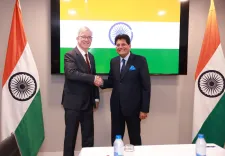
CM Bhupendra Patel Hails Green Energy Corridor Phase-III Approval
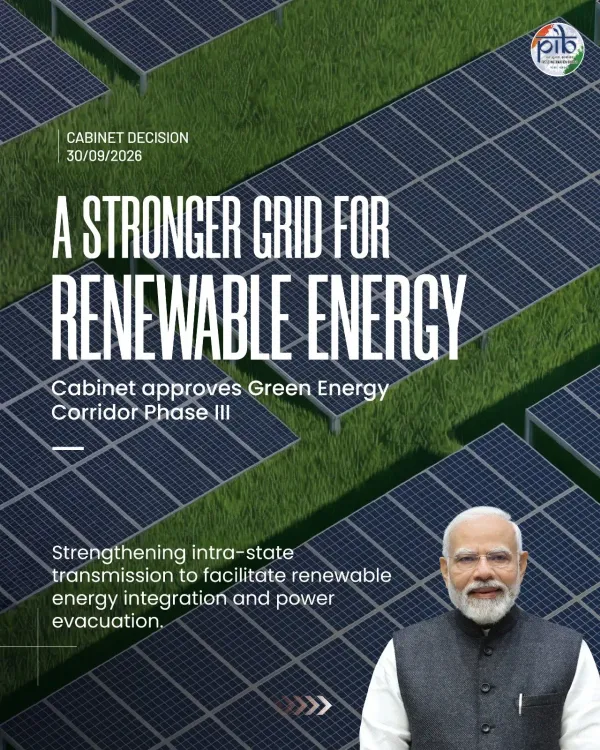
Synopsis
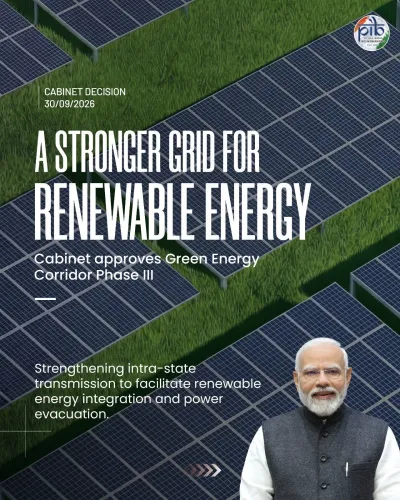
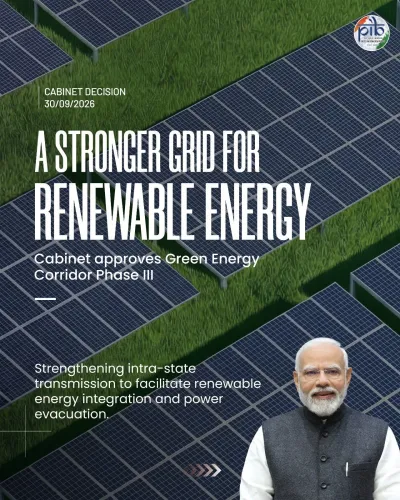
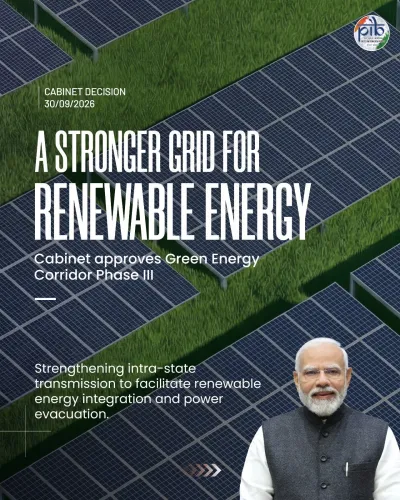
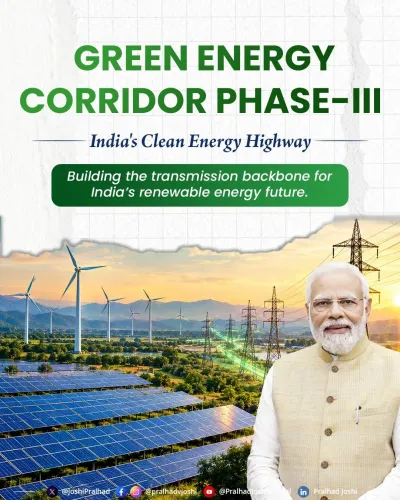
The Union Cabinet has approved Green Energy Corridor Phase-III to strengthen intra-state transmission for 135 GW of renewable power and deploy 50 GWh of battery storage, advancing India's 500 GW clean energy target by 2030. Gujarat CM Bhupendra Patel hailed the decision as a landmark step.
Key Takeaways
Union Cabinet approved the Green Energy Corridor Phase-III scheme to upgrade intra-state renewable energy transmission infrastructure.
The scheme targets evacuation of up to 135 GW of renewable energy through a strengthened Intra-State Transmission System.
50 GWh of Battery Energy Storage Systems are integrated into the scheme to ensure grid stability and manage renewable intermittency.
Phase-III builds on Green Energy Corridor Phase-I , approved in 2015 , which established inter-state transmission for renewables.
The scheme supports PM Narendra Modi's national target of 500 GW non-fossil fuel capacity by 2030 .
Gujarat CM Bhupendra Patel highlighted the scheme's role in empowering states to lead India's green growth agenda.
India's grid just got a mandate for transformation. The Union Cabinet has approved the Green Energy Corridor Phase-III scheme, a sweeping infrastructure push designed to evacuate up to 135 GW of renewable energy through upgraded Intra-State Transmission Systems — and Gujarat Chief Minister Bhupendra Patel is calling it a landmark step toward a cleaner, more energy-secure India.
What Phase-III Unlocks for India's Renewable Grid
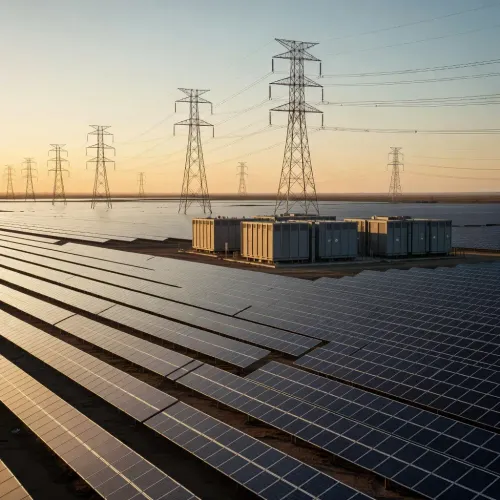
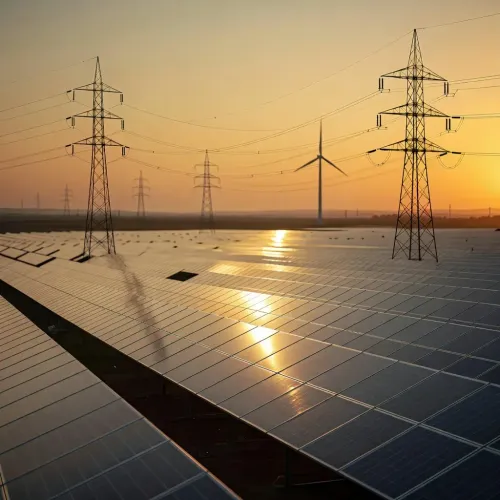
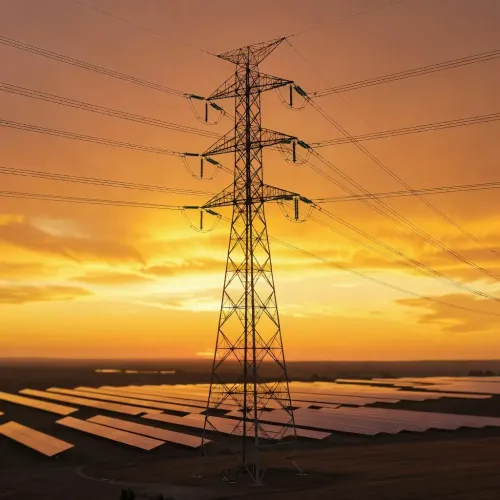
At its core, Green Energy Corridor Phase-III addresses the single biggest bottleneck in India's clean energy ambition: getting power from where it is generated to where it is consumed. Renewable energy — solar and wind especially — is being built at scale across states, but without matching transmission capacity, that power cannot reach the national grid reliably. Phase-III targets that gap directly, strengthening intra-state transmission corridors across multiple states.
The scheme also incorporates 50 GWh of Battery Energy Storage Systems (BESS) — a significant and qualitatively different addition compared to earlier phases. Storage is the answer to intermittency: the sun does not always shine, and the wind does not always blow. With 50 GWh of grid-scale storage embedded into the corridor design, operators gain the flexibility to absorb surplus generation, stabilise frequency, and dispatch clean power when demand peaks. It is infrastructure thinking that has caught up with the physics of renewables.
A Policy Lineage That Spans a Decade
Green Energy Corridor Phase-I, approved in 2015, laid the inter-state transmission spine to carry renewable power across India's high-voltage network. Each successive phase has expanded both the scale and the sophistication of the approach. Phase-III's inclusion of large-scale storage signals that India is no longer just building capacity — it is engineering a grid that can manage the variability of that capacity in real time.
Prime Minister Narendra Modi has anchored India's energy policy around a target of 500 GW of non-fossil fuel capacity by 2030. Hitting that number means nothing if the transmission infrastructure cannot evacuate the power those plants produce. Phase-III is, in that sense, the load-bearing column beneath the entire 2030 architecture.
States as Drivers of the Green Growth Revolution
CM Patel's statement specifically emphasised the role of states — describing the scheme as one that 'empowers states to lead the green growth revolution.' That framing matters. Intra-state transmission is built and operated by state utilities, and the pace at which project sanctions are issued, funding is drawn from the central pool, and transmission lines are commissioned will depend heavily on state-level execution. The Cabinet approval sets the policy and funding framework; state governments now hold the implementation lever.
For Gujarat — already one of India's most significant renewable energy hubs — the approval carries particular resonance. The state has been a frontrunner in solar and wind deployment, and expanded intra-state transmission capacity directly enables further growth.
India's green corridor ambition is now written into policy. The next chapter is written in steel towers, underground cables, and battery racks — and how fast states can put them in the ground.
Point of View
Not just generation, is now the critical constraint. For the BJP, the announcement also serves a dual political purpose: reinforcing the Centre's green-growth narrative ahead of state elections while giving chief ministers like Patel a tangible deliverable to champion at home. The real test, however, will be the speed of state-level execution — historically the weakest link in India's power sector reform chain.
NationPress
1 Oct 2026
Frequently Asked Questions
What is Green Energy Corridor Phase-III?
Green Energy Corridor Phase-III is a Union Cabinet-approved scheme to upgrade Intra-State Transmission Systems to evacuate up to 135 GW of renewable energy and integrate 50 GWh of Battery Energy Storage Systems for grid stability across Indian states.
How is Phase-III different from earlier Green Energy Corridor phases?
Green Energy Corridor Phase-I, approved in 2015, focused on inter-state transmission infrastructure. Phase-III focuses on intra-state transmission and, crucially, adds 50 GWh of grid-scale battery storage to manage the variability of renewable power — a feature absent from the earlier phases.
What is the significance of 50 GWh of Battery Energy Storage in the scheme?
Battery Energy Storage Systems at 50 GWh scale allow the grid to store surplus renewable power and dispatch it during peak demand, smoothing out the intermittency of solar and wind generation and ensuring stable, reliable supply.
How does this scheme connect to India's 2030 renewable energy target?
PM Modi has set a target of 500 GW non-fossil fuel capacity by 2030. Green Energy Corridor Phase-III provides the transmission and storage backbone needed to actually evacuate and utilise that power once generated, making it a critical enabler of the 2030 goal.
What role do states play in implementing the Green Energy Corridor Phase-III?
Intra-state transmission lines and storage assets are built and operated by state power utilities. While the Union Cabinet provides policy direction and central funding, the pace of implementation depends on state governments sanctioning projects and drawing down funds.