CM Bhupendra Patel hails India's 114-medal haul at Asian Para Games 2026
Synopsis
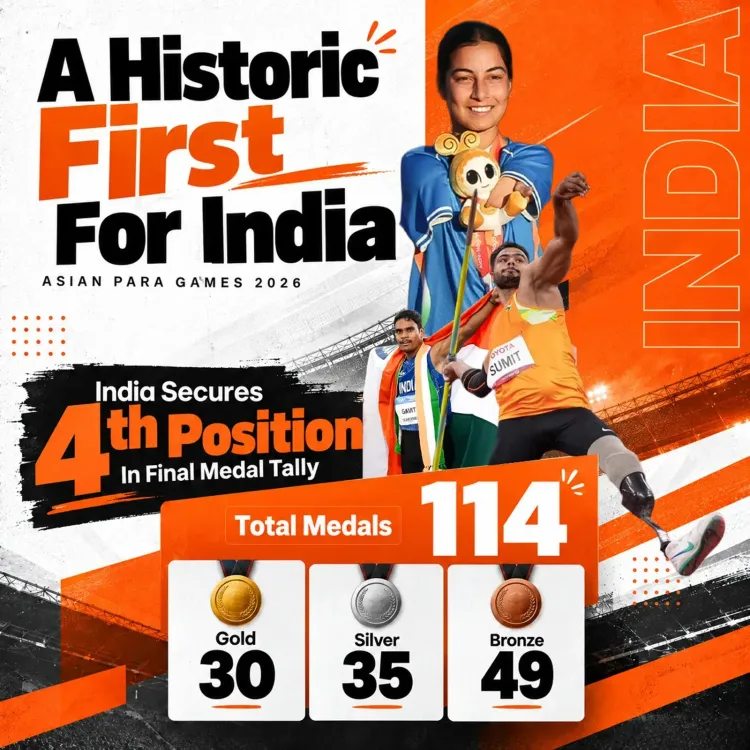
India's para-athletes finished fourth at the Asian Para Games 2026 with a record 114 medals — 30 Gold, 35 Silver, 49 Bronze. Gujarat CM Bhupendra Patel praised the achievement, crediting PM Modi's Khelo India and TOPS schemes for building the sporting ecosystem that made it possible.
Key Takeaways
India finished fourth at the Asian Para Games 2026 — the country's best-ever para-games standing.
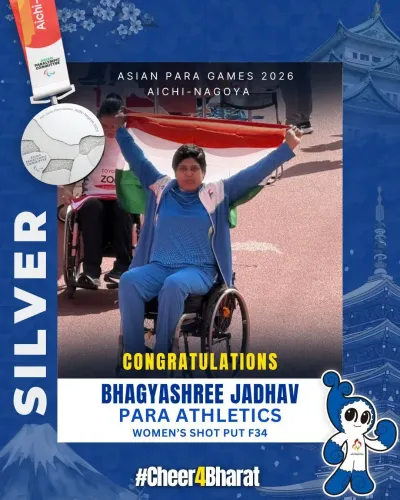
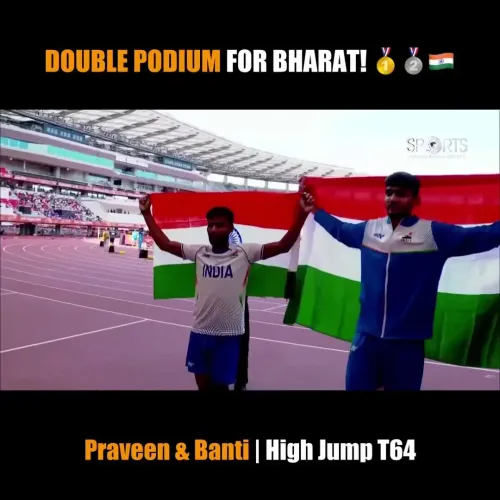
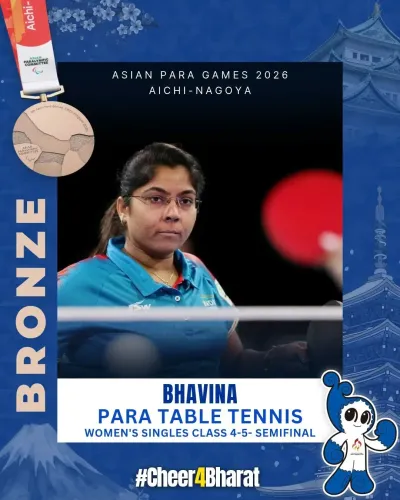
The contingent won a record 114 medals: 30 Gold, 35 Silver and 49 Bronze .
Gujarat CM Bhupendra Patel extended congratulations to para-athletes, coaches and support teams.
The Target Olympic Podium Scheme (TOPS) , launched 2014 , provides elite athletes with dedicated financial and training support.
Khelo India , launched 2017 , drives grassroots talent identification and infrastructure development across states.
The result reflects over a decade of sustained central government investment in both Olympic and para-sport programmes.
India's para-athletes have rewritten the record books. Gujarat Chief Minister Bhupendra Patel on Sunday, 25 October 2026 celebrated the national contingent's historic fourth-place finish at the Asian Para Games 2026, a campaign that yielded an unprecedented 114 medals — 30 Gold, 35 Silver and 49 Bronze.
114 medals and a fourth-place finish that resets the benchmark
The number alone tells the story. 114 medals is India's largest-ever haul at the Asian Para Games, and a fourth-place finish on the overall standings signals a quantum leap for a programme that once struggled for visibility. Every gold, every bronze earned by an athlete who defied circumstance to compete at the continental stage adds weight to a number that will be hard to top.
CM Patel's post on X captured the mood plainly: 'You have made 1.4 billion Indians proud and set new benchmarks for the future of Indian sports!' — a line directed at the para-athletes, coaches and support staff who made the run possible.
How Khelo India and TOPS built the pipeline
Behind the medal tally is a decade of deliberate investment. The Target Olympic Podium Scheme (TOPS), introduced in 2014, channelled dedicated funding and customised training support directly to elite athletes, including para competitors, removing the financial friction that once forced many to choose between sport and livelihood.
Khelo India, launched in 2017, extended the net further — grassroots talent identification, upgraded infrastructure across states, and a pipeline designed to feed national squads for years ahead. Together, the two schemes represent a structural shift: India no longer waits for medals to arrive; it builds the conditions for them.
CM Patel credited Prime Minister Narendra Modi's 'visionary leadership' for the ecosystem that enabled this performance, pointing specifically to these flagship programmes as the engine room of the achievement.
A sporting ecosystem coming of age
India's growing para-sport ambitions sit inside a broader national pattern. Successive Union Budgets have increased sports allocations, and state governments — Gujarat prominently among them — have aligned their own programmes with central initiatives to widen the talent pool. The Asian Para Games result is, in that sense, not a surprise but a confirmation: sustained policy investment, compounded over years, is yielding compound returns on the field of play.
The question now is whether the momentum carries into the next major cycle. With Khelo India and TOPS reviews expected in upcoming sports ministry deliberations, the 114-medal Games gives policymakers a powerful data point — and para-athletes a higher bar to chase.
Point of View
Amplifying the achievement is also a way of aligning Gujarat's identity with a national success story that has broad popular resonance. The fourth-place finish raises the stakes for the next cycle: policymakers will face pressure to lock in funding gains rather than treat this as a one-off peak. Ultimately, how India converts this para-sport momentum into deeper institutional infrastructure — coaching academies, classification support, state-level leagues — will determine whether 2026 is a high-water mark or a launchpad.
NationPress
25 Oct 2026
Frequently Asked Questions
How many medals did India win at the Asian Para Games 2026?
India won a record 114 medals at the Asian Para Games 2026 — 30 Gold, 35 Silver and 49 Bronze — finishing fourth overall.
What is the Khelo India scheme?
Khelo India is a national programme launched in 2017 to promote grassroots sports participation, identify talent early, and develop sporting infrastructure across Indian states.
What is the TOPS scheme in Indian sports?
The Target Olympic Podium Scheme (TOPS) , introduced in 2014 , provides elite Indian athletes — including para competitors — with dedicated financial support, customised training and logistical assistance for international competitions.
Who is Bhupendra Patel?
Bhupendra Patel is the Chief Minister of Gujarat since 2021 and a senior BJP leader who regularly highlights national achievements in his official communications.
What was India's previous best performance at the Asian Para Games?
The research available does not specify India's precise previous best finish, but the 114-medal haul and fourth-place finish in 2026 is described as unprecedented, indicating it surpasses all prior performances.