CM Bhupendra Patel Hails Rs 4,094 Cr Tax Devolution for Gujarat

Synopsis
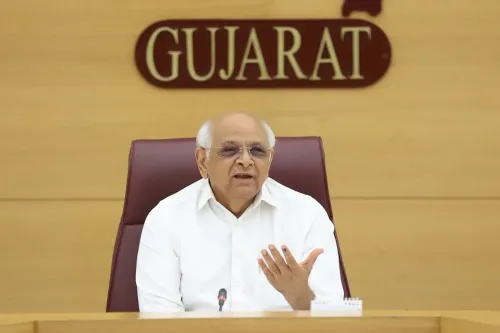
The Centre released an advance tax devolution instalment of Rs 1,09,019 crore to states on 1 August 2026. Gujarat CM Bhupendra Patel confirmed the state received Rs 4,094 crore, crediting PM Modi and Finance Minister Sitharaman, and said the funds will accelerate infrastructure and capital spending.
Key Takeaways
The Centre released an advance tax devolution instalment of Rs 1,09,019 crore to states on 1 August 2026 , over and above regular monthly transfers.
Gujarat received Rs 4,094 crore as its share of the national disbursement.
CM Bhupendra Patel said the funds will strengthen state finances and accelerate capital, developmental, and infrastructure expenditure.
Tax devolution is a constitutional mechanism under Articles 270 and 280 , with the 15th Finance Commission setting a 41 per cent devolution share for states for 2021–26.
Advance instalments allow states to commit capital budgets earlier in the fiscal cycle, avoiding project delays caused by cash-flow constraints.
The 16th Finance Commission is expected to be constituted before 2026, with its recommendations set to govern the next devolution cycle.
An advance instalment of central tax devolution — totalling Rs 1,09,019 crore for states across India — has landed, and Gujarat Chief Minister Bhupendra Patel says his state's share of Rs 4,094 crore will directly power infrastructure and capital spending. The release, announced on Saturday, 1 August 2026, comes over and above the regular monthly transfer cycle.
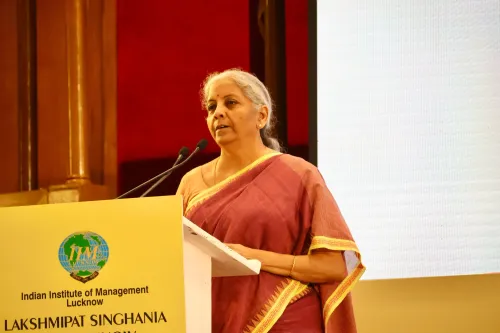
In a post on X, CM Patel credited the disbursement to the leadership of Prime Minister Narendra Modi and Union Finance Minister Nirmala Sitharaman, saying the advance instalment would 'strengthen the state's financial position and accelerate capital and developmental expenditure as well as infrastructure creation.'
What the Rs 4,094 Crore Means for Gujarat
Tax devolution is not discretionary — it is a constitutional obligation under Articles 270 and 280 of the Indian Constitution, calibrated by Finance Commission recommendations. The 15th Finance Commission (2020) set the devolution share for states at 41 per cent of the central divisible pool for the period 2021–26. Gujarat's slice of the advance instalment flows directly from that formula.
What distinguishes an advance instalment from the routine monthly release is timing and intent. By front-loading funds, the Centre enables states to commit capital budgets earlier in the fiscal cycle — particularly useful for infrastructure contracts, road projects, and urban development schemes that require upfront financial certainty before ground is broken.
Advance Instalments as a Fiscal Tool
This is not the first time the Centre has deployed an advance devolution instalment. In prior fiscal years, the Finance Ministry has used the mechanism to inject liquidity into state treasuries ahead of peak spending seasons, preventing states from deferring capital projects due to cash-flow constraints. The aggregate national release of Rs 1,09,019 crore signals a broad push to keep state-level infrastructure momentum alive.
Nirmala Sitharaman's Finance Ministry has consistently framed such releases as instruments of cooperative federalism — a framework where the Centre and states function as financial partners rather than adversaries. For Gujarat, a state with an active pipeline of port, highway, and urban-infrastructure projects, the timing of the infusion aligns with the pre-monsoon construction window winding down and the post-monsoon push that typically intensifies in the second half of the fiscal year.
With the 16th Finance Commission expected to be constituted and begin work before the current devolution cycle closes in 2026, states like Gujarat will be watching closely for any revision to the 41 per cent formula that governs how much of the central tax pool flows to them. Until then, advance instalments like this one remain one of the most direct levers the Centre holds to accelerate ground-level spending — and one of the clearest signals of fiscal intent.
Point of View
Publicly acknowledging the transfer reinforces the BJP's cooperative-federalism narrative ahead of the 16th Finance Commission's constitution, where Gujarat will seek to protect or improve its devolution share. The timing also signals that the Finance Ministry is prioritising fiscal headroom for states in the second half of the 2026 financial year, likely anticipating slower revenue buoyancy. With the current Finance Commission formula expiring in 2026, this instalment may be one of the last under the 41 per cent framework — making the next Commission's recommendations a high-stakes moment for every state treasury.
NationPress
1 Aug 2026
Frequently Asked Questions
What is tax devolution and why do states receive it?
Tax devolution is the constitutional transfer of a share of central tax revenues to state governments under Articles 270 and 280 of the Indian Constitution. The 15th Finance Commission set this share at 41 per cent of the central divisible pool for 2021–26, ensuring states have funds for their own development and governance needs.
How much did Gujarat receive in the August 2026 advance tax devolution?
Gujarat received Rs 4,094 crore as its share of the Centre's advance tax devolution instalment of Rs 1,09,019 crore released on 1 August 2026.
Why did the Centre release an advance instalment instead of waiting for the regular monthly transfer?
Advance instalments front-load funds to states so they can commit to capital projects — roads, ports, urban infrastructure — earlier in the fiscal cycle without waiting for routine monthly releases, helping accelerate ground-level spending.
Who announced the tax devolution release for Gujarat?
Gujarat Chief Minister Bhupendra Patel announced it on X on 1 August 2026, thanking Prime Minister Narendra Modi and Union Finance Minister Nirmala Sitharaman for the disbursement.
What is the 16th Finance Commission and how does it affect future devolution?
The 16th Finance Commission is the next constitutional body that will recommend the share of central taxes to be devolved to states for the period after 2026. Its formula will determine how much funding states like Gujarat receive in future years, making its constitution and recommendations closely watched by all state governments.