CM Bhupendra Patel Invokes Navratri to Champion Vahali Dikri Yojana
Synopsis
On Navratri's first night, Gujarat CM Bhupendra Patel called daughters 'the living form of Shakti' and renewed focus on the Vahali Dikri Yojana — the state's girl-child welfare scheme built around honour, nutrition, health, safety, and self-reliance.
Key Takeaways
Gujarat CM Bhupendra Patel posted on 11 October 2026 , the first night of Navratri, linking the festival to the state's girl-child scheme.
He described daughters as 'the living embodiment of Shakti' and the Vahali Dikri Yojana as the government's tribute to that power.
The scheme is structured around five pillars: honour, nutrition, health, safety, and self-reliance .
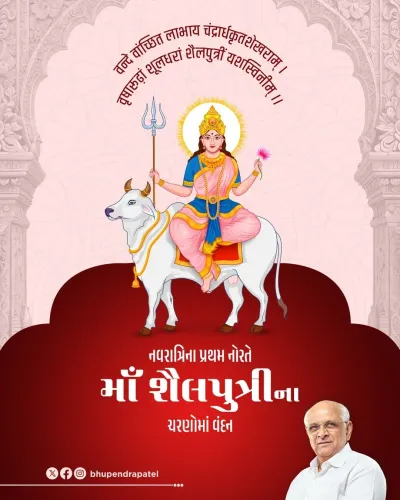
CM Patel invoked Maa Shailputri — the first of nine Navratri goddesses — to frame a collective public pledge in support of daughters.
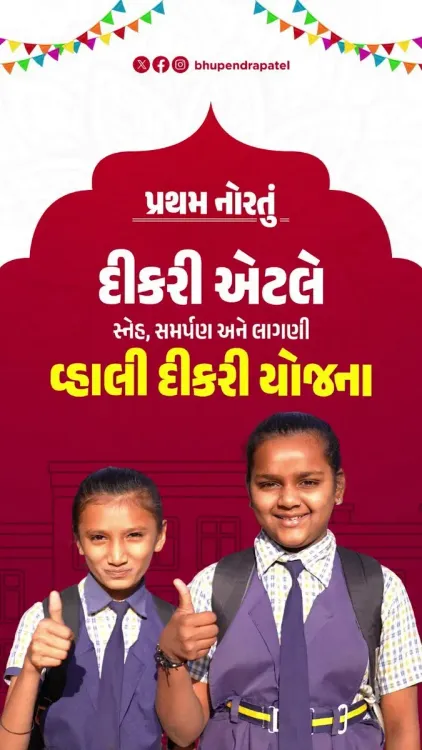
The post was in Gujarati and accompanied by a video, signalling a campaign-style outreach beyond a routine statement.
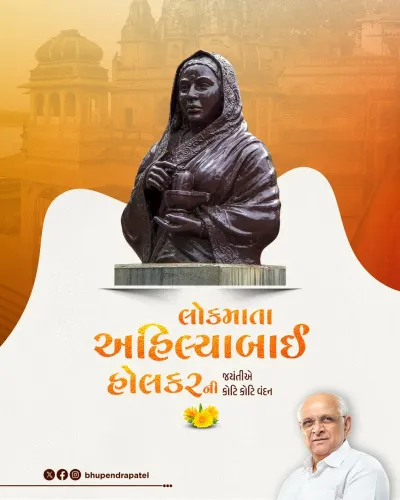
On the first night of Navratri — a festival that literally enshrines the power of the feminine divine — Gujarat Chief Minister Bhupendra Patel used the sacred occasion to spotlight the state's flagship girl-child welfare scheme, the Vahali Dikri Yojana, calling daughters 'the living embodiment of Shakti.' The message landed on Sunday, 11 October 2026, as millions across Gujarat lit lamps for Maa Shailputri, the first of nine forms of Devi worshipped through Navratri.
Writing in Gujarati, CM Patel declared: 'Dikri e to Shakti nu jivant swaroop chhe' — 'A daughter is the living form of Shakti itself.' He framed the Vahali Dikri Yojana as the government's institutional tribute to that power, describing it as a scheme that 'venerates the strength within daughters and gives it an opportunity to express itself.'
What the Vahali Dikri Yojana Promises
The Vahali Dikri Yojana — translating roughly as 'Beloved Daughter Scheme' — is a Gujarat government initiative designed around five pillars CM Patel named explicitly: honour (sanman), nutrition (suposhaN), health (swasthya), safety (suraksha), and self-reliance (swavlamban). The scheme provides financial support to families at key milestones in a girl child's life, aiming to counter the economic pressures that can push families toward gender-discriminatory choices. On the first Noran (night) of Navratri, CM Patel called on citizens to take a collective pledge aligned with these five values — anchoring a government welfare promise inside one of Gujarat's most widely observed cultural moments.
Navratri as Policy Platform
The timing is deliberate and telling. Navratri's nine forms of the goddess are each an expression of feminine power — and invoking Maa Shailputri, the mountain-daughter who embodies resolve and strength, on the same breath as a girl-child scheme is a rhetorical bridge between cultural reverence and state policy. It is a framing Gujarat's BJP government has used consistently: tying welfare commitments to festive occasions gives them cultural resonance and wider reach. For millions of families in rural Gujarat who celebrate Navratri fervently, the message arrives through a familiar, emotionally charged channel.
The five-point pledge CM Patel articulates — sanman, suposhaN, swasthya, suraksha, swavlamban — maps onto the full arc of a girl's life, from birth to economic independence. That the Chief Minister chose to amplify this on Navratri's opening night, rather than a press conference or policy event, underscores how deeply welfare politics and cultural identity are woven together in Gujarat's political landscape.
Point of View
Patel reinforces the party's 'Beti Bachao' ideological lineage while keeping it locally rooted in Gujarati custom. The five-point pledge format — sanman, suposhaN, swasthya, suraksha, swavlamban — also signals that the scheme is being positioned as a comprehensive life-cycle programme, not a one-off cash transfer. Whether the messaging translates into measurable on-ground outcomes for girl children in Gujarat is the harder question this festive framing leaves unanswered.
NationPress
12 Oct 2026
Frequently Asked Questions
What is the Vahali Dikri Yojana in Gujarat?
The Vahali Dikri Yojana is a Gujarat government scheme for girl-child welfare, providing financial support to families at key milestones in a daughter's life, built around five pillars: honour, nutrition, health, safety, and self-reliance.
What did Gujarat CM Bhupendra Patel say on Navratri 2026?
On the first night of Navratri 2026, CM Bhupendra Patel said daughters are 'the living embodiment of Shakti' and called on citizens to take a pledge supporting the five values of the Vahali Dikri Yojana while paying respects to Maa Shailputri.
Who is Maa Shailputri and why is she significant on the first day of Navratri?
Maa Shailputri is the first of nine forms of the goddess Durga worshipped during Navratri. She is considered the daughter of the mountains and symbolises strength and resolve, making her invocation especially resonant for a girl-child welfare message.
What are the five pillars of the Vahali Dikri Yojana?
CM Patel cited five pillars: sanman (honour), suposhaN (nutrition), swasthya (health), suraksha (safety), and swavlamban (self-reliance), representing a full life-cycle commitment to girl children in Gujarat.
Why did CM Bhupendra Patel link Navratri to the Vahali Dikri Yojana?
Navratri celebrates the feminine divine across nine nights, making it a culturally powerful moment to promote a girl-child welfare scheme. By linking the two, CM Patel embedded a government welfare message inside one of Gujarat's most widely observed festivals, broadening its reach.