CM Bhupendra Patel Joins Shala Praveshotsav in Tribal Dahod
Synopsis
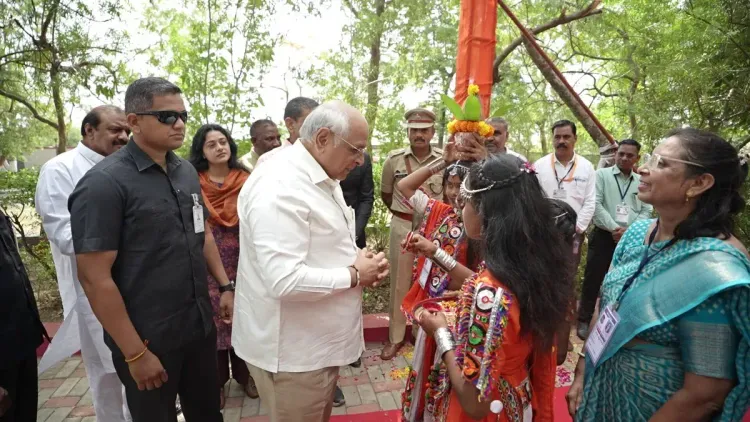
Gujarat Chief Minister Bhupendra Patel visited a tribal-area primary school in Dahod on 24 June 2026 for Shala Praveshotsav and Kanya Kelavani Mahotsav, welcoming new students with kumkum tilak and educational kits, and crediting PM Modi's 2003 initiative for transforming school enrollment in tribal Gujarat.
Key Takeaways
CM Bhupendra Patel attended Shala Praveshotsav 2026 on its second day at Moti Kharjani Rahadungri Primary School in Dahod on 24 June 2026 .
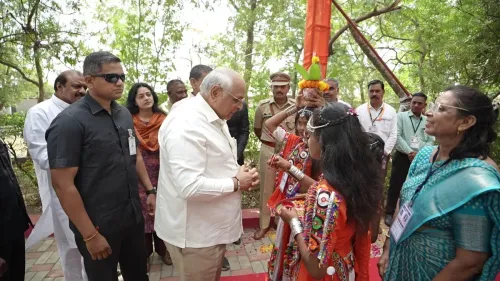
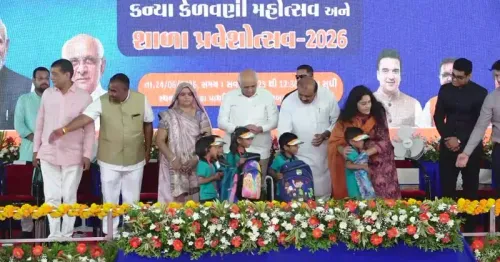
Children from Anganwadi, Balvatika, Standards 1 and 9 , and re-enrolled students received kumkum tilak and educational kits from the Chief Minister.
Students excelling in sports and other fields were felicitated at the ceremony.
Road-safety pledges were administered to all children and citizens present as part of civic awareness efforts.
Shala Praveshotsav and Kanya Kelavani were originally launched by Narendra Modi as Gujarat Chief Minister in 2003 to boost enrollment in rural and tribal areas.
Dahod is a tribal-majority district in eastern Gujarat and a longstanding focus of the state's school enrollment campaigns.
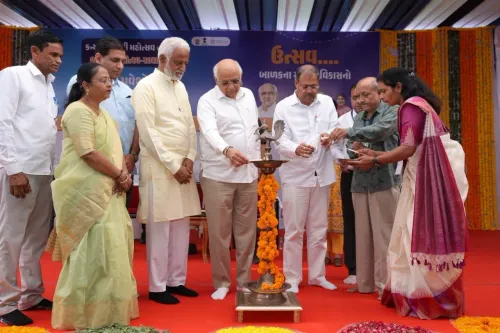
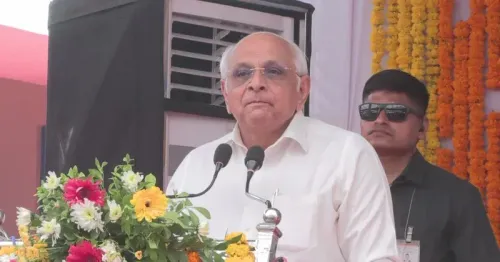
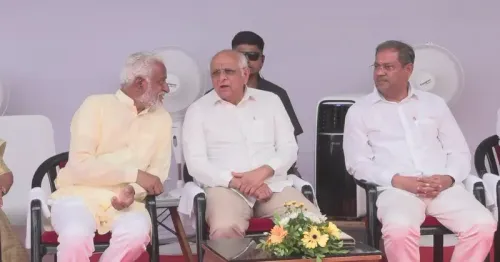
Gujarat Chief Minister Bhupendra Patel attended the second day of the statewide Shala Praveshotsav and Kanya Kelavani Mahotsav at Moti Kharjani Rahadungri Primary School in the tribal-majority Dahod district on Wednesday, 24 June 2026, welcoming children from Anganwadi, Balvatika, Standards 1 and 9, as well as re-enrolled students into the new academic year.
Context
Posting in Gujarati on X, CM Patel described the occasion as a moment of 'unique joy' (anero anand) spent among children. He said he applied the ceremonial kumkum tilak on the foreheads of boys and girls and distributed educational kits as a symbolic entry into 'the world of knowledge', blessing them for a bright future. Children who had excelled in sports and other fields were also felicitated at the event.
Two moments stood out for the Chief Minister: a boy who delivered a speech on cleanliness, and a girl who confidently anchored the entire programme. Patel wrote that these moments 'strengthened his faith in the capabilities of the new generation blossoming in Gujarat's rural areas.'
Policy Backdrop
Shala Praveshotsav and Kanya Kelavani were launched by Narendra Modi when he served as Gujarat Chief Minister, beginning in 2003, to drive school enrollment in rural and tribal regions where dropout rates — particularly among girls — were high. The twin campaigns use a community-festival format, combining enrollment ceremonies with messages on hygiene, road safety, and civic responsibility.
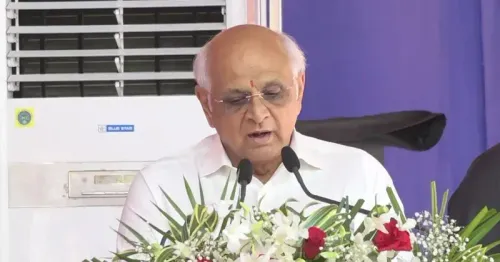
At the Dahod event, CM Patel administered road-safety pledges to all children and citizens present, continuing the tradition of embedding civic awareness into the annual school-entry festival. Patel credited Modi's early initiative, saying the seed planted 'years ago' has today grown into a 'banyan tree' (vatvriksha) spreading across remote tribal belts including Dahod.
Stakeholders and Impact
Dahod, located in eastern Gujarat along the Madhya Pradesh border, is among the state's most significant Scheduled Tribe concentration districts. The district has historically been a focus area for state education interventions aimed at first-generation learners. The Shala Praveshotsav model — distributing educational kits, honouring achievers, and involving parents — is designed to reduce mid-session dropouts and encourage families to keep girls in school.
The Kanya Kelavani component specifically targets girl-child education, addressing social and economic barriers that have historically kept tribal girls out of classrooms. The participation of a girl student as programme anchor at the Rahadungri Primary School event was cited by CM Patel as direct evidence of the campaign's impact on confidence and participation.
What's Next
The statewide Shala Praveshotsav 2026 drive continues across Gujarat's districts, with district-level enrollment figures and educational kit distribution data expected to be released by state education authorities in the coming weeks. Monitoring of student retention through the 2026 academic session in tribal blocks will be a key indicator of the campaign's on-ground reach. CM Patel's visit to a remote tribal school signals the state government's intent to keep the spotlight on equity in education beyond urban centres.
Point of View
Patel reinforces a continuity narrative that ties Gujarat's current administration directly to the Prime Minister's legacy. The emphasis on a girl anchoring the programme and a boy speaking on cleanliness signals the campaign's dual aim: improving female enrollment metrics while embedding civic messaging in early education. Whether the 2026 drive translates into measurable retention gains in tribal blocks will be the real test of a two-decade-old policy's staying power.
NationPress
24 Jun 2026
Frequently Asked Questions
What is Shala Praveshotsav in Gujarat?
Shala Praveshotsav is an annual Gujarat government festival that marks the formal entry of new and returning students into school at the start of the academic year. It was launched by Narendra Modi as Gujarat Chief Minister in 2003 to improve enrollment, especially in rural and tribal areas, through community ceremonies that include educational kit distribution and civic pledges.
What is Kanya Kelavani Mahotsav?
Kanya Kelavani Mahotsav is a Gujarat government campaign run alongside Shala Praveshotsav that specifically promotes the education of girl children. It aims to address social and economic barriers that have historically kept girls — particularly in tribal communities — out of school.
Why did CM Bhupendra Patel visit Dahod for Shala Praveshotsav 2026?
CM Bhupendra Patel attended the second day of Shala Praveshotsav 2026 at Moti Kharjani Rahadungri Primary School in Dahod, a tribal-majority district in eastern Gujarat that has been a priority area for school enrollment drives since the early 2000s.
Who started Shala Praveshotsav and Kanya Kelavani in Gujarat?
Both Shala Praveshotsav and Kanya Kelavani were initiated by Narendra Modi during his tenure as Gujarat Chief Minister, beginning in 2003, with the goal of raising school enrollment and reducing dropout rates among rural and tribal children.
What activities took place at the Dahod Shala Praveshotsav 2026 event?
At the event, CM Patel applied kumkum tilak on students and distributed educational kits to children from Anganwadi, Balvatika, Standards 1 and 9, and re-enrolled students. Academically and sportingly outstanding children were felicitated, and road-safety pledges were administered to all attendees.