CM Bhupendra Patel Marks Azad Hind Government's 83rd Anniversary
Synopsis
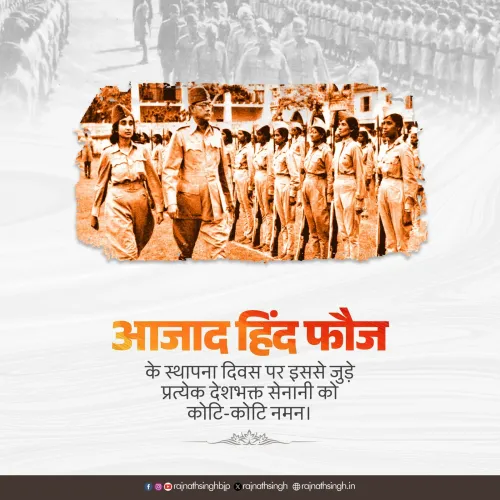
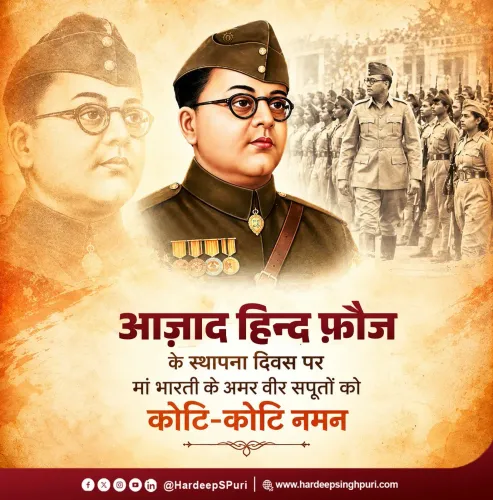
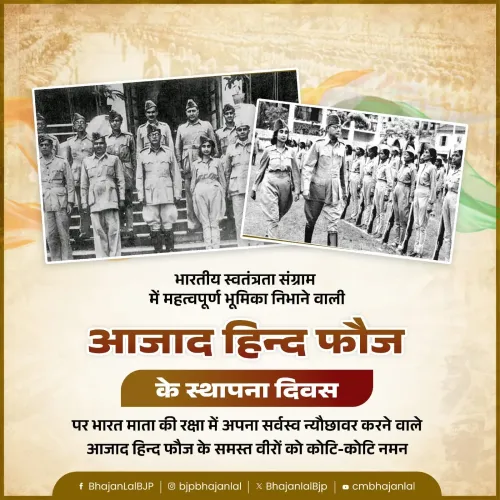
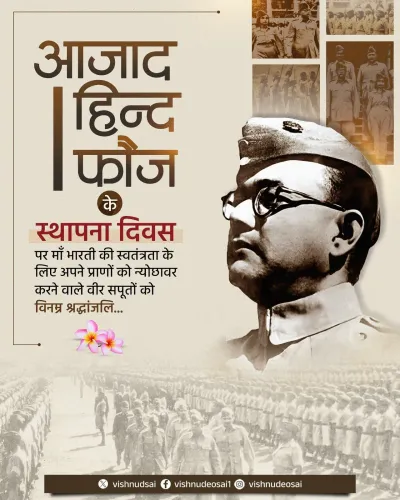
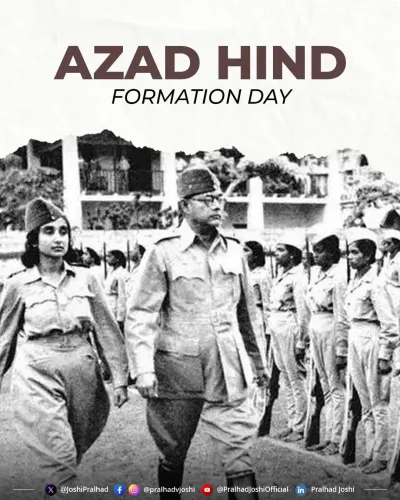
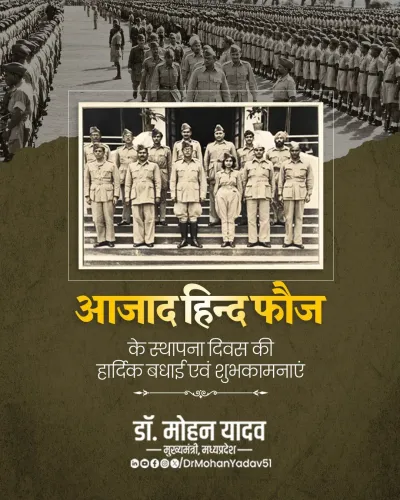
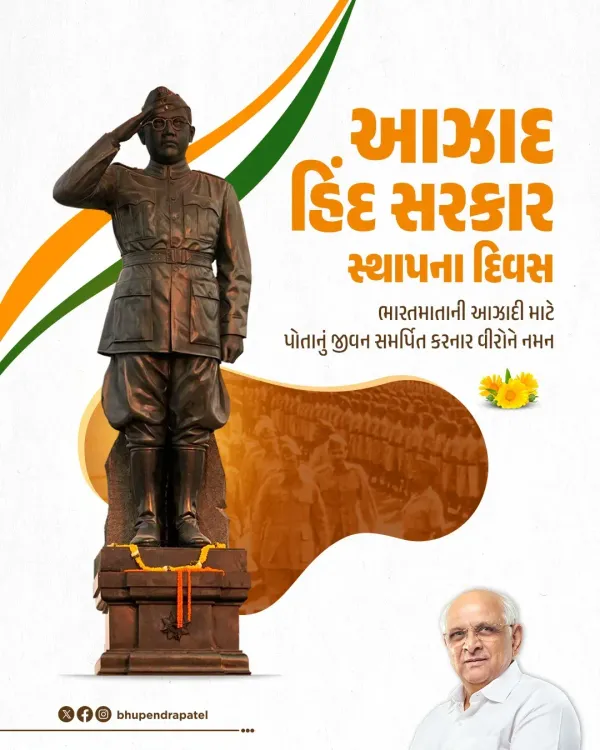
Gujarat Chief Minister Bhupendra Patel marked the 83rd anniversary of the Provisional Government of Free India on 21 October 2026, paying homage to Netaji Subhas Chandra Bose and the Azad Hind Fauj for their sacrifice in the struggle against British rule.
Key Takeaways
Gujarat CM Bhupendra Patel posted a tribute in Gujarati on 21 October 2026 marking the anniversary of the Azad Hind government's proclamation.
Netaji Subhas Chandra Bose declared the Provisional Government of Free India on 21 October 1943 in Singapore .
The government was the first independent Indian government in exile, recognised by several Axis and neutral nations.
The Azad Hind Fauj (Indian National Army) served as the military arm of the exiled government and fought British forces in the northeast.
CM Patel invoked Netaji's famous call — 'Give me your blood, and I will give you freedom' — and closed with 'Jai Hind!' Tributes on 21 October are observed annually by political leaders across parties as part of broader remembrance of India's independence movement.
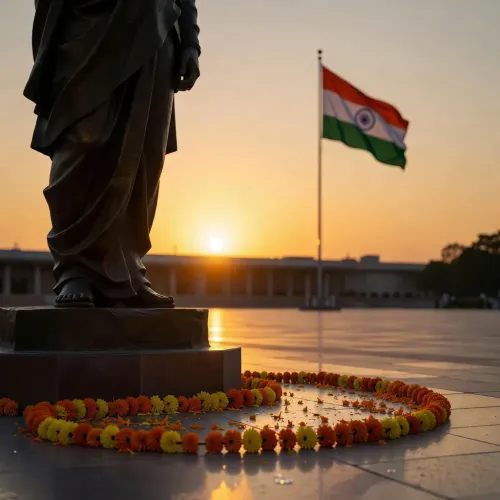
Eighty-three years after Netaji Subhas Chandra Bose electrified a nation in chains with his immortal cry — 'Tum mujhe khoon do, main tumhe azaadi dunga!' ('Give me your blood, and I will give you freedom!') — Gujarat Chief Minister Bhupendra Patel paid tribute on Wednesday, 21 October 2026 to Netaji and every soldier of the Azad Hind Fauj, honouring the historic proclamation that shook the very foundations of British rule.
Writing in Gujarati, CM Patel invoked the legacy of those who sacrificed everything to break what he called 'the chains of Mother India's slavery.' He described Netaji's contribution and that of the Indian National Army as 'inscribed in golden letters,' reserving his deepest reverence for the armed stream of India's freedom struggle.
The Proclamation That Changed Everything — 21 October 1943
On this date in 1943, in Singapore, Netaji Subhas Chandra Bose declared the Provisional Government of Free India — the first independent Indian government in exile. The proclamation was not a symbolic gesture. It was a direct political and military challenge to the British Empire, recognised swiftly by several Axis and neutral nations, and it gave the armed freedom movement a sovereign identity that could negotiate, govern, and fight.
The Azad Hind Fauj, or Indian National Army, formed the military backbone of that government — tens of thousands of Indian soldiers, many of them prisoners of war in Southeast Asia, who chose to fight under Netaji's banner rather than remain under British command. Their march toward the Indian subcontinent, and the battles at Imphal and Kohima, remain among the most dramatic chapters of the independence era.
Why 21 October Still Commands Salutes Across the Political Spectrum
Tributes on 21 October have become a fixture of India's political calendar, cutting across party lines. Netaji's legacy — the conviction that freedom must be seized, not merely petitioned — carries a particular resonance that leaders invoke to signal both patriotism and the depth of the independence movement's diversity. CM Patel closed his post with a crisp, unambiguous 'Jai Hind!' — the very salute Netaji's soldiers carried into battle.
The commemoration is one of several annual moments the Azad Hind legacy anchors: Netaji Jayanti on 23 January and Republic Day form the other pillars, each drawing fresh attention to the armed and diplomatic dimensions of India's road to 1947.
Point of View
CM Patel aligns with a BJP-era pattern of centering figures who were historically marginalised in Congress-dominated nationalist narratives. The tribute signals a continued effort to broaden the ideological canvas of India's freedom story beyond the non-violence movement. At the state level, such commemorations double as soft cultural mobilisation — reminding audiences that patriotism has many registers. The consistency of cross-party 21 October tributes, however, also underscores how thoroughly Netaji's legacy has been absorbed into a shared national memory.
NationPress
21 Oct 2026
Frequently Asked Questions
What happened on 21 October 1943?
On 21 October 1943 , Netaji Subhas Chandra Bose declared the Provisional Government of Free India in Singapore — the first independent Indian government in exile — with the Azad Hind Fauj as its military force.
What is the Azad Hind Fauj?
The Azad Hind Fauj , also known as the Indian National Army (INA) , was a military force raised largely from Indian prisoners of war in Southeast Asia during World War II to fight British colonial rule under Netaji Bose's command.
Who is Bhupendra Patel?
Bhupendra Patel is the Chief Minister of Gujarat and a senior BJP leader. He posted the tribute on 21 October 2026 to mark the 83rd anniversary of the Azad Hind government's proclamation.
What does 'Tum mujhe khoon do, main tumhe azaadi dunga' mean?
The phrase — attributed to Netaji Subhas Chandra Bose — translates to 'Give me your blood, and I will give you freedom.' It became one of the most iconic rallying calls of India's armed independence movement.
When is Netaji Subhas Chandra Bose Jayanti?
Netaji Jayanti is observed on 23 January every year, marking Netaji Subhas Chandra Bose's birth anniversary. It is one of several annual occasions when his legacy is formally commemorated across India.