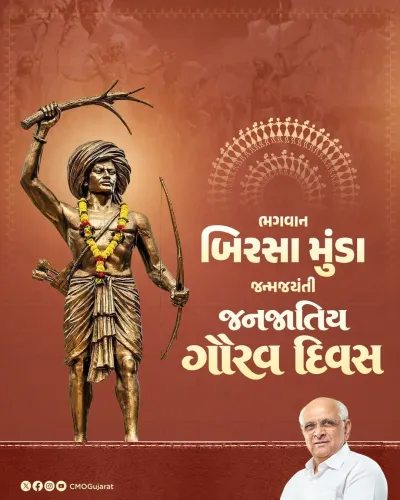
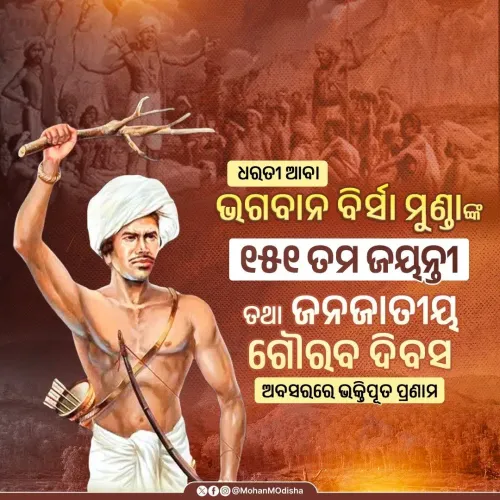
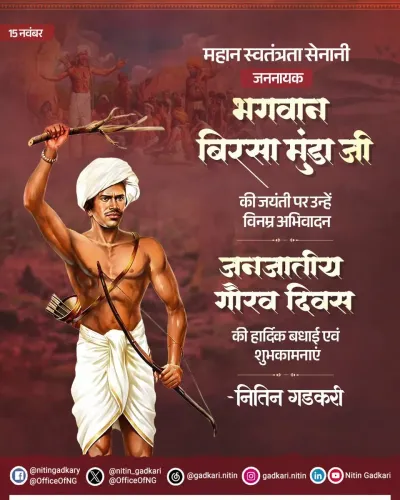
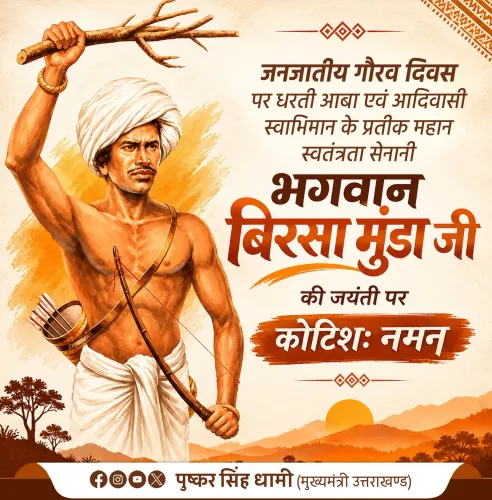
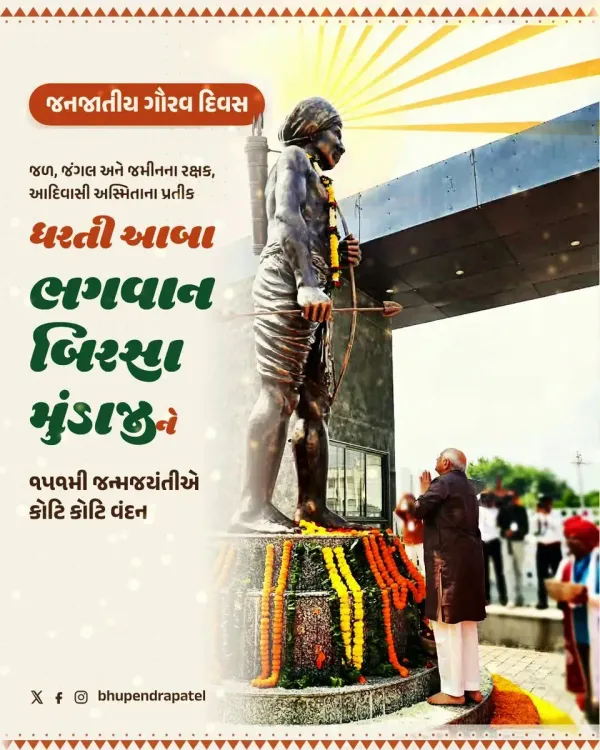
CM Bhupendra Patel Marks Birsa Munda's 151st Birth Anniversary
Synopsis
Gujarat Chief Minister Bhupendra Patel honoured Bhagwan Birsa Munda on his 151st birth anniversary, observed as Janjatiya Gaurav Divas on 15 November, calling the tribal leader a guardian of water, forest and land whose flame of self-respect still guides generations.
Key Takeaways
Gujarat CM Bhupendra Patel posted a Gujarati tribute to Bhagwan Birsa Munda on 15 November 2026 .
The day marks Birsa Munda's 151st birth anniversary and is observed nationally as Janjatiya Gaurav Divas .
The Government of India formally declared 15 November as Janjatiya Gaurav Divas in 2021 to honour tribal heroes and Scheduled Tribe heritage.
Birsa Munda, born in 1875 in present-day Jharkhand , led the Ulgulan uprising against British colonial dispossession of tribal lands.
CM Patel called on citizens to pledge protection of nature and the motherland in Munda's memory.
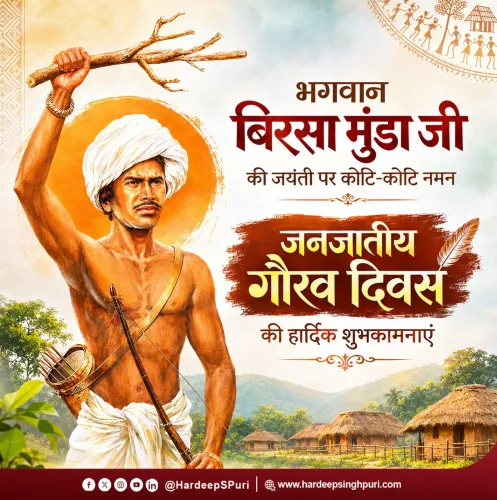
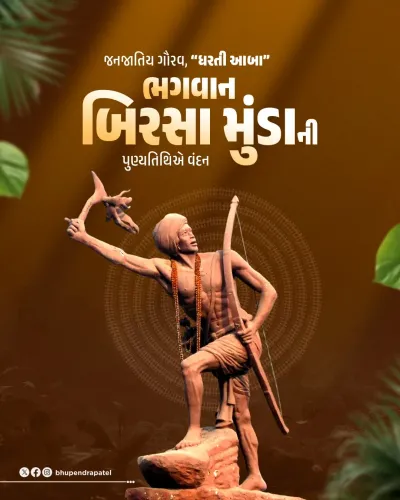
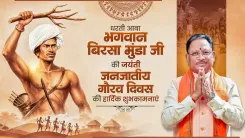
Born to the soil and lived for it — that is how Gujarat Chief Minister Bhupendra Patel opened his tribute to Bhagwan Birsa Munda on Sunday, 15 November 2026, as India observed the 151st birth anniversary of the tribal freedom fighter and the fifth edition of Janjatiya Gaurav Divas.
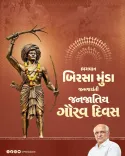
Posting in Gujarati, CM Patel wrote: 'ધરતીના ખોળે જન્મ્યા, ધરતી માટે જ જીવ્યા' — 'Born in the lap of the earth, lived only for the earth' — describing Birsa Munda as the guardian of water, forest and land, and a symbol of the dignity and self-respect of Adivasi society. He called on citizens to bow before the courage, culture and love of nature of India's tribal heroes and to pledge the protection of nature and the motherland.
Who Was Bhagwan Birsa Munda?
Birsa Munda, born on 15 November 1875 in present-day Jharkhand, led the Ulgulan — the Great Tumult — a grassroots uprising against British colonial appropriation of tribal lands and forests. Revered across Jharkhand, Odisha and Bengal as Dharti Aaba (Father of the Earth), he demanded tribal self-rule and an end to the zamindari system that dispossessed Adivasi communities of their ancestral holdings. He died in British custody in 1900, aged just 25, but his legacy endured as a foundation for modern tribal rights movements in India.
Janjatiya Gaurav Divas: From Declaration to Annual Observance
The Government of India formally declared 15 November as Janjatiya Gaurav Divas in 2021, anchoring the date in the national calendar to honour tribal heroes and promote the cultural legacy of Scheduled Tribe communities. The observance has since become a focal point for state and central events recognising forest rights, cultural documentation and the historical contributions of Adivasi figures.
CM Patel's tribute follows a pattern visible across BJP-governed states, where the anniversary is used to foreground tribal identity within the broader narrative of Indian nationhood — connecting ecological stewardship, cultural pride and historical resistance in a single symbolic moment. The Ministry of Tribal Affairs and several state governments are expected to use the occasion to spotlight welfare programmes for Scheduled Tribe communities in the coming weeks.
One hundred and fifty-one years on, Birsa Munda's insistence that the land, the forest and the river belong to those who live with them — not those who rule from afar — still echoes through every policy debate on tribal rights in India. That is a flame, as CM Patel put it, whose light still guides generations.
Point of View
A space historically occupied by regional and left-leaning movements. CM Patel's framing — connecting ecological stewardship, self-respect and sacrifice — mirrors central messaging and reinforces Gujarat's alignment with that broader arc. Whether symbolic observance translates into substantive policy gains for tribal communities on forest rights and land titles remains the sharper question.
NationPress
15 Nov 2026
Frequently Asked Questions
Why is 15 November celebrated as Janjatiya Gaurav Divas?
15 November is celebrated as Janjatiya Gaurav Divas because it marks the birth anniversary of tribal freedom fighter Bhagwan Birsa Munda , born on this day in 1875 . The Government of India formally declared the observance in 2021 to honour tribal heroes and the contributions of Scheduled Tribe communities.
Who was Bhagwan Birsa Munda and why is he called Dharti Aaba?
Bhagwan Birsa Munda was a 19th-century tribal leader from present-day Jharkhand who led the Ulgulan uprising against British colonial rule and zamindari dispossession of Adivasi lands. He is called Dharti Aaba — Father of the Earth — for his fierce advocacy of tribal self-rule and rights over forests and land.
What did Gujarat CM Bhupendra Patel say on Janjatiya Gaurav Divas 2026?
CM Bhupendra Patel posted a Gujarati tribute describing Birsa Munda as the guardian of water, forest and land, and a symbol of Adivasi dignity. He called on citizens to honour the courage and culture of tribal heroes and to pledge the protection of nature and the motherland on his 151st birth anniversary .
When was Janjatiya Gaurav Divas first declared?
The Government of India declared 15 November as Janjatiya Gaurav Divas in 2021 , making it an annual national observance to recognise tribal heritage and promote the cultural legacy of Scheduled Tribe communities across India.
What was the Ulgulan movement led by Birsa Munda?
The Ulgulan — meaning 'Great Tumult' — was a grassroots uprising led by Birsa Munda in the late 19th century against British colonial appropriation of tribal lands and forests in present-day Jharkhand . It demanded tribal self-rule and an end to the zamindari system that dispossessed Adivasi communities.