Chhattisgarh CMO Marks Birsa Munda Jayanti and Janjatiya Gaurav Diwas
Synopsis
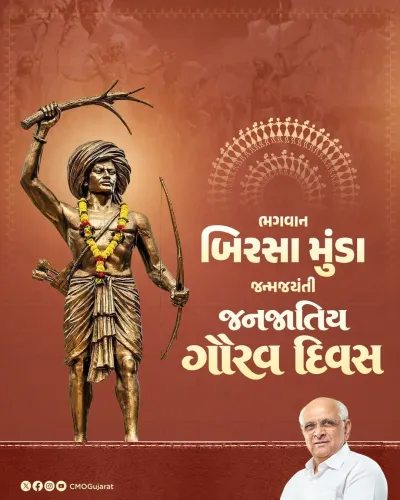
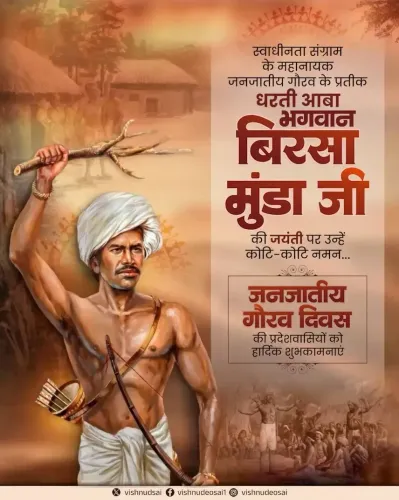
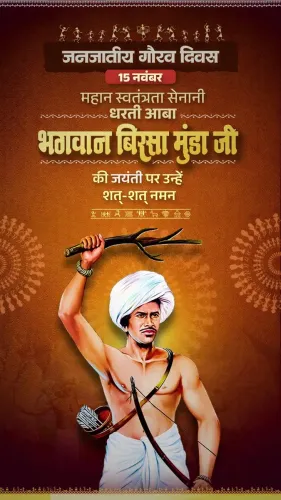
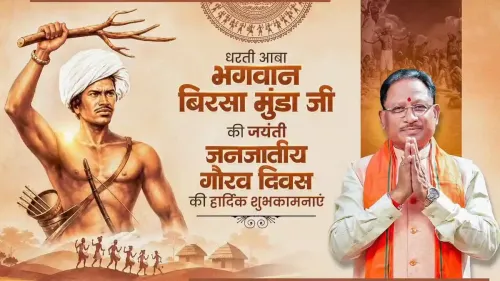
On 15 November 2026, Chhattisgarh's CMO honoured Bhagwan Birsa Munda on his birth anniversary and Janjatiya Gaurav Diwas, calling his life a symbol of courage and sacrifice, and pledging to preserve tribal heritage for future generations.
Key Takeaways
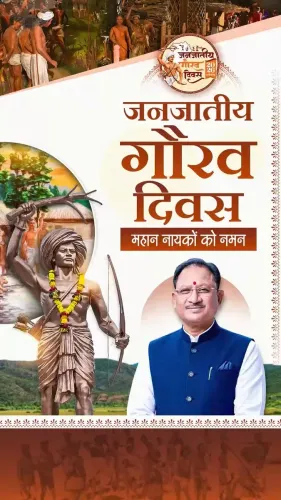
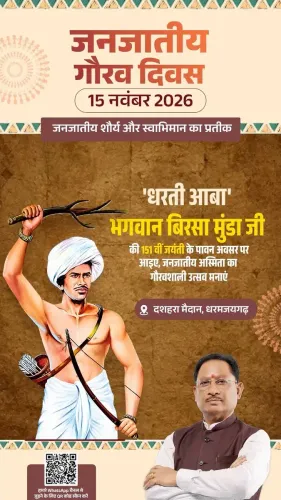
The Chief Minister's Office of Chhattisgarh marked Janjatiya Gaurav Diwas on 15 November 2026 , Birsa Munda's birth anniversary.
Birsa Munda (1875–1900) led the Ulgulan rebellion against British rule and local landlords in the Chota Nagpur region.
The Union Government formally established Janjatiya Gaurav Diwas as an annual observance on 15 November 2021 .
CM Vishnu Deo Sai , himself from a tribal community, is tagged in the post, lending personal resonance to the tribute.
The post calls on citizens to preserve tribal heritage, culture, and traditions for future generations.
Chhattisgarh is among India's states with the largest Scheduled Tribe populations, making this observance politically and culturally significant.
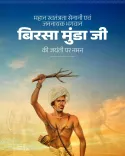
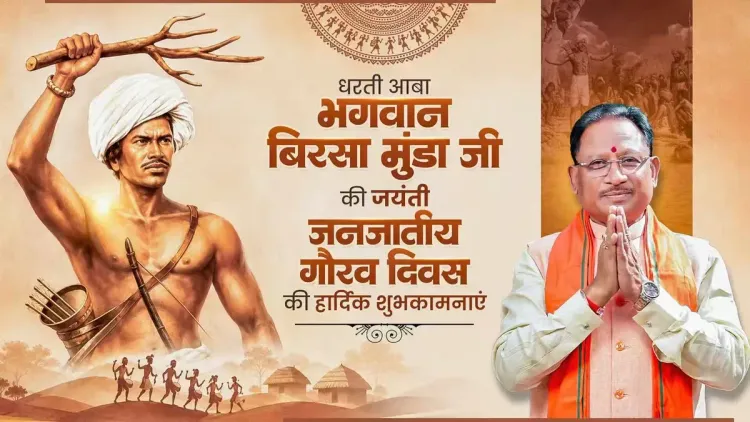
A freedom fighter who defied the British Empire at the age of twenty-five now commands a national day of remembrance — and on Sunday, 15 November 2026, the Chief Minister's Office of Chhattisgarh joined the country in honouring Bhagwan Birsa Munda on his birth anniversary and Janjatiya Gaurav Diwas.
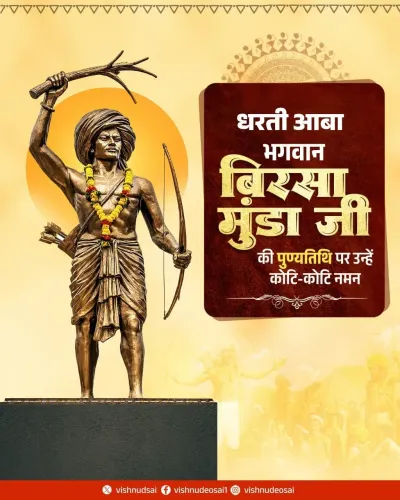
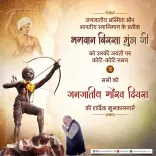
The CMO's post, tagged to Chief Minister Vishnu Deo Sai, extended greetings to all residents of Chhattisgarh, calling Birsa Munda's life a symbol of 'adamya sahas, swabhimaan aur matrubhumi ke prati samarpan' — 'indomitable courage, self-respect, and devotion to the motherland.' It called on citizens to salute the contributions of tribal heroes and to pledge preservation of their heritage, culture, and traditions for future generations, closing with the rallying cries 'Jai Johar! Jai Chhattisgarh!'
Who was Birsa Munda — and why does the date matter
Birsa Munda was born on 15 November 1875 in the Chota Nagpur region, in what is today Jharkhand. By his mid-twenties he had mobilised the Munda tribal community against both British colonial authorities and local landlords — an uprising remembered as the Ulgulan, or 'the Great Tumult.' He died in British custody in 1900, just twenty-five years old, but the revolt he led forced colonial administrators to enact land-protection legislation for tribal communities. His followers called him Dharti Aaba — 'Father of the Earth' — a title the CMO's post leads with.
In 2021, the Union Government formally instituted Janjatiya Gaurav Diwas on 15 November every year, anchoring the date in the national calendar as a moment to recognise tribal contributions to India's anti-colonial struggle and to cultural life. The move gave institutional weight to what had long been a community observance.
Chhattisgarh's tribal fabric and CM Sai's symbolic significance
Chhattisgarh is one of India's states with the largest Scheduled Tribe populations, and Chief Minister Vishnu Deo Sai — himself from the tribal community — carries particular resonance when the state government marks this day. State governments across central and eastern India issue commemorations on 15 November, but in Chhattisgarh the day intersects with active tribal welfare programmes and a political landscape in which Adivasi identity is both a cultural anchor and an electoral constituency.
The CMO's message frames the occasion not merely as backward-looking tribute but as a forward pledge: to carry a 'glorious heritage, culture, and traditions' into the hands of coming generations. That framing — preservation as an active, intergenerational duty — reflects a broader national emphasis on documenting and celebrating indigenous knowledge systems alongside formal commemorations.
One hundred and fifty-one years after his birth, Birsa Munda's story continues to remind a democracy where it came from — and who fought for the ground beneath it.
Point of View
Correcting decades of historiographical neglect. For CM Vishnu Deo Sai, a tribal leader governing a state with one of India's largest Adivasi populations, such messaging is as much governance as commemoration. The framing of Birsa Munda's legacy as a living, forward-looking pledge rather than a static historical fact signals that tribal identity politics in central India will only deepen as a mobilising force. How that symbolic capital translates into durable welfare outcomes is the question that hangs over every 15 November.
NationPress
15 Nov 2026
Frequently Asked Questions
What is Janjatiya Gaurav Diwas and why is it celebrated on 15 November?
Janjatiya Gaurav Diwas is an annual national observance on 15 November to mark the birth anniversary of tribal freedom fighter Bhagwan Birsa Munda and honour the contributions of India's tribal communities. The Union Government formally instituted it in 2021.
Who was Bhagwan Birsa Munda?
Birsa Munda (1875–1900) was a Munda tribal leader from the Chota Nagpur region who led the Ulgulan rebellion against British colonial authorities and local landlords. He died in British custody at twenty-five and is revered as 'Dharti Aaba' — Father of the Earth.
What is the significance of Janjatiya Gaurav Diwas in Chhattisgarh?
Chhattisgarh has one of India's largest Scheduled Tribe populations, and CM Vishnu Deo Sai is himself from a tribal community, making the observance especially resonant. The state government uses the day to pledge preservation of tribal culture and heritage.
What did Chhattisgarh CM Vishnu Deo Sai say on Birsa Munda Jayanti 2026?
The CMO, tagged to CM Vishnu Deo Sai, called Birsa Munda's life a symbol of indomitable courage, self-respect, and devotion to the motherland, and urged citizens to salute tribal heroes and preserve their heritage for future generations.
When did the Indian government start Janjatiya Gaurav Diwas?
The Union Government formally instituted Janjatiya Gaurav Diwas in 2021, designating 15 November — Birsa Munda's birth anniversary — as an annual national observance.