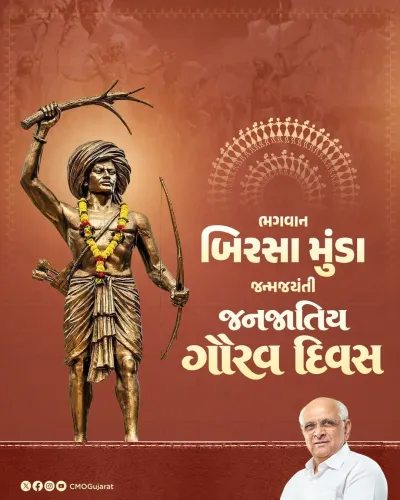
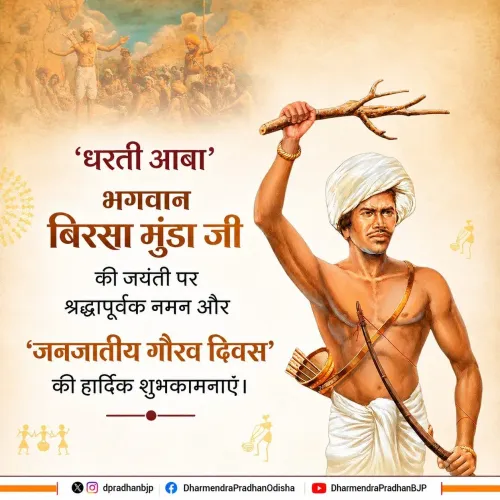
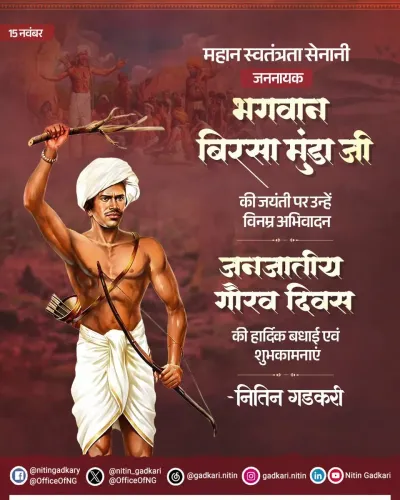
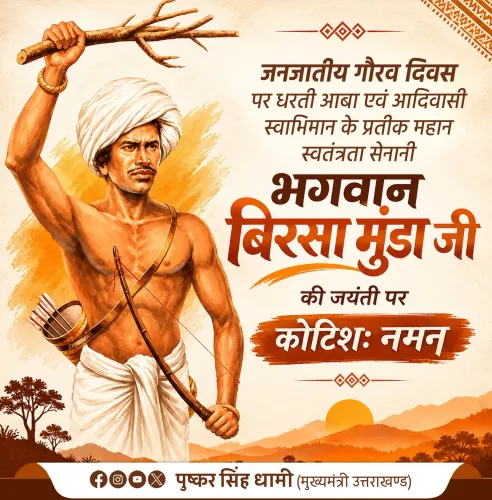
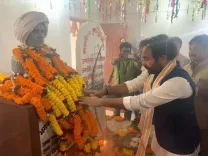
Amit Shah Pays Tribute to Birsa Munda on Janjatiya Gaurav Divas
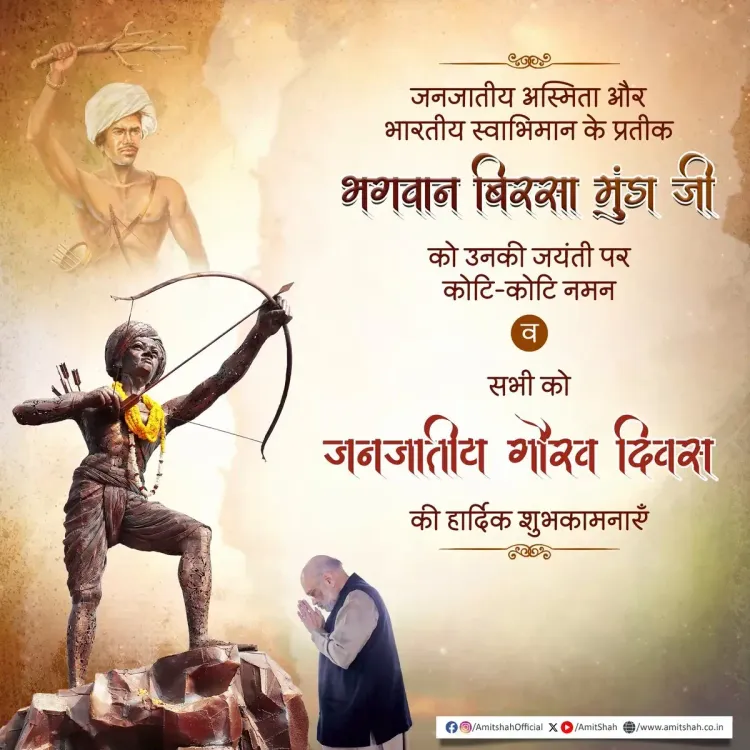
Synopsis
Union Home Minister Amit Shah on 15 November 2026 paid tribute to tribal freedom fighter Birsa Munda on his birth anniversary, observed nationally as Janjatiya Gaurav Divas since 2021, honouring the Ulgulan movement and its legacy of tribal pride and resistance.
Key Takeaways
Union Home Minister Amit Shah posted a tribute to Birsa Munda on 15 November 2026 , his birth anniversary.
The day is observed as Janjatiya Gaurav Divas , formally declared by the Government of India in November 2021 .
Birsa Munda (1875–1900) led the Ulgulan ('Great Tumult') — a tribal uprising against British colonial authority in the Chota Nagpur region.
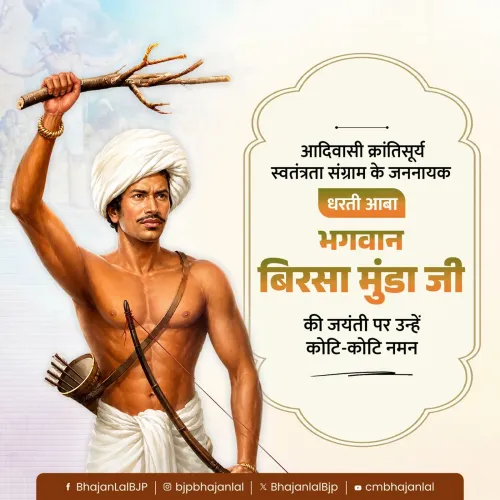
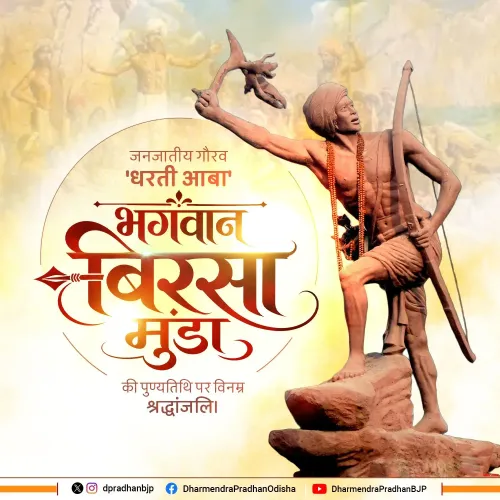
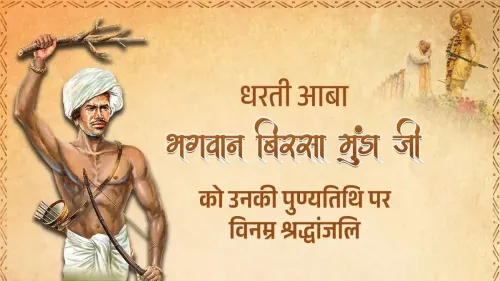
Shah referred to Birsa Munda as 'Dharti Aaba' — 'Father of the Earth' — and called him 'a symbol of unparalleled courage and patriotism.' The observance is part of a broader central government effort to integrate Adivasi leaders into India's mainstream freedom-struggle narrative.
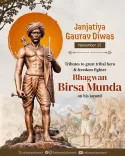
A young tribal leader who shook the foundations of British colonial rule before dying at just 25 — Birsa Munda endures as one of India's most defiant freedom fighters, and on Sunday, 15 November 2026, Union Home Minister Amit Shah marked his birth anniversary with a tribute honouring both the man and the movement he ignited.
In his post, Shah saluted Birsa Munda as 'Dharti Aaba' — 'Father of the Earth' — a title of reverence used by tribal communities, calling him 'a symbol of unparalleled courage and patriotism.' He extended warm wishes to fellow citizens on Janjatiya Gaurav Divas, the annual tribal pride observance held every 15 November.
Who Was Birsa Munda — and Why the Ulgulan Still Resonates
Born in 1875 in the Chota Nagpur region — present-day Jharkhand — Birsa Munda led the Munda tribal community at a time when both British administrators and local landlords were systematically stripping tribal land rights. His answer was the Ulgulan, or 'Great Tumult' — an uprising that fused socio-religious awakening with armed resistance. It was not simply a revolt; it was a demand for dignity.
Shah's post captures that dual character precisely: Birsa Munda, he wrote, 'awakened self-respect and consciousness in tribal society' on one hand, and 'sounded the bugle of revolution against British rule through the Ulgulan movement to protect indigenous culture and the motherland' on the other. He died in British custody in 1900, but the movement he sparked shaped the political geography of the region for generations.
From Declaration to Annual Observance: How Janjatiya Gaurav Divas Became Official
In November 2021, the Government of India formally declared 15 November as Janjatiya Gaurav Divas, anchoring the date to Birsa Munda's birth anniversary and recognising the broader contributions of tribal freedom fighters to India's independence movement. The move was framed as an overdue correction — restoring Adivasi leaders to the national narrative of the freedom struggle alongside figures who had long dominated history textbooks.
The observance has since become a fixture in the government's ceremonial calendar, with public events, scheme announcements, and commemorative activities scheduled around it each year. Shah's tribute this year continues that pattern, reinforcing the central government's sustained emphasis on integrating tribal history into India's mainstream public memory.
A Life Story That Still Teaches
Shah closed his tribute with a line that frames Birsa Munda not as a figure frozen in the past but as an active instruction for the present: his life story, Shah wrote, 'even today inspires us to remain organised for the national interest and to make sacrifices with dedication.' That framing — the tribal revolutionary as a civic model — captures exactly how the government seeks to position Janjatiya Gaurav Divas: less a heritage occasion, more a living call to purpose.
For India's tribal communities, who make up roughly 8-9 percent of the national population, that message lands with particular weight each November — a reminder that the country's freedom story was not written in one language, one region, or one kind of courage alone.
Point of View
Which is spread across key states including Jharkhand, Chhattisgarh, Madhya Pradesh, and Odisha. By consistently invoking Birsa Munda as a national hero — rather than a regional or community-specific figure — the BJP has worked to broaden the symbolic ownership of tribal history beyond any single party or movement. The framing of the Ulgulan as a precursor to the broader independence struggle positions tribal sacrifice within the national mainstream, lending the observance policy weight beyond mere ceremony. Whether that symbolic investment translates into measurable gains on tribal land rights, forest access, or development outcomes remains the sharper test of its significance.
NationPress
15 Nov 2026
Frequently Asked Questions
What is Janjatiya Gaurav Divas and when is it observed?
Janjatiya Gaurav Divas is an annual national observance on 15 November , coinciding with the birth anniversary of tribal freedom fighter Birsa Munda . It was formally declared by the Government of India in November 2021 to honour the contributions of tribal communities and freedom fighters to India's independence struggle.
Who was Birsa Munda and why is he called Dharti Aaba?
Birsa Munda (1875–1900) was a Munda tribal leader from the Chota Nagpur region who led the Ulgulan uprising against British colonial rule and landlord exploitation. He is called 'Dharti Aaba' — meaning 'Father of the Earth' — by tribal communities as a title of deep reverence for his role as a spiritual and political leader.
What was the Ulgulan movement?
The Ulgulan , meaning 'Great Tumult,' was a late-19th-century tribal uprising led by Birsa Munda in present-day Jharkhand . It combined socio-religious reform with armed resistance to British authority and landlord exploitation, making it one of the most significant tribal revolts in Indian colonial history.
What did Amit Shah say about Birsa Munda on 15 November 2026?
Union Home Minister Amit Shah paid tribute to Birsa Munda, calling him 'a symbol of unparalleled courage and patriotism.' He said Birsa Munda 'awakened self-respect and consciousness in tribal society' and 'sounded the bugle of revolution against British rule through the Ulgulan movement.' Shah also extended wishes to all citizens on Janjatiya Gaurav Divas .
Why did the Indian government declare 15 November as Janjatiya Gaurav Divas?
The Government of India declared 15 November as Janjatiya Gaurav Divas in November 2021 to recognise and honour the contributions of tribal freedom fighters — beginning with Birsa Munda's birth anniversary — and to integrate Adivasi history more prominently into India's national freedom-struggle narrative.