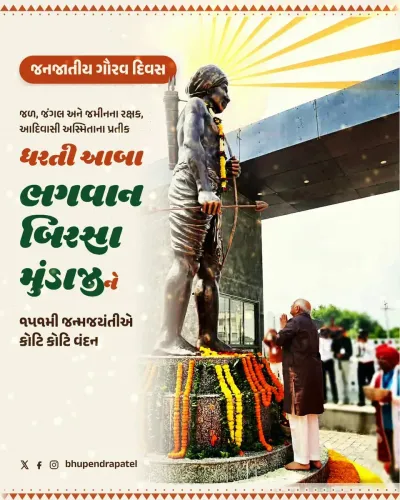
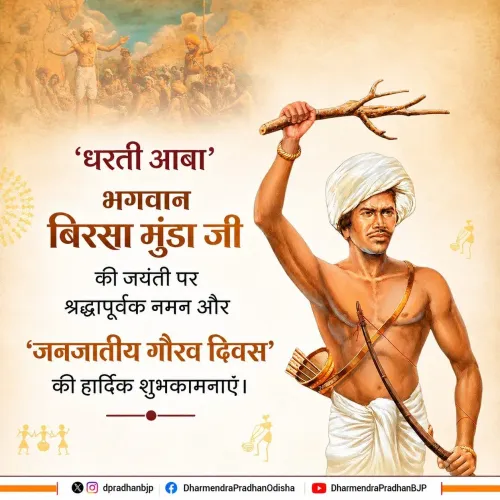
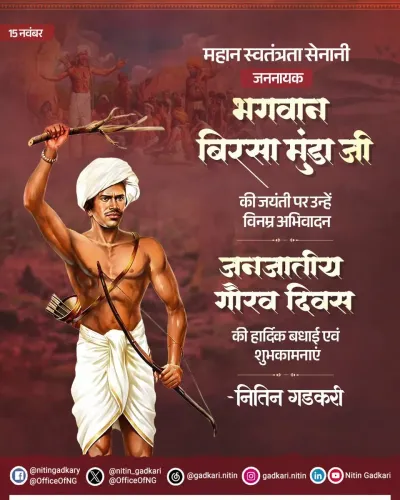
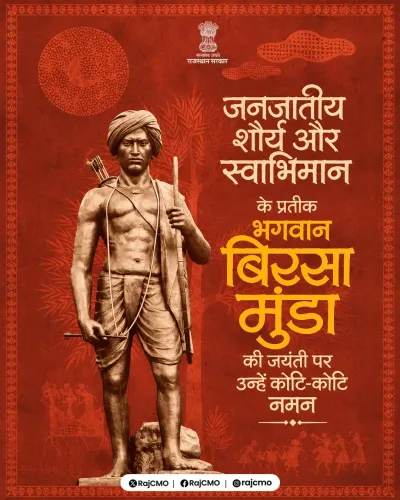
Rajnath Singh honours Birsa Munda on 151st birth anniversary
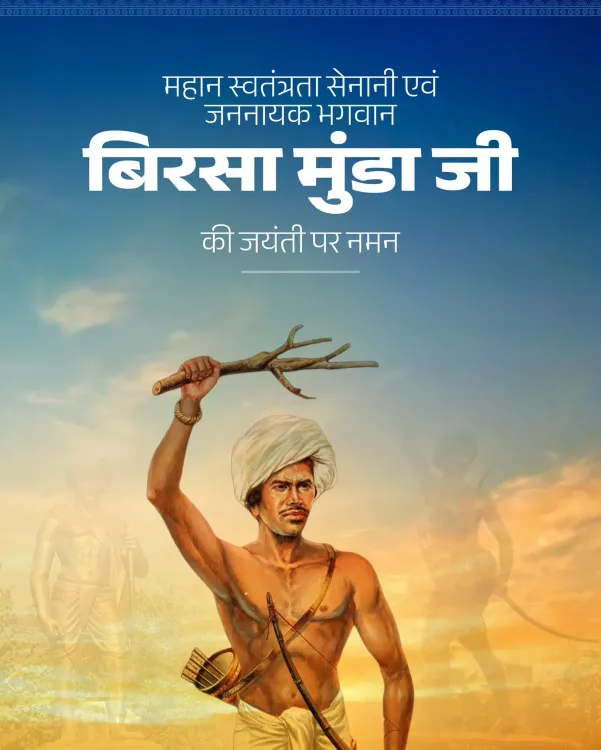
Synopsis
Defence Minister Rajnath Singh honoured Bhagwan Birsa Munda on his 151st birth anniversary on 15 November 2026, calling his life an 'unparalleled saga of courage,' and greeted the nation on Janjatiya Gaurav Divas, the national tribal commemoration established by PM Modi in 2021.
Key Takeaways
Rajnath Singh paid tribute to Bhagwan Birsa Munda on his 151st birth anniversary , 15 November 2026 .
Singh described Birsa Munda's life as a saga of 'indomitable courage, self-respect, and dedication to the motherland.' Janjatiya Gaurav Divas was established by the Modi government in 2021 to nationally honour tribal leaders and their role in India's history.
Birsa Munda , known as Dhartee Aaba , led the Ulgulan resistance against British colonial land-alienation policies in the Chota Nagpur region in the 1890s.
The observance is now in its sixth year , with programmes across tribal-majority states including Jharkhand, Odisha, and Chhattisgarh .
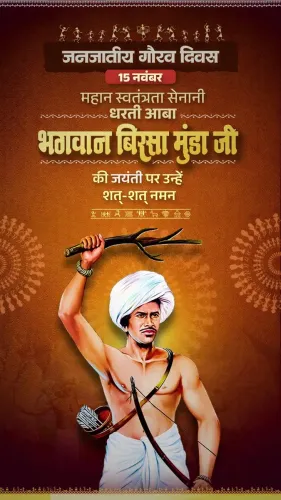
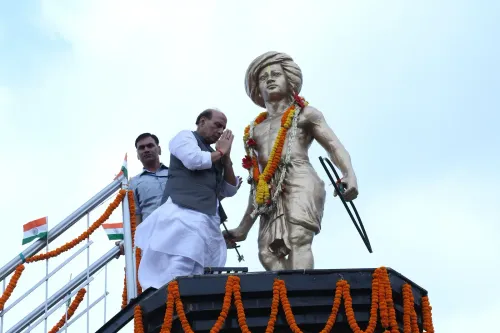
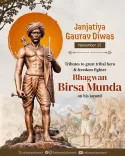
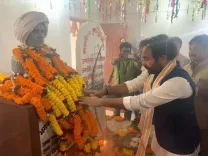
A tribal freedom fighter who took on the British Empire with nothing but conviction and a battle cry is being remembered today — 151 years after his birth. Union Defence Minister Rajnath Singh paid tribute to Bhagwan Birsa Munda on Sunday, 15 November 2026, marking both the icon's birth anniversary and the national observance of Janjatiya Gaurav Divas.
Singh's post offered a sweeping tribute in Hindi, calling Birsa Munda's life 'adamya sahas, swabhimaan aur matrubhumi ke prati samarpan ki anupam gatha' — 'an unparalleled saga of indomitable courage, self-respect, and dedication to the motherland.' He praised Birsa Munda for raising his voice against British exploitation and for fighting to protect the identity and rights of tribal society.
Who was Dhartee Aaba — the 'Father of the Earth'
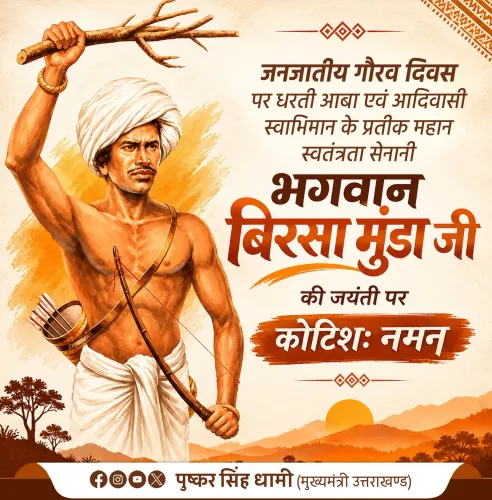
Bhagwan Birsa Munda, reverentially addressed as Dhartee Aaba ('Father of the Earth'), was born on 15 November 1875 in the Chota Nagpur region of present-day Jharkhand. A leader of the Munda tribal community, he organised resistance against British colonial land-alienation policies and the exploitation of Adivasi communities in the 1890s. His movement, known as the Ulgulan ('The Great Tumult'), forced colonial administrators to reckon with indigenous land rights. He died in British custody in 1900, aged just 25 — but left behind a legacy that tribal communities across India still invoke.
Janjatiya Gaurav Divas: from 2021 to a national fixture
Singh noted in his post that it was under Prime Minister Narendra Modi that Birsa Munda's birth anniversary was formally declared Janjatiya Gaurav Divas starting 2021. The day is designed to give national recognition to the contributions of India's tribal heroes — leaders who, for decades, occupied the margins of official freedom-struggle narratives. The Defence Minister extended warm wishes to all on the occasion, writing that Birsa Munda's life and ideals 'will continue to inspire generations to stand against injustice, take pride in their culture, and fulfil their duties to the nation.'
The observance is now in its sixth year, and has steadily grown into a fixture on India's official commemorative calendar — with central and state government programmes held across tribal-majority regions of Jharkhand, Odisha, Chhattisgarh, and Madhya Pradesh.
One hundred and fifty-one years on, a young man from Chota Nagpur who refused to accept colonial rule is recognised at the highest levels of the Indian state — a measure of how profoundly the terms of national memory can shift.
Point of View
The outreach signals continued attention to tribal constituencies, particularly in states like Jharkhand and Chhattisgarh where Adivasi voters are electorally significant. Over six years, Janjatiya Gaurav Divas has evolved from a new policy announcement into a durable fixture of official commemoration, suggesting the reframing of tribal contributions to India's freedom struggle is intended to be permanent.
NationPress
15 Nov 2026
Frequently Asked Questions
Who was Bhagwan Birsa Munda?
Bhagwan Birsa Munda was a tribal leader from the Munda community born on 15 November 1875 in the Chota Nagpur region. He led the 'Ulgulan' resistance movement against British colonial land-alienation policies in the 1890s and is revered as 'Dhartee Aaba' — Father of the Earth.
What is Janjatiya Gaurav Divas and when was it started?
Janjatiya Gaurav Divas is a national observance held every year on 15 November to honour tribal heroes and their contributions to India's history. It was established by the Government of India under Prime Minister Narendra Modi starting in 2021.
Why is 15 November significant for India's tribal communities?
15 November is the birth anniversary of Bhagwan Birsa Munda, one of the most revered tribal leaders in Indian history. Since 2021 the date has also been observed as Janjatiya Gaurav Divas, making it a day of national recognition for Adivasi contributions to the freedom struggle.
What did Rajnath Singh say about Birsa Munda?
Union Defence Minister Rajnath Singh called Birsa Munda's life 'an unparalleled saga of indomitable courage, self-respect, and dedication to the motherland.' He said Birsa Munda's ideals would continue to inspire generations to stand against injustice and take pride in their culture.
What is the Ulgulan movement?
The Ulgulan, meaning 'The Great Tumult,' was the tribal resistance movement led by Birsa Munda in the Chota Nagpur region in the 1890s. It challenged British colonial land policies that dispossessed Adivasi communities and pressured colonial authorities to address indigenous land rights.