CM Dhami pays tribute to Vinoba Bhave on his death anniversary
Synopsis
Uttarakhand CM Pushkar Singh Dhami marked Acharya Vinoba Bhave's death anniversary on 15 November, honouring the Bhoodan movement founder's lifelong dedication to non-violence, Sarvodaya, and land equity for India's poor.
Key Takeaways
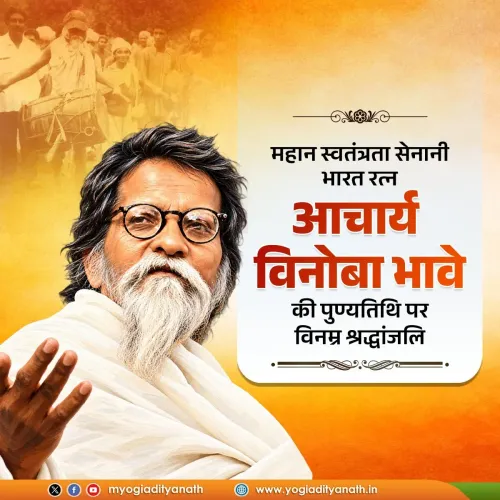
Uttarakhand CM Pushkar Singh Dhami paid tribute to Acharya Vinoba Bhave on his punyatithi , 15 November 2026 .
Bhave, born in 1895 , was a close associate of Mahatma Gandhi and a leading freedom fighter and social reformer.
He founded the Bhoodan (land-gift) movement in 1951 , which sought voluntary land redistribution for the landless poor across India.
His philosophy of Sarvodaya — welfare of all — advocated non-violence, rural self-rule, and economic decentralisation.
Indian political leaders across parties observe Bhave's death anniversary annually, reflecting his enduring place in the national conscience.
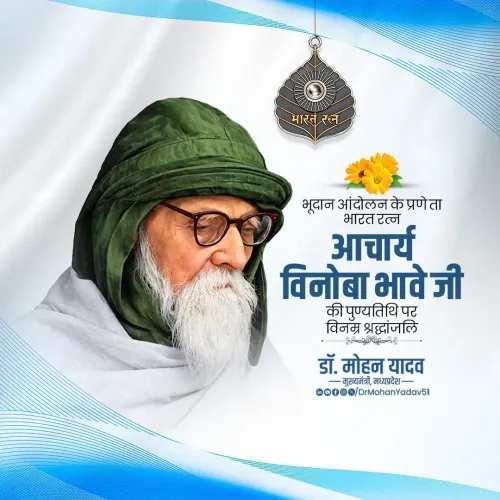
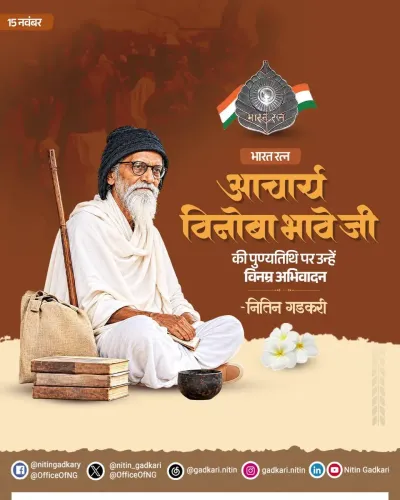
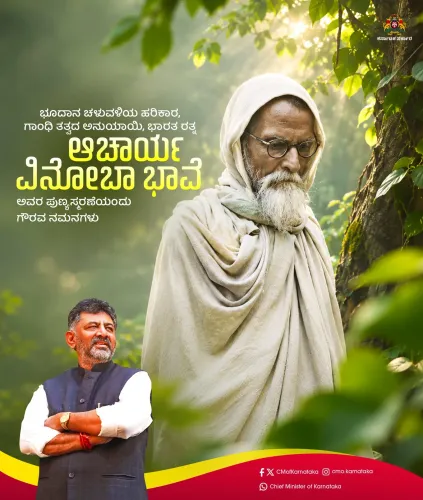
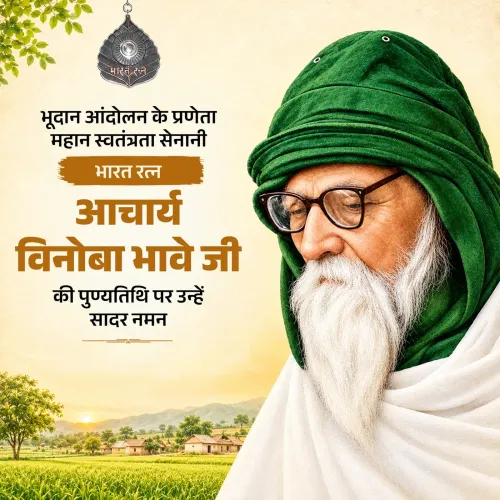
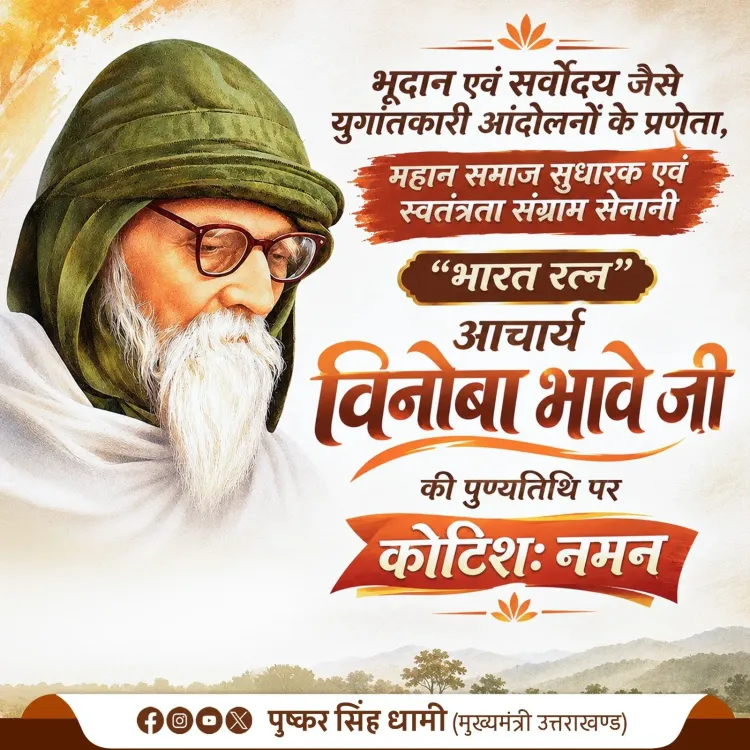
On the death anniversary of one of India's most consequential Gandhian thinkers, Uttarakhand Chief Minister Pushkar Singh Dhami offered tribute on Sunday, 15 November 2026 to Acharya Vinoba Bhave — freedom fighter, social reformer, and the man whose Bhoodan movement reshaped the conversation on land equity in post-independence India.
CM Dhami's post, written in Hindi, reads: 'Mahan swatantrata senani, samaj sudharak evam adhyatmik chintак Acharya Vinoba Bhave ji ki punyatithi par kotishः naman.' — 'Countless salutations on the death anniversary of the great freedom fighter, social reformer and spiritual thinker Acharya Vinoba Bhave.' He noted that Bhave's entire life was dedicated to social service, non-violence, truth, Sarvodaya, and human welfare.
The man behind the Bhoodan movement
Acharya Vinoba Bhave, born in 1895, was among Mahatma Gandhi's closest associates and emerged as one of post-independence India's most original moral voices. In 1951, walking through the villages of Telangana, he launched the Bhoodan movement — a voluntary land-gift campaign that called on landlords to donate a portion of their land to the landless poor. It was a radical, non-coercive attempt to address rural inequality without legislation or force.
The movement eventually collected millions of acres in pledges across India, making it one of the largest voluntary land redistribution efforts in human history. Bhave's philosophy of Sarvodaya — the welfare of all — drew directly from Gandhian thought but extended it into new terrain: economic decentralisation, spiritual self-sufficiency, and gram swaraj (village self-rule).
A tribute across the political spectrum
Indian political leaders across parties observe Bhave's punyatithi (death anniversary) each 15 November — a reflection of how thoroughly his values of non-violence, rural equity, and selfless service have entered India's national conscience. CM Dhami's tribute underscores that Bhave's legacy remains a touchstone, invoked not just as history but as living inspiration for public service.
Bhave's ideas carry quiet relevance in a country still grappling with land rights, agrarian distress, and the tension between rapid development and rural welfare. His insistence that moral persuasion — not coercion — could move society remains a standard by which public life is still measured.
The Chief Minister's tribute closes with a note that rings true across generations: Bhave's thoughts, he writes, 'will always remain a source of inspiration for all of us.' That is the enduring power of a life lived entirely in service — it keeps demanding to be remembered.
Point of View
Invoking Bhave's Sarvodaya and Bhoodan legacy — rooted in grassroots equity and non-coercive reform — is a reminder that the party's 'Antyodaya' (last-person-first) social agenda draws from the same well. These anniversaries also quietly frame development narratives: land rights, rural welfare, and voluntary community action remain live policy terrain, and Bhave's memory lends them moral weight.
NationPress
15 Nov 2026
Frequently Asked Questions
When is Vinoba Bhave's death anniversary?
Acharya Vinoba Bhave's death anniversary, known as his punyatithi , falls on 15 November each year.
What was the Bhoodan movement started by Vinoba Bhave?
The Bhoodan (land-gift) movement was launched by Vinoba Bhave in 1951 in Telangana. It was a voluntary campaign urging landowners to donate a share of their land to landless villagers, becoming one of the largest non-coercive land redistribution efforts in history.
What is Sarvodaya and how is it linked to Vinoba Bhave?
Sarvodaya means 'welfare of all' and was a core philosophy of Vinoba Bhave, extending Mahatma Gandhi's ideas into economic decentralisation, village self-rule, and spiritual self-sufficiency.
What did CM Dhami say about Vinoba Bhave?
CM Dhami described Vinoba Bhave as a 'great freedom fighter, social reformer and spiritual thinker,' and said his entire life was dedicated to social service, non-violence, truth, Sarvodaya, and human welfare.
Why do Indian political leaders pay tribute to Vinoba Bhave?
Vinoba Bhave is widely regarded as one of independent India's greatest moral voices. Leaders across parties honour his anniversary to affirm values of non-violence, rural equity, and selfless public service that cut across political lines.