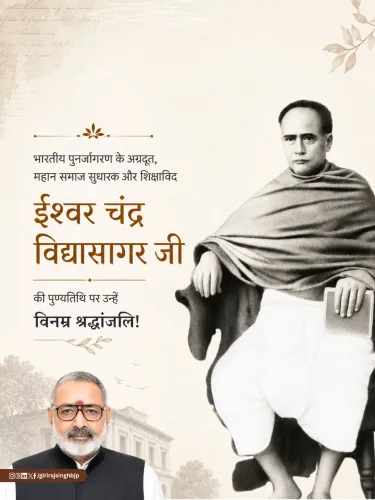
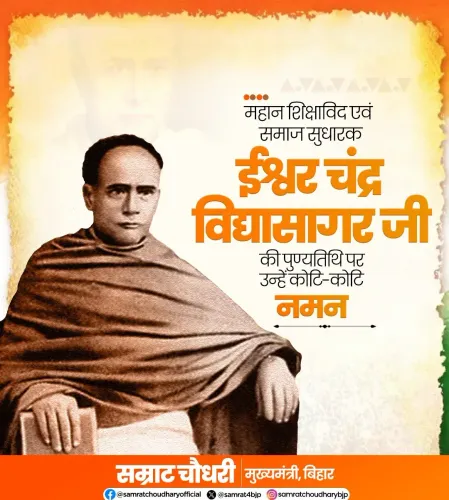
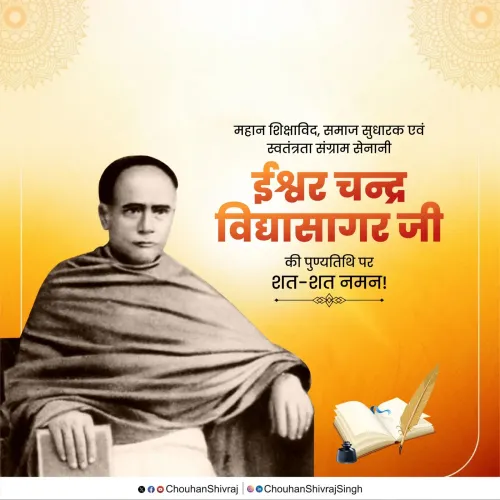
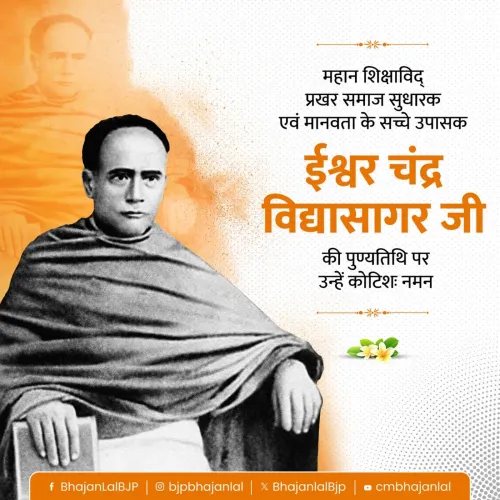
CM Dhami pays tribute to Ishwar Chandra Vidyasagar on death anniversary
Synopsis
Uttarakhand Chief Minister Pushkar Singh Dhami on 29 July 2026 honoured Ishwar Chandra Vidyasagar on his death anniversary, praising the 19th-century reformer's campaigns for widow remarriage, women's education and the eradication of social evils.
Key Takeaways
CM Pushkar Singh Dhami posted a Hindi tribute to Ishwar Chandra Vidyasagar on his death anniversary on 29 July 2026 .
Vidyasagar (1820–1891) was a Bengali polymath who secured the Hindu Widows' Remarriage Act of 1856 — a landmark legal reform.
Dhami praised Vidyasagar's lifelong struggle for social equality, education, humanity and social justice.
The tribute follows a widespread Indian political tradition of publicly honouring 19th-century social reformers on their death anniversaries.
Vidyasagar's legacy — gender justice, access to education, anti-caste reform — remains a live reference point in contemporary Indian public discourse.
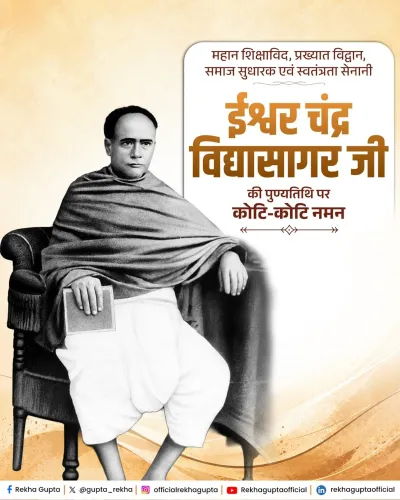
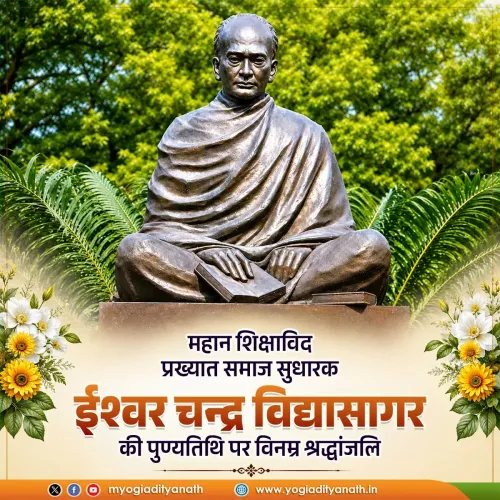
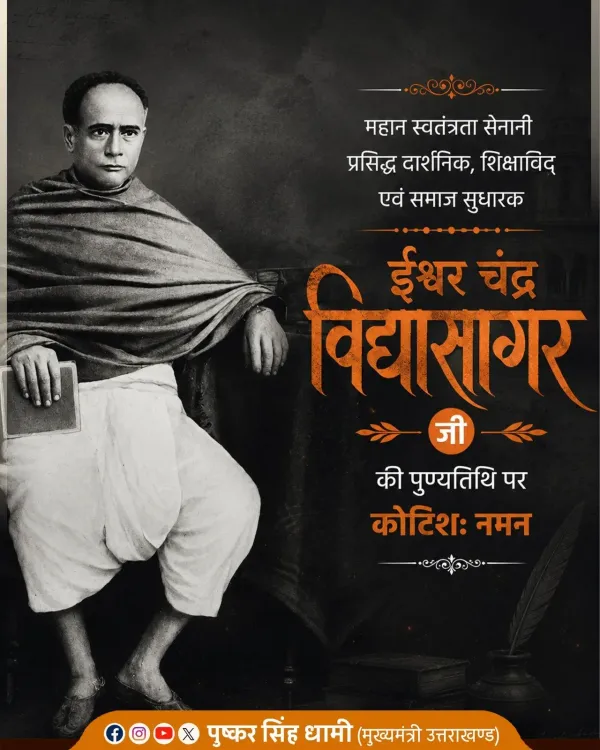
On the death anniversary of one of India's most consequential social reformers, Uttarakhand Chief Minister Pushkar Singh Dhami on Wednesday, 29 July 2026 paid tribute to Ishwar Chandra Vidyasagar, saluting the 19th-century Bengali polymath's lifelong struggle against social inequality and entrenched superstition.
Posting in Hindi, CM Dhami described Vidyasagar as a 'prakhar chintak, vicharak aur mahan samaj sudharak' — a sharp thinker, philosopher and great social reformer — and offered 'kotishaha naman', a crore-fold salute. He wrote that Vidyasagar's ideals around education, humanity and social justice 'will continue to inspire us to build a harmonious, aware and progressive society.'
The reformer who rewrote the rules for women
Ishwar Chandra Vidyasagar (1820–1891) was a Bengali scholar, educator and activist whose campaigns reshaped 19th-century Indian society. His most celebrated victory was the passage of the Hindu Widows' Remarriage Act of 1856, which for the first time gave legal sanction to widow remarriage in India — a battle he waged against fierce orthodox opposition. He also fought to expand girls' education, opposed child marriage and polygamy, and modernised Bengali prose.
Born in Birsingha village, Medinipur district of present-day West Bengal, Vidyasagar rose from poverty to become principal of Sanskrit College, Calcutta, where he broke caste barriers by opening its doors to non-Brahmin students. His pen and his persistence made him a bridge between classical scholarship and modern reform.
A ritual of remembrance with political weight
Indian political leaders across party lines routinely mark the death anniversaries of 19th-century reformers with public tributes. The practice is more than ceremonial — it is a deliberate invocation of historical legitimacy, signalling alignment with the reformers' values of gender justice, education and the eradication of social evils. For a sitting chief minister, naming Vidyasagar places the state's governance aspirations within that progressive lineage.
Vidyasagar's legacy remains sharply relevant in contemporary debates on women's rights, access to education and caste discrimination — themes that cut across political divides and resonate in states far beyond his native Bengal.
Two centuries after his birth, the reformer's insistence that no tradition is sacred enough to justify human suffering continues to set the standard.
Point of View
But the choice of Vidyasagar is notable: his legacy is most strongly associated with Bengal, making his invocation by a BJP chief minister from Uttarakhand a deliberate gesture toward a pan-Indian reformist identity. The emphasis on education and social justice mirrors the ruling party's broader messaging on women's empowerment and social welfare schemes. Such tributes rarely translate into concrete policy announcements, but they serve as soft ideological markers — positioning leaders within a progressive historical continuum that transcends regional and caste politics.
NationPress
13 Sept 2026
Frequently Asked Questions
Who was Ishwar Chandra Vidyasagar?
Ishwar Chandra Vidyasagar (1820–1891) was a Bengali scholar, educator and social reformer best known for championing the Hindu Widows' Remarriage Act of 1856 . He also worked to expand women's education and opposed child marriage and polygamy.
Why did CM Dhami pay tribute to Vidyasagar?
29 July marks Ishwar Chandra Vidyasagar's death anniversary. Uttarakhand Chief Minister Pushkar Singh Dhami posted a Hindi tribute on X honouring the reformer's contributions to education, social equality and the eradication of social evils.
What is Vidyasagar's most important contribution?
Vidyasagar's most celebrated achievement is securing the passage of the Hindu Widows' Remarriage Act of 1856 , which legally permitted widow remarriage in India for the first time, overturning centuries of orthodox opposition.
When did Ishwar Chandra Vidyasagar die?
Ishwar Chandra Vidyasagar died on 29 July 1891 in Calcutta. His death anniversary is observed annually by scholars, social organisations and political leaders across India.
What did CM Dhami say about Vidyasagar?
CM Dhami described Vidyasagar as a 'sharp thinker, philosopher and great social reformer' and said his lifelong struggle for social equality and the eradication of social evils is 'an invaluable source of inspiration for Indian society.'