CM Bhupendra Patel offers Navratri prayers on Shashthi
Synopsis
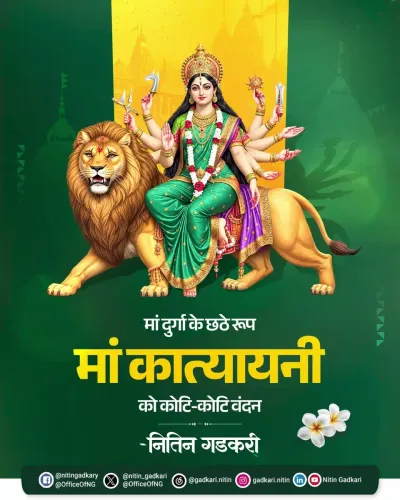
Gujarat Chief Minister Bhupendra Patel marked the sixth night of Navratri 2026 by offering prayers to Maa Katyayani, the warrior form of Goddess Durga, invoking her courage and seeking blessings of fearlessness and righteousness for all devotees.
Key Takeaways
Gujarat CM Bhupendra Patel posted a Navratri greeting on 16 October 2026 , the festival's sixth day.
He paid tribute to Maa Katyayani , the sixth form of Goddess Durga, worshipped on Shashthi.
Maa Katyayani is revered for slaying the demon Mahishasur , symbolising the victory of dharma over evil.
The Chief Minister prayed for the removal of fear, illness, and negativity from devotees' lives.
The post was written in Gujarati and closed with the invocation Jay Ambe .
Navratri is observed with special intensity in Gujarat , home to the celebrated garba tradition.
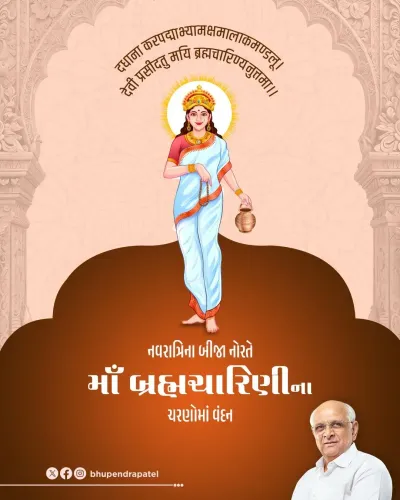
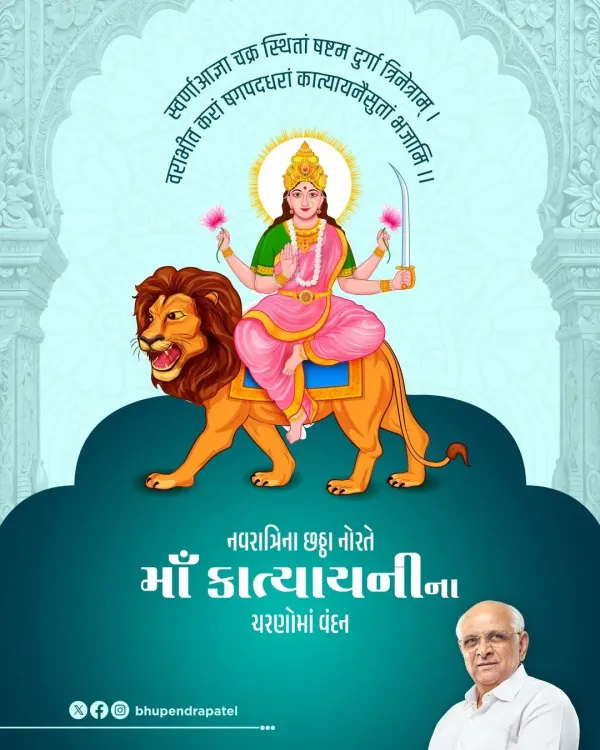
On the sixth day of Navratri, Gujarat Chief Minister Bhupendra Patel paid devotional tribute to Maa Katyayani — the sixth form of Goddess Durga — praying that the deity's boundless courage dispel fear, illness, and negativity from every devotee's life.
Posting in Gujarati on Friday, 16 October 2026, the Chief Minister wrote: 'નવરાત્રિના છઠ્ઠા નોરતે માઁ દુર્ગાના ષષ્ઠ સ્વરૂપ માઁ કાત્યાયનીના ચરણોમાં વંદન' — 'On the sixth night of Navratri, I bow at the feet of Maa Katyayani, the sixth form of Maa Durga.' He invoked the goddess's legendary triumph over the demon Mahishasur as a symbol of undying courage and divine power, and offered a prayer that she lead all people on the path of truth and righteousness.
Maa Katyayani holds a fierce, warrior aspect in the Navratri cycle. Tradition holds that she slew Mahishasur to restore dharma — making her a potent emblem of the festival's deeper narrative: the victory of righteousness over evil. Worshippers on Shashthi (the sixth night) seek her blessings specifically for fearlessness and the removal of adversity.
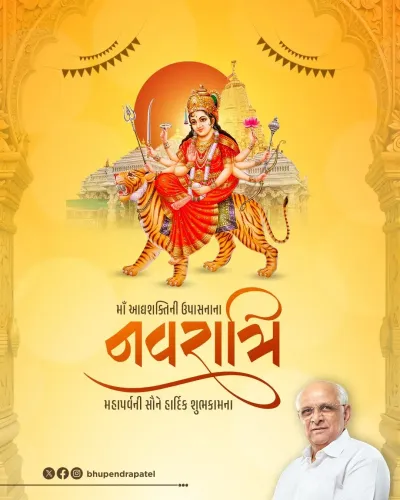
Navratri, the nine-night festival dedicated to the nine forms of Goddess Durga, is observed with particular fervour across Gujarat, where the garba tradition transforms public squares into all-night celebrations of devotion and community. For a sitting chief minister of the state, marking each day's presiding deity is both a cultural touchstone and a gesture of solidarity with millions of observing Gujaratis.
The message closes with the invocation 'જય અંબે' — 'Victory to Ambе' — the rallying cry of Navratri devotees. Three more nights of worship remain before the festival concludes.
Point of View
Where the festival carries both deep religious weight and significant electoral resonance. By specifically invoking Maa Katyayani's role in defeating Mahishasur, Patel's message draws on the festival's moral narrative — dharma protected through courage — rather than offering a generic greeting. The post signals continued attentiveness to Gujarat's dominant cultural calendar, reinforcing the party's long-standing positioning as the custodian of the state's Hindu traditions. With Navratri commanding mass participation across the state, such gestures function as quiet but effective outreach to a vast, culturally engaged electorate.
NationPress
16 Oct 2026
Frequently Asked Questions
Who is Maa Katyayani and why is she worshipped on the sixth day of Navratri?
Maa Katyayani is the sixth form of Goddess Durga, honoured on Shashthi — the sixth night of Navratri. She is celebrated as a fierce warrior goddess who slew the demon Mahishasur, and devotees seek her blessings for courage, fearlessness, and the removal of obstacles.
What did Gujarat CM Bhupendra Patel post on Navratri 2026?
On 16 October 2026, CM Bhupendra Patel posted a Gujarati message paying tribute to Maa Katyayani, praying that she destroy fear, illness, and negativity and guide people on the path of truth and righteousness.
What is the significance of Navratri in Gujarat?
Navratri is among the most important festivals in Gujarat. Beyond religious observance, the state is globally renowned for its garba dance tradition, which draws millions of participants and transforms communities into days-long celebrations of devotion.
What does 'Jay Ambe' mean?
'Jay Ambe' translates as 'Victory to Ambe' or 'Glory to the Mother Goddess.' It is a common devotional invocation used during Navratri across Gujarat and other parts of India.
Do Indian political leaders commonly post Navratri messages?
Yes. Chief ministers and senior political figures across parties routinely issue day-by-day Navratri greetings honouring each form of the goddess. It is a standard part of public engagement with the festival calendar, especially in states like Gujarat where Navratri holds deep cultural significance.