KTR Blames Congress for Telangana Water Crisis
Synopsis
BRS working president K. T. Rama Rao has accused Telangana's Congress government of releasing over 750 TMC of Godavari and 250 TMC of Krishna water downstream since June 2026, ignoring El Niño warnings and allowing Andhra Pradesh to divert the flows via Pattiseema and Veligonda.
Key Takeaways
BRS working president K.
Rama Rao on October 16, 2026 accused the Telangana Congress government of engineering a man-made water scarcity.
He claims 750+ TMC of Godavari water and 250 TMC of Krishna water were released downstream between June 1 and October 16, 2026 — these figures are unverified in public records.
KTR alleges the Kannepalli, Devadula (Godavari) and Palamuru-Rangareddy (Krishna) pump stations were not operated to fill reservoirs even when river flows were available.
Climate experts had warned of an El Niño event from March 2026 , giving the government time to pre-fill storage — a warning Rama Rao says was ignored.
Andhra Pradesh is alleged to have diverted the released water via Pattiseema, Potheriddi Padu and the Veligonda Tunnel , including to Kuppam .
The post is part of a coordinated BRS campaign under the hashtags #CongressBetrayedTelangana and #CongressFailedTelangana .
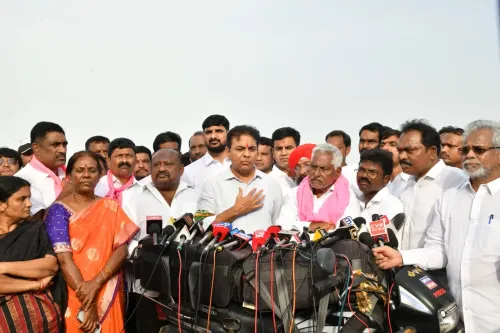
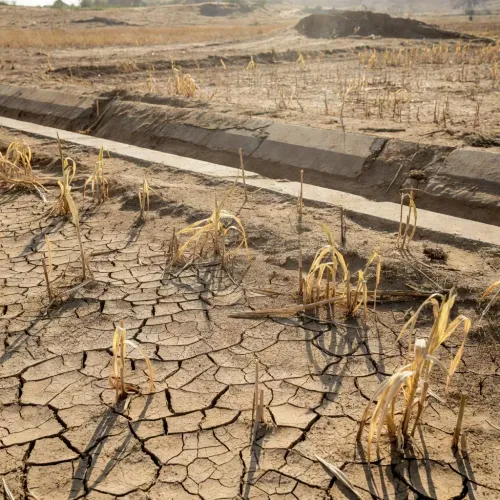
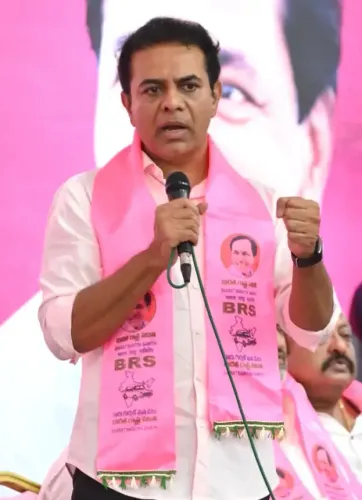
A drought born not of clouds but of choices — that is the charge BRS working president K. T. Rama Rao levelled at the Telangana Congress government on Friday, October 16, 2026, in a blistering post that has reignited the state's sharpest political flashpoint: who lost the water?
The Numbers at the Centre of the Storm
Rama Rao's post, written in Telugu, opens with a pointed line: 'కాలం తెచ్చిన కరువు కాదు.. కాంగ్రెస్ తెచ్చిన కరువు ఇది!!' — 'This is not a drought brought by time.. this is a drought brought by Congress!!' He claims that from June 1, 2026 to the date of his post, the state government released over 750 TMC of Godavari water and 250 TMC of Krishna water downstream without storing it. The research block flags these specific volumes as unverified from public records, but the political salvo is unambiguous.
The allegation is layered: Rama Rao argues the Kannepalli and Devadula pump stations on the Godavari — infrastructure built under the previous BRS regime — were not operated effectively to fill reservoirs and tanks even when river flows were available. He makes the same case for the Palamuru-Rangareddy Lift Irrigation Scheme on the Krishna, claiming its pumps were left idle while Krishna water flowed unused downstream.
El Niño Warnings That Went Unheeded
The post adds a forward-looking dimension to the critique: climate scientists had been warning since March 2026 of an incoming El Niño event, the periodic Pacific warming pattern that typically suppresses monsoon rainfall over peninsular India. Rama Rao's argument is that a government forewarned had no excuse — reservoirs and tanks could have been pre-filled during the window when rivers were running, but the administration did not act.
El Niño-linked forecasts have shaped political rhetoric around irrigation planning in the region before. In deficit years, the question of who operated which pump and when becomes intensely consequential for millions of farmers dependent on lift irrigation.
Andhra Pradesh Steps In — and Kupp am Gets Water
The sharpest passage in the post targets the downstream beneficiary. Rama Rao alleges that the moment Telangana's Congress government released the water, the Andhra Pradesh government moved quickly — drawing Godavari water through the Pattiseema Lift Irrigation Scheme and Krishna water via the Potheriddi Padu and Veligonda Tunnel — and even channelling flows to Kuppam, the constituency of AP Chief Minister N. Chandrababu Naidu. The insinuation is deliberate and politically loaded: water that Telangana farmers needed ended up irrigating a rival state's prized political geography.
Inter-state water disputes between the two states have simmered since the 2014 Andhra Pradesh Reorganisation Act created the Krishna and Godavari River Management Boards to adjudicate post-bifurcation allocations. Those boards remain the formal arbiter of releases; neither has yet issued a public response to the figures cited in Rama Rao's post.
BRS's Political Play in the Opposition Trenches
For the BRS, water is the sharpest available blade in opposition politics. The party staked much of its decade in power on mega irrigation projects — Kaleshwaram chief among them — to prove that Telangana could store and utilise its river share. Attacking the Congress government for failing to operate that same infrastructure closes a rhetorical loop: we built it, you squandered it.
The hashtags #CongressBetrayedTelangana and #CongressFailedTelangana signal a coordinated digital push, not a one-off comment. With the rabi sowing season approaching and reservoir levels under scrutiny, expect the Krishna and Godavari River Management Boards' next operational data release to become the next battleground.
Point of View
BRS reclaims ownership of the irrigation legacy it built while forcing the Congress government to defend its operational decisions on lift pumps and reservoir management. The Kuppam reference is the sharpest edge: it ties the alleged waste to Andhra Pradesh's ruling party geography, weaving inter-state rivalry into intra-state electoral grievance. With El Niño potentially compressing the next kharif season's options, the water narrative could define Telangana's political mood well into 2027.
NationPress
16 Oct 2026
Frequently Asked Questions
What is KTR accusing the Telangana Congress government of doing with river water?
K. T. Rama Rao accuses the Telangana Congress government of releasing over 750 TMC of Godavari water and 250 TMC of Krishna water downstream since June 1, 2026, without using available pump stations to fill reservoirs — leaving the state water-scarce while Andhra Pradesh diverted the flows.
What is the Palamuru-Rangareddy Lift Irrigation Scheme?
Palamuru-Rangareddy Lift Irrigation Scheme is a Krishna river-based project designed to supply water to the drought-prone southern districts of Telangana. KTR alleges its pumps were not switched on, causing Krishna water to flow unused into Andhra Pradesh.
Why is Kuppam mentioned in KTR's post about Telangana water?
KTR alleges that after Telangana's Congress government released Krishna water downstream, the Andhra Pradesh government diverted it — including to Kuppam, the home constituency of AP Chief Minister N. Chandrababu Naidu — implying political favoritism benefited a rival state.
What is El Niño and why is it relevant to Telangana's water crisis?
El Niño is a periodic Pacific Ocean warming event that typically reduces monsoon rainfall over peninsular India. KTR's post says meteorologists warned of its onset from March 2026, arguing the Telangana government had ample time to pre-fill reservoirs but failed to act.
What is the Pattiseema Lift Irrigation Scheme?
Pattiseema is an Andhra Pradesh project that lifts Godavari water and diverts it into the Krishna river basin. KTR alleges AP used it to capture Godavari water that Telangana's Congress government released downstream without storing.