Piyush Goyal launches NSTCC, pushes ease of doing business reforms
Synopsis
India's Commerce Minister Piyush Goyal has launched the National Strategic Trade Command Centre — a real-time trade analytics platform — and simultaneously called for weekly Inter-Ministerial Committee meetings to clear the SCOMET backlog. Together, these moves signal a shift from ad hoc trade governance to data-driven accountability, with significant implications for high-technology exporters and India's broader FTA strategy.
Key Takeaways
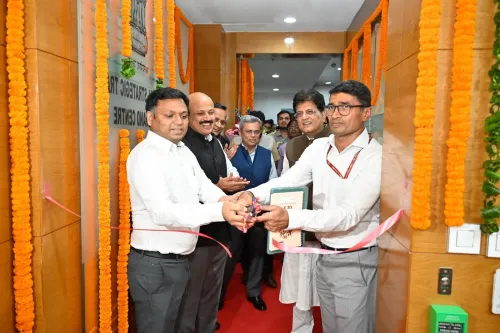
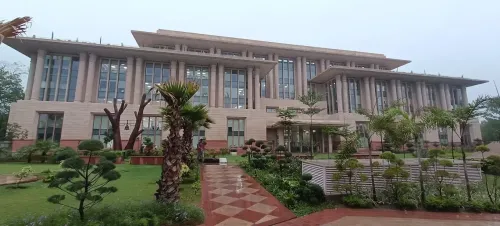
Commerce Minister Piyush Goyal launched the National Strategic Trade Command Centre (NSTCC) at Vanijya Bhawan, New Delhi on 16 October 2026 .
The NSTCC consolidates trade data across export promotion schemes, regulatory approvals, application processing, and operational indicators for senior policymakers.
Goyal called for the Inter-Ministerial Committee to meet weekly to clear the backlog of pending SCOMET applications.
The review meeting also covered time-bound decision-making, streamlined compliance requirements, and deeper utilisation of India's free trade agreements (FTAs) .
The NSTCC is designed around three pillars: consolidated trade visibility, performance benchmarking, and policy simplification through bottleneck identification.
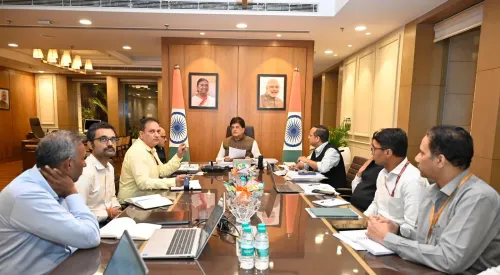
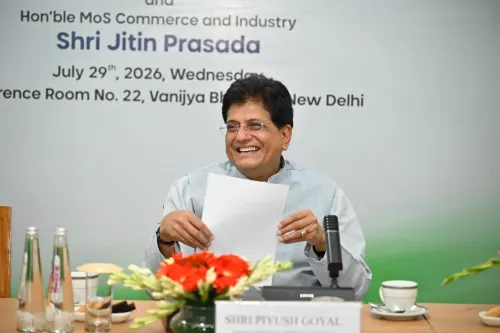
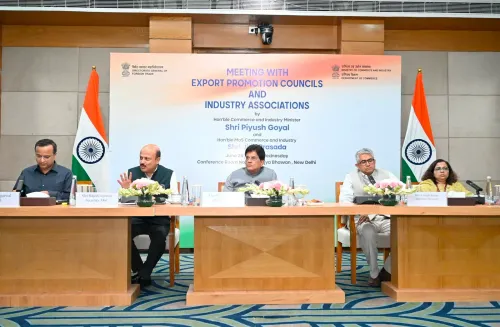
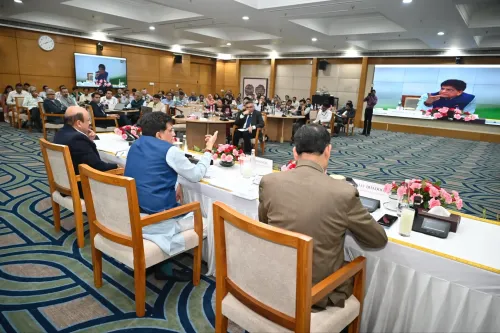
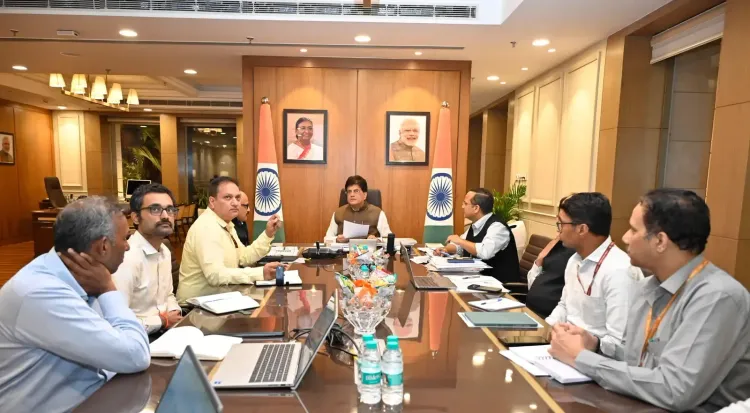
Commerce and Industry Minister Piyush Goyal on 16 October 2026 chaired a high-level review meeting at Vanijya Bhawan, New Delhi, focusing on sweeping reforms to India's trade and commerce administration — including time-bound decision-making, simplified industrial clearances, and deeper utilisation of free trade agreements (FTAs). The meeting came on the heels of his launch of the National Strategic Trade Command Centre (NSTCC), a centralised platform designed to bring data-driven governance to India's international trade ecosystem.
What the NSTCC Is and Why It Was Launched
The NSTCC, unveiled at Vanijya Bhawan, consolidates information from multiple trade-related systems to give senior policymakers a unified view of India's trade performance. The platform covers export promotion schemes, regulatory approvals, application processing, and key operational indicators. By integrating data across national trade performance, regional authorities, schemes, products, destination markets and individual applications — subject to role-based access — the Centre is designed to flag emerging trends, operational bottlenecks, and areas requiring policy or administrative action.
Three Pillars of Trade Governance
According to an official statement, the NSTCC is built around three core functions. First, it provides consolidated visibility into trade trends, application pendency and emerging risks, enabling faster identification and resolution of operational issues. Second, it facilitates monitoring and benchmarking of schemes, processes and regional authorities against defined performance indicators to surface gaps and improvement opportunities. Third, it supports policy simplification by identifying recurring bottlenecks, procedural complexities and shifting trade patterns to guide targeted facilitation measures.
SCOMET Backlog: Goyal Calls for Weekly Meetings
During a dedicated review of the SCOMET (Special Chemicals, Organisms, Materials, Equipment and Technologies) dashboard, Goyal called for the Inter-Ministerial Committee to meet regularly — weekly if required — to clear the backlog of pending applications and ensure expeditious processing. SCOMET controls govern dual-use items with strategic and security implications, and delays in clearances have long been flagged by exporters as a friction point in high-technology trade.
Ease of Doing Business and Export Support
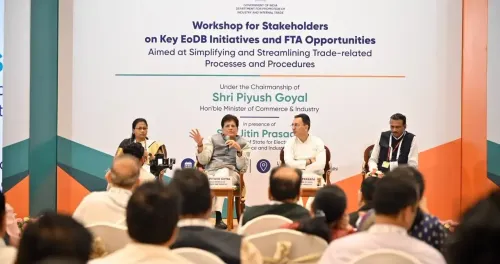
Beyond the NSTCC launch, the review meeting deliberated on opportunities to strengthen export support mechanisms, deepen industry and stakeholder engagement, and maximise India's gains from its growing FTA network. Goyal emphasised streamlining compliance requirements and exploring innovative approaches to ease the regulatory burden on industry. This comes amid sustained government efforts to improve India's global ranking on business ease metrics and scale up merchandise and services exports.
With the NSTCC now operational, the immediate focus will be on translating real-time data insights into faster clearances and measurable improvements in trade facilitation — a test of whether India's governance infrastructure can keep pace with its export ambitions.
Point of View
But its value will hinge entirely on what happens after the dashboard lights up. India has a documented history of building monitoring systems that generate reports without generating accountability. The real signal here is Goyal's demand for weekly SCOMET committee meetings — SCOMET delays have quietly constrained India's defence and deep-tech export ambitions for years, and a minister willing to hold weekly reviews is a meaningful shift in cadence. The harder question is whether the Inter-Ministerial Committee has the authority and the will to override bureaucratic caution on dual-use clearances, or whether 'weekly meetings' simply means weekly deferrals dressed up as process.
NationPress
16 Oct 2026
Frequently Asked Questions
What is the National Strategic Trade Command Centre (NSTCC)?
The NSTCC is a centralised trade governance platform launched by Commerce Minister Piyush Goyal at Vanijya Bhawan, New Delhi, on 16 October 2026. It consolidates data from multiple trade systems to give senior policymakers a unified view of India's trade performance, export scheme utilisation, and application processing status.
What is SCOMET and why is the backlog significant?
SCOMET stands for Special Chemicals, Organisms, Materials, Equipment and Technologies — India's export control regime for dual-use and strategically sensitive items. A backlog in SCOMET clearances directly delays high-technology and defence-related exports; Goyal called for weekly Inter-Ministerial Committee meetings specifically to clear this backlog.
How does the NSTCC improve ease of doing business?
The platform provides role-based access to trade data across national performance, regional authorities, schemes and individual applications, allowing officials to identify bottlenecks and pendency in real time. The goal is to replace slow, opaque clearance processes with data-driven, time-bound decision-making.
What else did the review meeting cover?
Beyond the NSTCC launch, the meeting discussed strengthening export support mechanisms, deepening industry and stakeholder engagement, streamlining compliance requirements, and promoting greater use of India's free trade agreements (FTAs) to maximise export gains.
What happens next after the NSTCC launch?
The immediate priority is clearing the SCOMET application backlog through weekly Inter-Ministerial Committee reviews. Broader outcomes — including measurable improvements in clearance timelines and ease of doing business metrics — will depend on whether the platform's data insights translate into faster administrative action.