CM Bhupendra Patel Spends Night at Bhindol Village, Holds Khatla Baithak
Synopsis
Gujarat Chief Minister Bhupendra Patel spent the night at Bhindol village on 18 November 2026, holding an informal khatla baithak with villagers, engaging women and elders, and attending a tribal Adivasi bhajan mandali performance as part of grassroots rural outreach.
Key Takeaways
CM Bhupendra Patel stayed overnight at Bhindol village in Gujarat on 18 November 2026 .
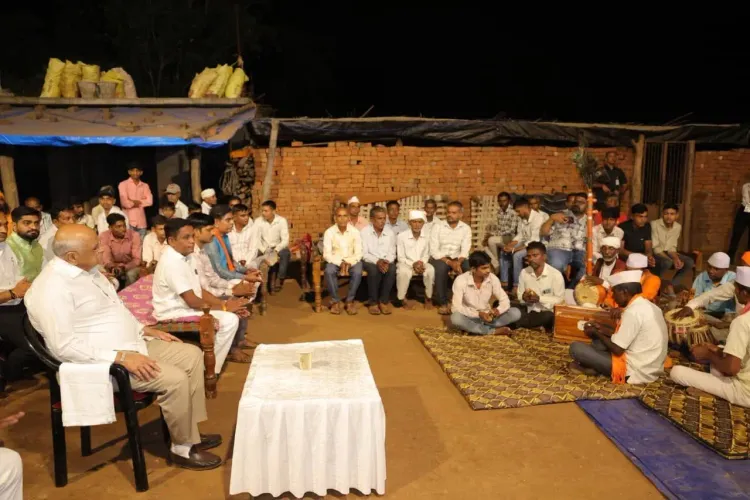
He conducted a khatla baithak — an informal ground-level sitting — to hear villagers' representations directly.
Dedicated interaction sessions were held with women and village elders as part of the rural outreach.
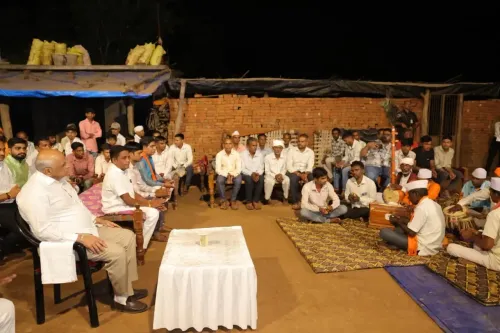
The Chief Minister attended a performance by the Adivasi Bhajan Mandali , listening to tribal devotional songs and kirtans.
The visit is part of a broader Gujarat tradition of overnight rural stays to understand grassroots issues firsthand.
Follow-up action on rural infrastructure and tribal welfare based on representations heard is expected to be watched closely.
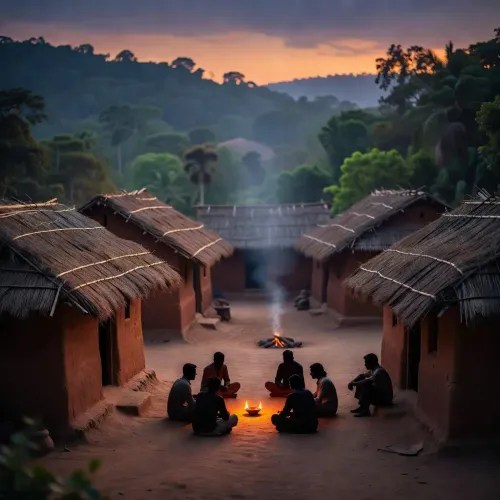
Under an open sky in rural Gujarat, Gujarat Chief Minister Bhupendra Patel traded the state capital for a charpoy — spending an overnight stay at Bhindol village on Wednesday, 18 November 2026, listening to the concerns of ordinary villagers in the intimate format of a khatla baithak (cot-side gathering).
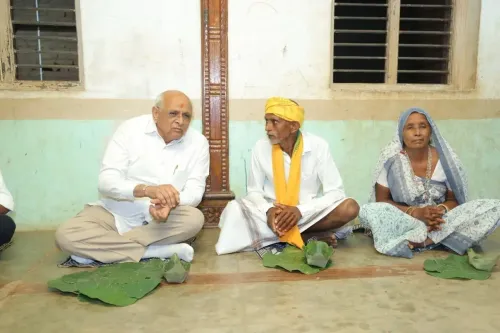
The Chief Minister sat through candid conversations with women and elders, hearing out the representations that rarely make it past a district office. The session was part of an increasingly deliberate push by Gujarat's state leadership to close the gap between government and grassroots — particularly in tribal belt communities.
Voices from the Village Floor
The khatla baithak format — informal, seated at ground level, no dais — is by design stripped of official distance. Women and village elders shared grievances and needs directly with the Chief Minister, in keeping with what CM Patel described as gathering firsthand knowledge of gramin janjeevan (rural everyday life).
These aren't photo-opportunity conversations. The interactions are meant to surface the kind of hyper-local, granular problems — a broken handpump, a blocked ration card, a missing road link — that formal bureaucratic channels often miss or delay.
Bhajans, Kirtans, and the Adivasi Bhajan Mandali
The evening at Bhindol carried cultural weight beyond policy dialogue. The Adivasi Bhajan Mandali — a tribal devotional singing group — performed bhajans and kirtans that the Chief Minister joined as a listener, absorbing a tradition of faith and community that runs deep in Gujarat's tribal villages.
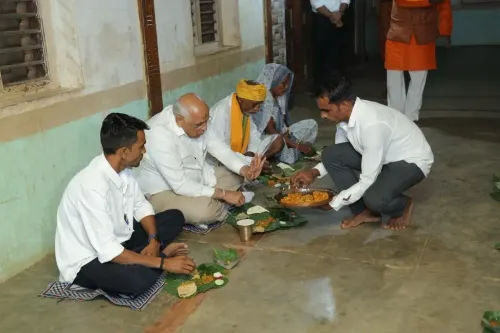
That cultural gesture matters. In tribal areas, trust is built as much through shared ritual as through administrative action. A Chief Minister who stays the night, eats with the village, and listens to its devotional music signals a qualitatively different kind of engagement than a day-visit ribbon-cutting.
A Pattern of Overnight Outreach in Gujarat
Gujarat Chief Ministers have made periodic overnight village stays a feature of governance outreach, particularly in Adivasi regions. The practice predates Patel's tenure but has continued under him — using informal direct contact to identify welfare gaps, build ground-level trust, and demonstrate responsiveness ahead of potential follow-up in areas like rural infrastructure, tribal welfare schemes, and local employment.
The representations heard at Bhindol now go into the pipeline. Whether they translate into scheme announcements or administrative action will be the measure of the visit's real weight.
One night in a village is a signal. What follows it back in Gandhinagar is the story.
Point of View
Informal contact with rural and tribal communities as a demonstration of accessibility that formal administration cannot replicate. For a ruling party facing the perennial challenge of translating welfare schemes into felt ground-level impact, these visits serve a dual purpose: intelligence-gathering on where policy is not reaching, and cultural signalling to communities that hold significant electoral weight in Gujarat's tribal belt. The question analysts will watch is whether the representations heard at Bhindol generate measurable follow-up action — scheme extensions, infrastructure orders, administrative redressal — or remain symbolically valuable but structurally thin.
NationPress
18 Nov 2026
Frequently Asked Questions
Why did Gujarat CM Bhupendra Patel stay overnight at Bhindol village?
CM Bhupendra Patel stayed overnight at Bhindol village on 18 November 2026 to conduct a khatla baithak — an informal sitting with villagers — hear their representations, interact with women and elders, and experience rural life firsthand as part of his grassroots outreach programme.
What is a khatla baithak?
A khatla baithak is an informal ground-level meeting, typically held on charpoys or cots, that deliberately removes bureaucratic distance between officials and citizens. It allows villagers to voice concerns directly without the formality of official proceedings.
Where is Bhindol village located?
Bhindol is a rural village in Gujarat where CM Bhupendra Patel conducted his overnight outreach visit on 18 November 2026. Its precise district location was not confirmed in available information.
What is an Adivasi Bhajan Mandali?
An Adivasi Bhajan Mandali is a tribal devotional singing group that performs bhajans and kirtans rooted in the cultural and spiritual traditions of Gujarat's Adivasi communities. CM Patel attended their performance during his Bhindol village stay.
Does Gujarat CM regularly conduct overnight village stays?
Yes, overnight village stays and direct rural dialogues have been a periodic feature of Gujarat Chief Ministers' governance outreach, particularly in tribal and rural areas, intended to understand local issues beyond formal administrative channels.