Gujarat CM Bhupendra Patel spends night in Dahod tribal village, holds khatla baithak
Synopsis
Gujarat Chief Minister Bhupendra Patel did not hold a rally or a press conference — he spent the night on the floor of a tribal home in Dahod, eating off leaf plates and listening to villagers at a khatla baithak. The 72-hour grassroots immersion in one of Gujarat's most marginalised tribal districts is an unusually direct form of outreach for a sitting chief minister.
Key Takeaways
Gujarat CM Bhupendra Patel spent Wednesday night at Bhindol village , Dahod district , as part of a 72-hour tribal outreach programme .
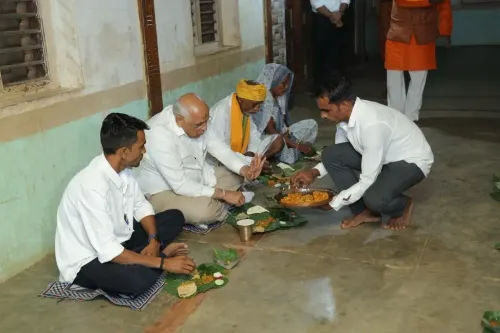
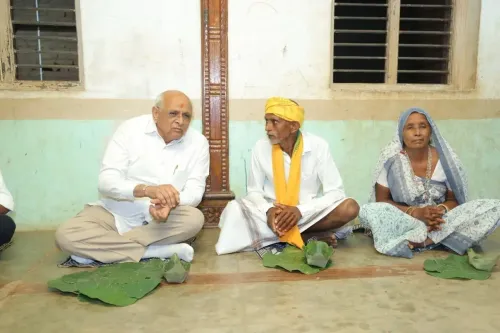
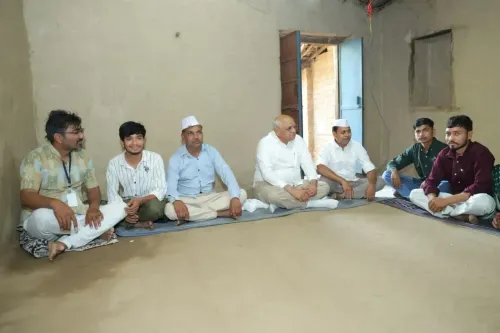
Patel shared dinner with a Tadvi tribal family , seated on the floor, with food served on khakhra leaf plates ('padiya'/'patrala').
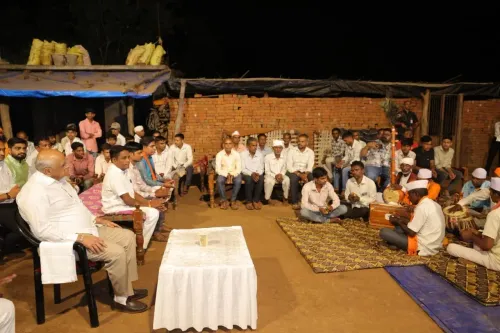
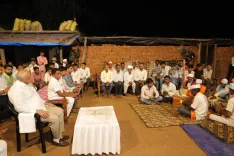
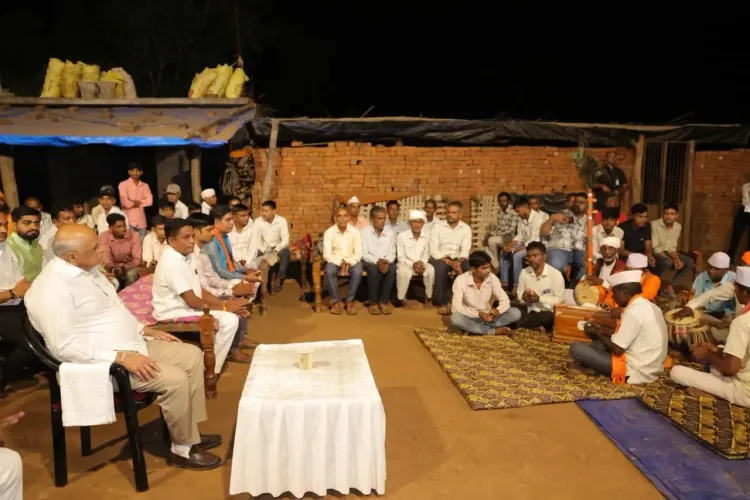
He held a traditional khatla baithak — an open community forum — to hear residents' concerns directly.
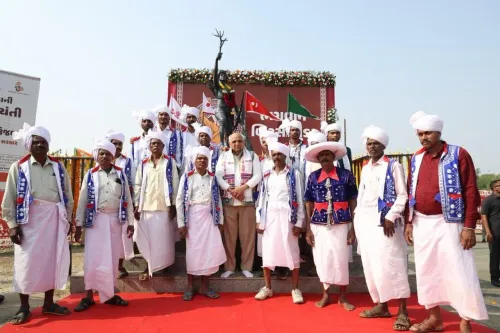
The day began in Garbada with floral tributes to Bhagwan Birsa Munda , followed by stops in Sarabali and Gangardi villages.
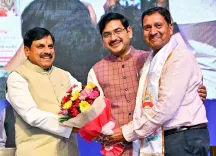
Patel received traditional tribal attire — a 'koti' (jacket) and 'bhoriya' (headgear) — along with a bow and arrow from local performers.
No formal follow-up mechanism for concerns raised at community meetings has been announced by officials.
Gujarat Chief Minister Bhupendra Patel on Wednesday night stayed overnight at Bhindol village in Dahod district as part of a 72-hour outreach programme in the tribal belt, sharing dinner with a Tadvi tribal family and participating in a traditional 'khatla baithak' — an informal community gathering — to hear residents' concerns firsthand.
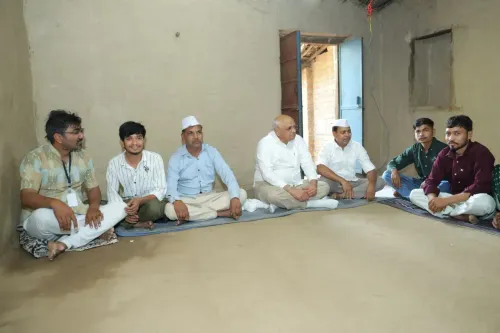
Patel sat on the floor alongside family members for dinner, with traditional tribal food served on plates made from khakhra leaves, locally known as 'padiya' or 'patrala'. He separately interacted with women and senior citizens to understand daily life and the challenges facing residents of the predominantly tribal region.
The Khatla Baithak: Governance at the Grassroots
Later in the evening, the Chief Minister joined villagers for the khatla baithak — a customary open-air community forum in which residents speak directly to those in authority. Patel listened to concerns raised by villagers and engaged with them on issues related to their livelihoods and welfare. The night also included devotional songs and bhajans performed by a local tribal bhajan mandali, which the Chief Minister attended.
Day's Itinerary: From Garbada to Bhindol
The visit began earlier on Wednesday at Garbada, where Patel paid floral tributes to the statue of Dharti Aaba Bhagwan Birsa Munda, the revered tribal freedom fighter. A large gathering of villagers welcomed him with traditional tribal dance performances. Members of the dance troupe presented him with tribal attire — a 'koti' (jacket) and 'bhoriya' (traditional headgear) — along with a bow and arrow, and joined him for photographs.
En route from Garbada towards Gangardi village, Patel stopped at the home of Mukeshbhai Bariya for tea and a brief family interaction. He subsequently had lunch at a tribal family's home in Sarabali village, seated on the floor alongside family members. During lunch, he enquired about the children's education and the family's sources of livelihood, and spoke with elderly members and women about their circumstances.
The Broader Context of the 72-Hour Visit
The three-day programme is focused on direct, unmediated engagement with tribal communities across Dahod district — one of Gujarat's most socially and economically marginalised regions. Patel is scheduled to stay overnight in villages, visit households and participate in traditional community meetings throughout the tour. This kind of immersive outreach is relatively uncommon at the Chief Minister level and signals an intent to demonstrate proximity to tribal constituencies ahead of the political calendar.
Notably, Dahod is a district with a significant Scheduled Tribe population, and the region has historically been a focus of welfare programmes ranging from nutrition schemes to forest rights implementation. How the concerns gathered through this visit translate into policy action will determine its longer-term significance.
What Comes Next
The visit is set to continue through the remaining days of the 72-hour programme, with further village stays, household visits and community interactions planned. Officials have not yet indicated a formal feedback mechanism or follow-up timeline for the concerns raised during the khatla baithak sessions.
Point of View
But optics and outcomes are different things. Dahod has been a focus of tribal welfare programmes for years, yet gaps in nutrition, forest rights and livelihood support persist. The khatla baithak model of listening is valuable only if what is heard feeds into a verifiable action plan — the absence of any announced follow-up mechanism is a gap worth watching. For the BJP, this visit also carries a political undercurrent: tribal constituencies in Gujarat's eastern belt are electorally significant, and immersive outreach by the Chief Minister signals that the party is not taking that base for granted.
NationPress
18 Nov 2026
Frequently Asked Questions
What is a khatla baithak?
A khatla baithak is a traditional informal community meeting common in tribal regions of Gujarat, in which villagers gather — typically outdoors — to speak directly with officials or leaders about their concerns. Chief Minister Bhupendra Patel participated in one at Bhindol village in Dahod district on Wednesday evening as part of his 72-hour tribal outreach.
Why is Gujarat CM Bhupendra Patel visiting Dahod district?
Patel is on a 72-hour outreach programme in Dahod, one of Gujarat's most significant tribal districts, to engage directly with tribal communities. The visit involves overnight stays in villages, shared meals with tribal families, and participation in traditional community forums.
Which villages did Bhupendra Patel visit during his Dahod tour?
On Wednesday, Patel visited Garbada, where he paid tributes to Bhagwan Birsa Munda; stopped at the home of Mukeshbhai Bariya en route to Gangardi village; had lunch with a family in Sarabali village; and spent the night at Bhindol village with a Tadvi tribal family.
Who is Bhagwan Birsa Munda, whose statue Patel garlanded?
Bhagwan Birsa Munda, also honoured with the title 'Dharti Aaba' (Father of the Earth), was a prominent tribal freedom fighter and folk hero from the Munda community who led a significant uprising against colonial rule in the late 19th century. He is widely revered across India's tribal belt.
How long is the Gujarat CM's tribal outreach in Dahod?
Chief Minister Bhupendra Patel's tribal outreach in Dahod district spans 72 hours, during which he is staying overnight in villages, visiting households, sharing meals with tribal families and attending traditional community meetings.