CM Sukhu Chairs 8th NCORD Meet, Orders Chitta Crackdown
Synopsis
Chief Minister Sukhvinder Singh Sukhu chaired Himachal Pradesh's 8th NCORD meeting in Dharamshala, ordering panchayat-level drug mapping by Dec 15, announcing a Spiti prison, and launching a December sports-awareness campaign against chitta.
Key Takeaways
8th State-Level NCORD meeting chaired by CM Sukhu at Tapovan, Dharamshala on 18 November 2026 .
Mapping of chitta traffickers and victims in all 246 Red Category panchayats ordered by 15 December 2026 .
Lahaul-Spiti DC directed to identify 200+ bigha land in Spiti for a new prison facility. 'Khelo Himachal, Chitta Mukt Himachal' sports-awareness campaign to launch in December 2026 .
159 people imprisoned in drug cases in 2026 — second-highest figure nationally; ₹92 crore in drug-linked assets seized over 3.5 years.
21 police personnel and 30 other government employees dismissed for drug-related lapses.
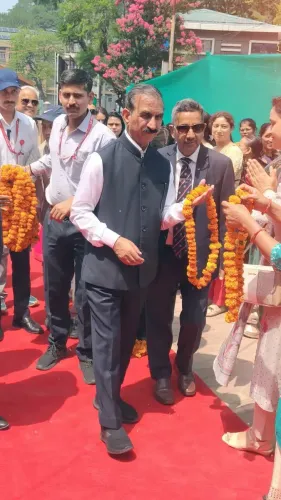
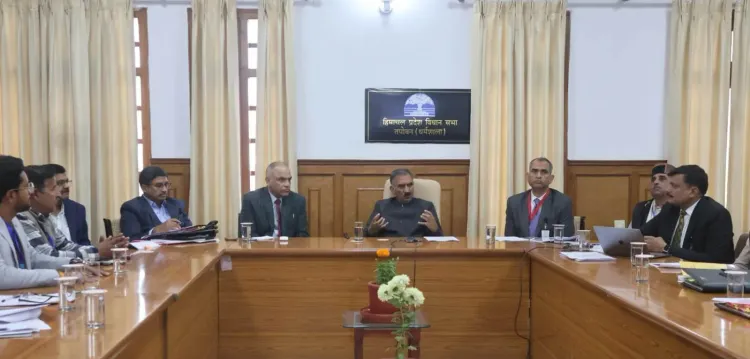
A mountain district town became the command centre for Himachal Pradesh's sharpest anti-narcotics push yet — Chief Minister Sukhvinder Singh Sukhu chaired the 8th State-Level Narcotics Coordination Centre (NCORD) meeting at Tapovan, Dharamshala on Wednesday, 18 November 2026, issuing a cascade of hard deadlines and structural directives aimed at eradicating chitta — the synthetic drug devastating the state's youth.
246 Red-Zone Panchayats and a 15 December Deadline
The sharpest directive out of Dharamshala: all 246 panchayats classified under the Red Category must complete full mapping of chitta traffickers and drug-affected victims before 15 December. Sukhu instructed Deputy Commissioners and Superintendents of Police from every district to intensify ground-level coordinated action for the drug's 'complete eradication' — a phrase that signals the state is moving beyond containment toward elimination language.
The Red Category designation marks these villages as the highest-priority zones in a tiered system Himachal Pradesh has built to track narcotics penetration at the panchayat level. Completing the mapping in under a month is an aggressive ask — but it feeds directly into enforcement and rehabilitation planning for the year ahead.
A New Prison for Spiti and a Reckoning for Private De-Addiction Centres
In a signal that the state expects its arrest numbers to keep climbing, the Deputy Commissioner of Lahaul-Spiti was directed to identify suitable land — more than 200 bigha — in Spiti for establishing a new prison facility. The choice of this remote trans-Himalayan district for a major carceral infrastructure project reflects both a geographic logic — a natural barrier to smuggling networks — and a long-term bet on enforcement capacity.
Separately, the CM ordered reports on the functioning of private de-addiction centres across the state, a move that suggests growing government scrutiny of the rehabilitation sector alongside its enforcement arm.
'Khelo Himachal, Chitta Mukt Himachal' — Sport as a Counter-Narrative
Enforcement alone rarely wins a drug war. Recognising that, the government announced the 'Khelo Himachal, Chitta Mukt Himachal' (Play Himachal, Chitta-Free Himachal) campaign, set to launch in December 2026, combining sports promotion with community awareness to draw young people away from substance abuse. The campaign name deliberately mirrors the Centre's Nasha Mukt Bharat Abhiyan, launched nationally in August 2020, anchoring the state's initiative within a broader federal anti-narcotics architecture.
The Numbers Behind the Crackdown
The meeting surfaced a striking statistic: in 2026 alone, 159 people have been sent to prison in connection with drug cases — described as the second-highest figure in the country for the year. Over the past three-and-a-half years, enforcement agencies have seized illegal assets worth approximately ₹92 crore linked to drug trafficking. Inside the administration itself, accountability has been unsparing: 21 police personnel and 30 employees from other departments have been dismissed from service.
These numbers, cited by the Chief Minister at the meeting, paint a portrait of an administration willing to turn the enforcement apparatus on its own ranks — a credibility move as much as a disciplinary one. The NCORD framework, institutionalised by the Ministry of Home Affairs from 2016 onwards, provides the inter-agency scaffold that makes this kind of multi-department accountability tracking possible.
With the December campaign launch, the mid-month mapping deadline, and a potential new prison in the pipeline, Himachal Pradesh's anti-chitta clock is now running — and the Chief Minister has made the milestones public enough that missing them will be impossible to ignore.
Point of View
Dismissals, imprisonment counts — with community-facing campaigns and infrastructure investment, Sukhu is building a layered anti-narcotics record that serves both governance and political optics ahead of a state election cycle. The public mapping deadline of 15 December and the mid-year prison announcement convert abstract policy into accountability checkpoints. This mirrors a national pattern where state governments use NCORD as a credibility platform to demonstrate alignment with central narcotics frameworks while staking out independent administrative ambition. The scrutiny of private de-addiction centres adds a regulatory dimension that could reshape how rehabilitation money flows in the state.
NationPress
18 Nov 2026
Frequently Asked Questions
What is the NCORD meeting in Himachal Pradesh?
NCORD stands for Narcotics Coordination Centre, an inter-agency platform institutionalised by the Ministry of Home Affairs to coordinate anti-drug efforts between central and state agencies. The 8th state-level NCORD meeting was chaired by CM Sukhu in Dharamshala on 18 November 2026 to review and intensify Himachal's anti-chitta operations.
What are Red Category panchayats in Himachal Pradesh?
Red Category panchayats are the highest-priority villages in Himachal Pradesh's tiered system for tracking drug penetration. All 246 such panchayats have been ordered to complete mapping of chitta traffickers and drug-affected victims before 15 December 2026.
What is the 'Khelo Himachal, Chitta Mukt Himachal' campaign?
'Khelo Himachal, Chitta Mukt Himachal' — meaning 'Play Himachal, Chitta-Free Himachal' — is a government campaign combining sports promotion with community awareness against drug abuse, set to launch in December 2026 to engage youth as an alternative to substance use.
Why is a new prison being planned in Spiti, Himachal Pradesh?
CM Sukhu directed the Deputy Commissioner of Lahaul-Spiti to identify over 200 bigha of land in Spiti for a new prison, in response to rising drug-related arrests and the need to expand carceral infrastructure in a district that also offers a natural geographic barrier to smuggling networks.
How many government employees have been dismissed in Himachal Pradesh's anti-drug drive?
A total of 51 government employees have been dismissed — 21 from the police force and 30 from other departments — as part of Himachal Pradesh's internal accountability drive against drug trafficking complicity over the past three-and-a-half years.