CM Mohan Yadav Attends CAIT Swearing-In, Pledges Trader Prosperity
Synopsis
Chief Minister Dr. Mohan Yadav attended CAIT's new executive oath-taking ceremony in Bhopal on November 18, 2026, administered a 'Prosperous Trader — Prosperous MP' pledge, and called on trade and industry to jointly strengthen the state economy and create youth employment.
Key Takeaways
Mohan Yadav attended CAIT's swearing-in ceremony in Bhopal on November 18, 2026 .
Newly appointed CAIT officials, executive committee members, and district presidents from 55 districts took oath.
The Chief Minister administered the resolution 'Samridh Vyapari — Samridh Madhya Pradesh' (Prosperous Trader — Prosperous Madhya Pradesh).
CAIT positions itself as the representative body for the state's large trading community across all 55 districts.
Yadav called for trade and industry to complement each other in strengthening Madhya Pradesh's economy and creating youth employment.
The event reflects the BJP-led state government's sustained engagement with organised trader bodies as economic and political stakeholders.
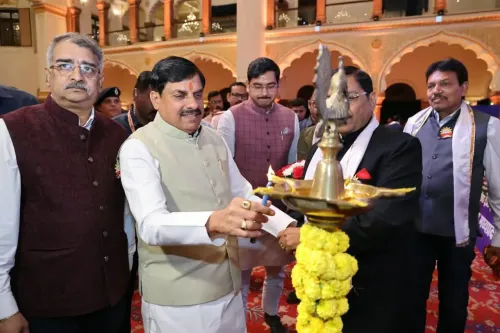
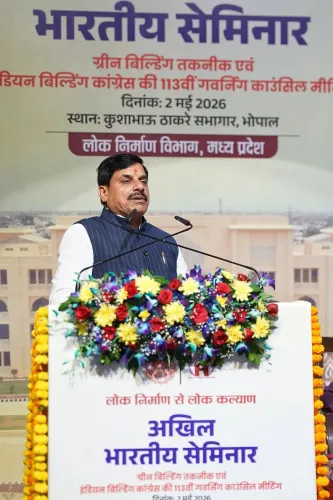
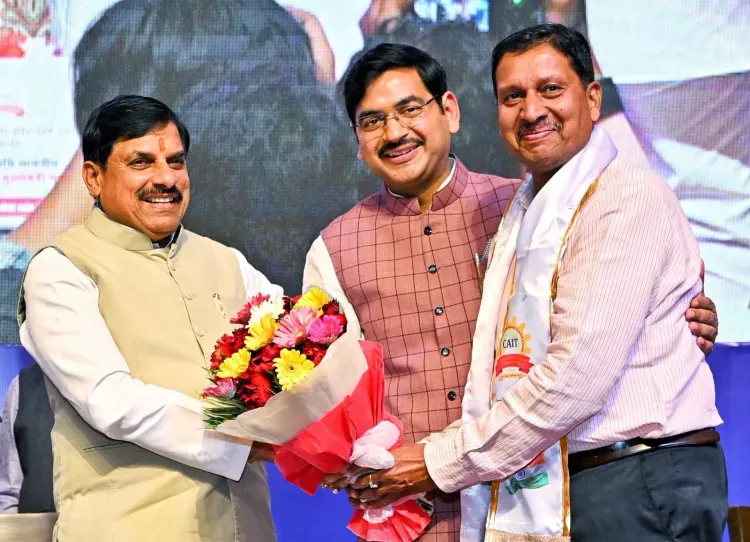
A pledge, a ceremony, and a pointed message about Madhya Pradesh's economic future — Madhya Pradesh Chief Minister Dr. Mohan Yadav attended the oath-taking ceremony of the newly appointed officials, executive committee, and district presidents from 55 districts of the Confederation of All India Traders (CAIT) in Bhopal on Wednesday, November 18, 2026, and left the gathering with a clear directive for the state's trading community.
Speaking at the event, Dr. Yadav administered a collective oath built around the resolution 'Samridh Vyapari — Samridh Madhya Pradesh' ('Prosperous Trader — Prosperous Madhya Pradesh'), framing trader welfare not as a sectoral concern but as a pillar of the state's broader economic ambition. The Chief Minister extended congratulations and best wishes to all newly inducted office-bearers as they assumed charge.
CAIT's Footprint Across Madhya Pradesh
CAIT is a national traders' body with an active presence in policy advocacy and business interest representation across Indian states. In Madhya Pradesh, the organisation claims to represent the interests of the state's trading community spread across all 55 districts. Its newly constituted executive marks a fresh organisational cycle, and the government's decision to have the Chief Minister preside over the swearing-in signals the administration's intent to keep organised trade tightly within its policy orbit.
State governments in Madhya Pradesh have periodically engaged trader associations for inputs on business regulations and welfare measures — a practice that has grown more structured under the BJP-led administration since Dr. Yadav took office in December 2023.
'Industry and Trade Must Be Complements': The Core Message
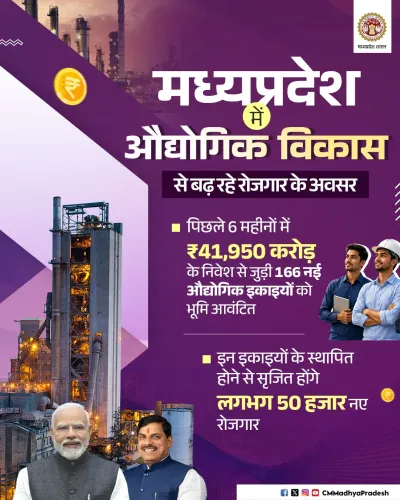
The Chief Minister's address carried a deliberate economic framing. Dr. Yadav called on industry and trade to function as 'complements to each other' in strengthening Madhya Pradesh's economy — and, critically, in generating new employment opportunities for the state's youth. This dovetails with a national pattern among BJP-governed states: positioning organised commerce as a co-driver of job creation alongside large-scale industrial investment.
The 'Samridh Vyapari' resolution is not merely ceremonial — it sets an expectation for CAIT's new leadership to actively work toward resolving traders' grievances while expanding commercial activity, making the oath a soft policy compact between the government and the trade body's fresh mandate.
What the Bhopal Event Signals
Gatherings of this kind, where a Chief Minister personally administers an oath to a trader body's new executive, are a deliberate act of political signalling. For the BJP, organised traders represent a historically loyal and mobilisable constituency, and cementing that relationship at the start of a new CAIT executive cycle keeps the lines of influence active. The resolution's language — 'samridh' (prosperous) repeated for both trader and state — frames commercial success and state development as inseparable, a message with equal utility on the campaign trail and at the policy table.
With state budget planning cycles ahead and ongoing conversations around ease of doing business, the event positions the CAIT network as a formal stakeholder in whatever trader-welfare measures Madhya Pradesh may announce next.
Point of View
Binding CAIT's new leadership to measurable expectations around trader grievances and commercial expansion. This mirrors a national BJP template of aligning state-level trade bodies with government messaging on ease of doing business. With a budget cycle ahead, the event effectively places CAIT at the table of Madhya Pradesh's economic planning conversation.
NationPress
18 Nov 2026
Frequently Asked Questions
What is CAIT and what does it do in Madhya Pradesh?
The Confederation of All India Traders (CAIT) is a national body that advocates for trader interests and business policy. In Madhya Pradesh, it has district-level presidents across all 55 districts and engages with the state government on commercial regulations and trader welfare measures.
What is the 'Samridh Vyapari — Samridh Madhya Pradesh' pledge?
It is a resolution — meaning 'Prosperous Trader — Prosperous Madhya Pradesh' — that CM Dr. Mohan Yadav administered to CAIT's newly sworn-in office-bearers on November 18, 2026, committing the organisation to expand trade and resolve traders' problems in service of the state's economic growth.
Why did CM Mohan Yadav attend the CAIT oath-taking ceremony in Bhopal?
CM Dr. Mohan Yadav attended to formally congratulate CAIT's new leadership, administer the 'Samridh Vyapari' pledge, and reinforce the state government's commitment to trader welfare and economic growth through the partnership between trade and industry.
What was CM Yadav's message on youth employment at the CAIT event?
Dr. Yadav called on trade and industry to function as complements to each other in strengthening Madhya Pradesh's economy, with a specific emphasis on generating new employment opportunities for the state's youth.
When did Dr. Mohan Yadav become Chief Minister of Madhya Pradesh?
Dr. Mohan Yadav became Chief Minister of Madhya Pradesh in December 2023 as a BJP leader.