CM Dhami: Pantnagar Airport Runway to Stretch to 3,000 Metres
Synopsis
Uttarakhand CM Pushkar Singh Dhami announces environmental clearance for Pantnagar Airport's runway expansion from 1,372 to 3,000 metres, citing gains for tourism, investment, youth employment, and disaster relief operations in the Himalayan state.
Key Takeaways
Pantnagar Airport has received environmental clearance for a major expansion project.
The runway will be extended from 1,372 metres to 3,000 metres , enabling larger aircraft operations.
CM Pushkar Singh Dhami credited PM Narendra Modi and central government support under the 'double engine government' framework.
Expected benefits include growth in tourism, trade, industry, and investment in Uttarakhand.
The expanded runway will also strengthen disaster relief and rescue operations in the flood-prone Himalayan state.
The project aligns with the Centre's UDAN scheme , launched in 2016 to boost regional air connectivity in hilly and remote areas.
A green light for growth — Uttarakhand Chief Minister Pushkar Singh Dhami announced on Wednesday, 18 November 2026 that Pantnagar Airport has received environmental clearance for a major expansion, with its runway set to nearly double in length and open the doors to wide-body aircraft for the first time.
Dhami posted in Hindi, calling the clearance 'ek sashakt kadam' — 'a powerful step' — toward lifting Uttarakhand's development and air connectivity to new heights. He credited the vision of Prime Minister Narendra Modi and the support of the central government, framing the project as a signature achievement of what the BJP calls the 'double engine government' — aligned administrations in Lucknow/Dehradun and New Delhi working in concert.
From 1,372 metres to 3,000 metres: what the runway upgrade actually means
The numbers tell the story plainly. Pantnagar Airport's current runway stands at 1,372 metres — long enough for smaller turboprop and regional jet operations, but a hard ceiling for larger commercial aircraft. The approved expansion pushes that to 3,000 metres, a threshold that unlocks operations by narrow-body jets like the Airbus A320 family and Boeing 737, and potentially even some wide-body configurations.
Pantnagar sits in Udham Singh Nagar district, at the foothills of the Kumaon Himalayas — geographically one of Uttarakhand's more accessible points but still a critical gateway for a state whose terrain makes road travel slow and vulnerable. A longer runway does not merely mean more flights; it means heavier cargo, higher passenger volumes, and direct connections to distant metros that short-haul aircraft cannot profitably serve.
Tourism, industry, jobs — and faster disaster response
Dhami listed the downstream effects explicitly: momentum for tourism, industry, trade and investment, new employment for the state's youth, and — crucially — a stronger platform for relief and rescue operations during disasters. That last point carries particular weight in Uttarakhand, a state repeatedly battered by flash floods, cloudbursts and landslides that cut road access and demand rapid aerial response. A runway capable of handling larger relief aircraft changes the calculus of emergency logistics in ways a tourism pitch cannot fully capture.
The expansion also slots neatly into the Centre's UDAN (Ude Desh ka Aam Naagrik) scheme, launched in 2016 to revive and develop regional airports across India, with particular emphasis on hilly and remote states where air connectivity is not a luxury but a lifeline. Pantnagar has featured in UDAN-linked route planning, and a significantly longer runway would make it eligible for a wider range of route bids.
What comes next: tenders, timelines, and the broader Uttarakhand network
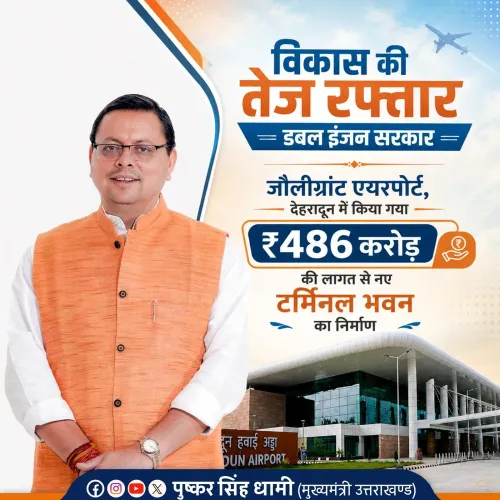
Environmental clearance is the statutory starting gun, not the finish line. The tendering process, construction phasing, and funding allocation between the Airports Authority of India and the state government will determine how quickly the upgrade materialises on the ground. Uttarakhand's other major airport, Jolly Grant near Dehradun, has seen its own capacity upgrades in recent years — analysts and aviation watchers will now track whether Pantnagar's expansion is sequenced alongside or independent of further investments at Jolly Grant or the proposed Chinyalisaur greenfield site in Uttarkashi.
For a mountain state whose economic future is tightly bound to how easily tourists, investors, and emergency responders can move in and out, a 3,000-metre runway at Pantnagar is not just an infrastructure upgrade — it is a structural shift in what Uttarakhand can be.
Point of View
Translating a Centre-state alignment pitch into visible infrastructure. The runway upgrade also reflects a broader strategic logic: in disaster-prone mountain states, airport capacity is simultaneously an economic and a security asset, and the Modi government has consistently used regional aviation investment as a soft but durable form of political capital. Watch whether the construction timeline is accelerated before the next state assembly election, as infrastructure announcements in Uttarakhand have historically tracked the electoral calendar. The UDAN framework gives this project institutional momentum, but bureaucratic tendering and terrain-related construction challenges remain the variables that will determine whether the 3,000-metre runway becomes a reality or a recurring promise.
NationPress
18 Nov 2026
Frequently Asked Questions
What is the Pantnagar Airport runway expansion plan?
Pantnagar Airport in Uttarakhand has received environmental clearance to extend its runway from the current 1,372 metres to 3,000 metres , which will allow larger commercial aircraft to operate at the airport.
Where is Pantnagar Airport located?
Pantnagar Airport is located in Udham Singh Nagar district in Uttarakhand, at the foothills of the Kumaon Himalayas, and serves as a key gateway for the Kumaon region.
What is the UDAN scheme and how does it relate to this expansion?
The UDAN (Ude Desh ka Aam Naagrik) scheme was launched by the central government in 2016 to promote regional air connectivity, particularly for hilly and remote states. Pantnagar Airport has featured in UDAN-linked route planning, and the runway upgrade makes it eligible for a broader range of routes.
How will Pantnagar Airport expansion help in disasters?
A 3,000-metre runway can accommodate larger relief aircraft, significantly improving the speed and scale of disaster relief and rescue operations during floods, cloudbursts, or landslides — events that frequently cut road access in Uttarakhand.
What did CM Dhami say about the Pantnagar Airport expansion?
CM Pushkar Singh Dhami called the environmental clearance a 'powerful step' toward new heights of development and air connectivity, crediting PM Narendra Modi and the central government, and listing tourism, trade, youth employment, and disaster response as key benefits.