CM Bhupendra Patel: Vadodara VGRC Draws Rs 3.34 Lakh Cr Investment
Synopsis
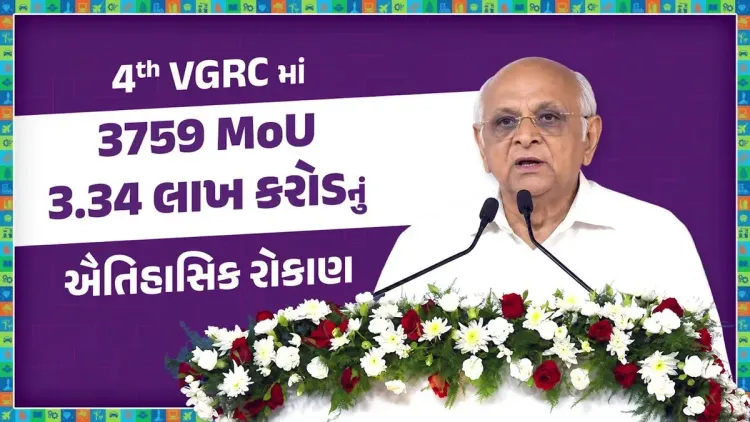
The Vibrant Gujarat Regional Conference in Vadodara secured 3,759 MoUs worth Rs 3.34 lakh crore for Central Gujarat, CM Bhupendra Patel announced on June 30, 2026, projecting 1.97 lakh new employment opportunities and a major boost to the state economy.
Key Takeaways
3,759 MoUs were signed at the Vibrant Gujarat Regional Conference held in Vadodara for Central Gujarat .
Total investment commitment stands at Rs 3.34 lakh crore .
The MoUs are projected to create 1.97 lakh employment opportunities in the region.
CM Bhupendra Patel announced the outcomes via X on June 30, 2026 .
The VGRC is a regional extension of the biennial Vibrant Gujarat Global Summit , designed to attract investment at the district and divisional level.
Central Gujarat covers industrially significant districts including Vadodara, Anand, Panchmahal, Dahod, and Chhota Udaipur .
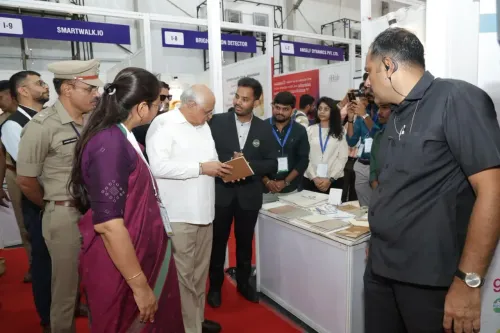
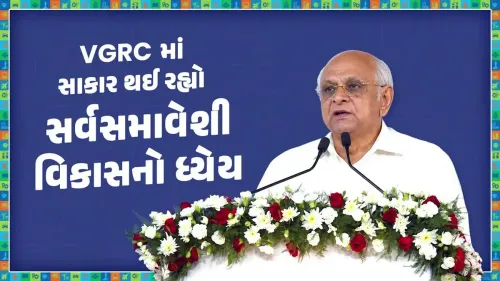
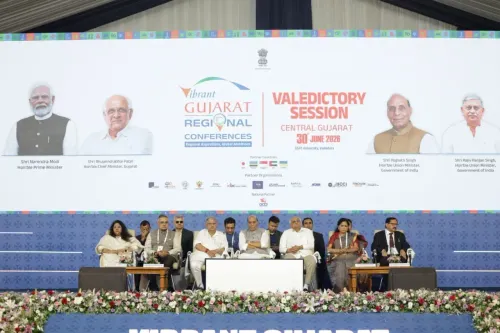
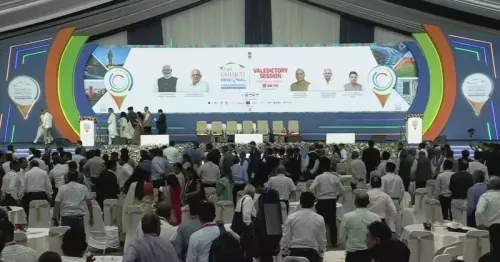
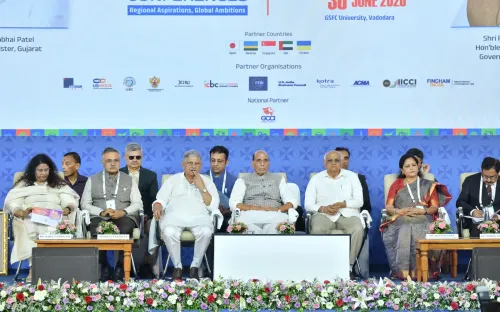
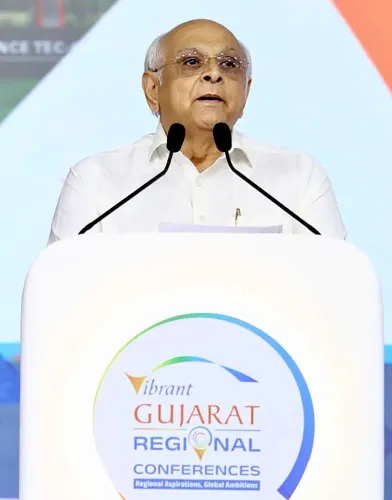
Gujarat Chief Minister Bhupendra Patel announced on Tuesday, June 30, 2026, that the Vibrant Gujarat Regional Conference (VGRC) for Central Gujarat, held in Vadodara, secured 3,759 Memoranda of Understanding (MoUs) representing investment commitments of Rs 3.34 lakh crore, with the potential to generate 1.97 lakh employment opportunities.
Posting on X, CM Patel stated — translated from Gujarati — that the MoUs signed at the conference 'will give a major boost to Gujarat's economy.' The post was tagged @VibrantGujarat and carried the hashtags #VGRCCentralGujarat and #VibrantGujarat, signalling the event's alignment with the state's flagship investor-outreach programme.
Context
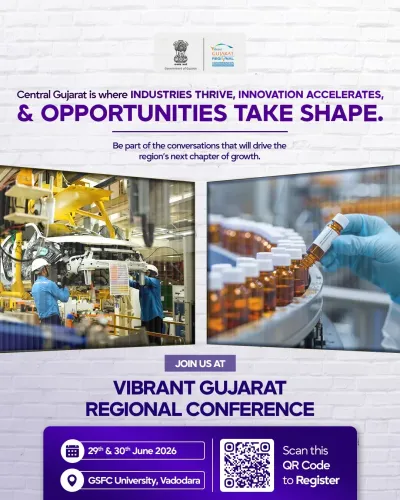
The Vibrant Gujarat Regional Conference is a decentralised extension of the biennial Vibrant Gujarat Global Summit, designed to bring investor engagement directly to Gujarat's regional hubs rather than concentrating activity solely in Gandhinagar. Vadodara, the cultural and industrial capital of Central Gujarat, serves as the natural anchor for this regional edition, given its established base in engineering, chemicals, and petrochemicals.
The VGRC format allows state authorities to present region-specific industrial corridors, infrastructure pipelines, and land-bank opportunities to investors, translating the broader Vibrant Gujarat brand into localised commitments.
Policy Backdrop
The Vibrant Gujarat Global Summit has been held biennially since 2003 and is widely regarded as one of India's most prominent state-level investor-outreach platforms. The regional conference model was introduced to deepen penetration beyond the headline summit, ensuring that districts and divisions across the state — including Central Gujarat, which encompasses districts such as Anand, Kheda, Panchmahal, Dahod, Vadodara, and Chhota Udaipur — receive dedicated investor focus.
Gujarat has consistently ranked among India's top states for ease of doing business, and the state government has used the Vibrant Gujarat platform to attract investment in sectors ranging from renewable energy and semiconductors to textiles and food processing. MoU signings at these events are treated as intent-to-invest declarations, with subsequent tracking mechanisms to monitor conversion into ground-level projects.
Stakeholders and Impact
The 1.97 lakh projected employment opportunities are expected to benefit workers and youth across Central Gujarat's six-plus districts, a region that includes both industrially advanced zones near Vadodara and relatively less-developed tribal belt areas such as Dahod and Chhota Udaipur. If a meaningful share of the 3,759 MoUs translates into operational projects, the employment impact could be significant for semi-skilled and skilled labour in the region.
Industry stakeholders — particularly in chemicals, engineering goods, and agro-processing — are likely to be the primary signatories, given Central Gujarat's existing industrial profile. The scale of the commitment, at Rs 3.34 lakh crore, positions this single regional conference among the larger single-event investment announcements in recent Gujarat history.
What's Next
The Gujarat government is expected to publish a sector-wise and district-wise breakdown of the MoUs, enabling tracking of investor follow-through. State industrial development agencies will likely initiate ground-truthing exercises to convert MoU commitments into formal project approvals, land allotments, and environmental clearances.
The Vibrant Gujarat secretariat typically monitors MoU implementation through periodic review meetings, and the performance of this Vadodara VGRC will feed into the narrative ahead of the next full-scale Vibrant Gujarat Global Summit. For CM Bhupendra Patel, the numbers reinforce the state's pitch as India's premier investment destination at a time when competition among states for manufacturing and infrastructure capital is intensifying.
Point of View
759 agreements — reflects the Gujarat government's deliberate strategy of decentralising the Vibrant Gujarat brand to sustain investor momentum between biennial global summits. For CM Bhupendra Patel, these numbers serve a dual purpose: reinforcing Gujarat's positioning as India's top investment destination and directing economic attention toward Central Gujarat, a region that includes both industrially mature corridors and underdeveloped tribal districts. The emphasis on 1.97 lakh jobs signals a political calculus as much as an economic one, given ongoing competition among BJP-governed states to demonstrate employment generation. Whether MoU-to-ground-project conversion rates match the headline figures will be the real test of this conference's legacy.
NationPress
30 Jun 2026
Frequently Asked Questions
How much investment was announced at the Vibrant Gujarat Regional Conference in Vadodara?
A total of Rs 3.34 lakh crore in investment was committed through 3,759 MoUs signed at the Vibrant Gujarat Regional Conference for Central Gujarat, held in Vadodara .
How many jobs will the Vadodara VGRC MoUs create?
The MoUs signed at the Vadodara VGRC are projected to generate 1.97 lakh employment opportunities across Central Gujarat .
What is the Vibrant Gujarat Regional Conference (VGRC)?
The Vibrant Gujarat Regional Conference (VGRC) is a decentralised investor-outreach initiative by the Gujarat government , extending the biennial Vibrant Gujarat Global Summit to regional hubs across the state to attract localised investment.
Which districts are covered under Central Gujarat for the VGRC?
Central Gujarat broadly includes districts such as Vadodara, Anand, Kheda, Panchmahal, Dahod, and Chhota Udaipur , spanning both industrially developed zones and tribal belt areas.
Who announced the VGRC Vadodara investment figures?
Gujarat Chief Minister Bhupendra Patel announced the investment and MoU figures from the Vadodara VGRC via a post on X on June 30, 2026 .