CM Chandrababu Holds Emergency Telecon as Cyclone Nears AP Coast

Synopsis
Chief Minister Chandrababu Naidu on 24 September 2026 chaired an emergency teleconference with collectors from 11 coastal Andhra Pradesh districts, ordering high alert through 25 September as a Bay of Bengal cyclonic system moves toward landfall overnight.
Key Takeaways
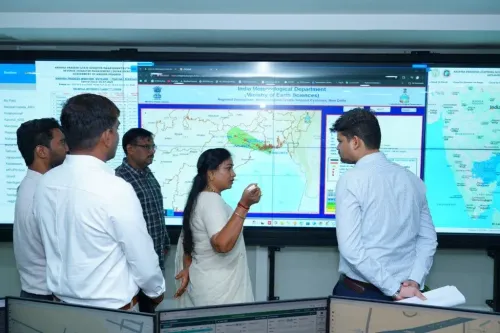
Chief Minister Nara Chandrababu Naidu held an emergency teleconference with district collectors late on 24 September 2026 as a cyclone approached the AP coast.
11 districts — Srikakulam, Vizianagaram, Visakhapatnam, Manyam, ASR, Anakapalli, West Godavari, Ambedkar Konaseema, Eluru, Polavaram, and Krishna — were placed on high alert.
The cyclone was expected to make landfall on the night of 24 September , with heaviest rainfall forecast on 24 and 25 September .
Collectors were specifically instructed to remain on continuous alert through the post-landfall window when rainfall typically peaks.
The protocol follows a preparedness framework strengthened after Cyclone Hudhud (2014) , using direct CM-to-collector teleconferences as the primary coordination tool.
With a cyclonic system bearing down on Andhra Pradesh's northern coastline overnight, Chief Minister Nara Chandrababu Naidu convened an emergency teleconference with district collectors late on Thursday, 24 September 2026, ordering them onto high alert as heavy rainfall is expected to intensify across the state on 24 and 25 September.
Eleven districts on the frontline
The teleconference brought together collectors from Srikakulam, Vizianagaram, Visakhapatnam, Manyam, ASR (Alluri Sitharama Raju), Anakapalli, West Godavari, Ambedkar Konaseema, Eluru, Polavaram, and Krishna — a stretch that maps almost exactly onto Andhra Pradesh's most exposed northern and central coastal belt. The Chief Minister told collectors that with the cyclone expected to make landfall tonight, rainfall would be 'significantly heavier' on the days that follow, making round-the-clock readiness non-negotiable.
Why these districts, why now
Andhra Pradesh's roughly 974-kilometre coastline sits squarely in the path of Bay of Bengal cyclonic systems that intensify during the northeast monsoon. The districts named run from the Odisha border in the north down through the Godavari delta and Krishna river basin — low-lying, densely populated river-delta terrain where even a moderate cyclone can flood tens of thousands of homes within hours. Since the devastating Cyclone Hudhud of 2014, successive state administrations have hardened the protocol: the moment a system threatens landfall, the Chief Minister chairs direct collector calls to pre-position resources and eliminate any communication lag between Amaravati and district ground teams.
What the Chief Minister directed
Naidu's specific instruction — that collectors remain 'alert' (అలెర్ట్గా ఉండాలని) through 24 and 25 September — points to the post-landfall window as the critical danger period, when rainfall typically peaks even after a storm's eye has crossed the coast. Landfall itself is expected later on the night of 24 September. Revenue and disaster management machinery across the eleven districts will now be on continuous watch for flooding, fallen trees, and infrastructure damage, with damage assessments to follow once the system weakens.
The next critical markers: official rainfall distribution data from the meteorological department, any evacuation orders from coastal mandals, and the first post-storm damage assessment from the revenue department. Andhra Pradesh has been here before — and the speed of this teleconference is exactly the institutional muscle memory those past storms built.
Point of View
Not the eye itself, as the primary risk. The choice to loop in eleven collectors simultaneously signals that the administration is wary of a wide rainfall footprint rather than a pin-point impact. For a Chief Minister who has staked much of his political identity on governance efficiency, how quickly relief machinery reaches affected mandals in the hours after landfall will matter as much as the preparedness optics of this call.
NationPress
24 Sept 2026
Frequently Asked Questions
Which districts in Andhra Pradesh are on cyclone alert on 24 September 2026?
Eleven districts are on high alert: Srikakulam, Vizianagaram, Visakhapatnam, Manyam, Alluri Sitharama Raju (ASR), Anakapalli, West Godavari, Ambedkar Konaseema, Eluru, Polavaram, and Krishna.
What did CM Chandrababu Naidu say about the cyclone?
CM Naidu told collectors that the cyclone would make landfall overnight on 24 September and that heavy rainfall was expected on 24 and 25 September, directing all collectors to remain on continuous alert during that period.
When is the cyclone expected to make landfall in Andhra Pradesh?
According to the Chief Minister's Office, the cyclonic system was expected to cross the coast on the night of 24 September 2026.
Why does Andhra Pradesh face frequent cyclone threats?
Andhra Pradesh has one of India's longest coastlines and sits directly in the path of Bay of Bengal cyclonic systems that typically intensify during the northeast monsoon season between October and December.
How does the Andhra Pradesh government coordinate during cyclones?
The state uses direct teleconferences between the Chief Minister and district collectors as its primary real-time coordination tool — a protocol reinforced and formalised after Cyclone Hudhud struck in 2014.