CM Chandrababu Reviews Cyclone Threat to AP Coast

Synopsis
Chief Minister Chandrababu Naidu chaired an emergency cyclone preparedness review on 25 October 2026 as a Bay of Bengal depression intensifies toward the Kakinada-Konaseema coast, with winds up to 140 km/h and 10 NDRF plus 11 SDRF teams on standby.
Key Takeaways
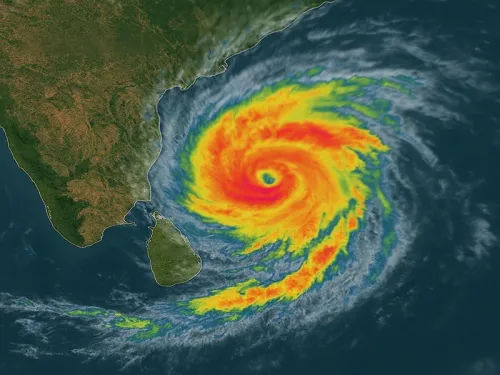
A deep depression in the Bay of Bengal is expected to strengthen into a cyclone and make landfall near Konaseema–Yanam–Kakinada .
Sustained winds of 115–125 km/h , with gusts up to 140 km/h , are forecast at the time of landfall.
Coastal wind intensity is expected from morning of 27 October , with heavy to extremely heavy rain on 27 and 28 October .
High-alert districts include Kakinada, Anakapalli, Visakhapatnam, Konaseema, and East Godavari .
10 NDRF and 11 SDRF teams are pre-positioned and ready for deployment.
CM Naidu ordered readiness across evacuation, shelters, food, water, medical care, and power restoration .
A deep depression churning over the Bay of Bengal is on track to intensify into a full cyclone — and Andhra Pradesh Chief Minister Nara Chandrababu Naidu is not waiting for it to arrive. On Sunday, 25 October 2026, the Chief Minister's Office of Andhra Pradesh confirmed that Naidu chaired an emergency preparedness review, with forecasts pointing to a likely landfall in the Konaseema–Yanam–Kakinada corridor.
Where the Storm Is Headed — and How Hard
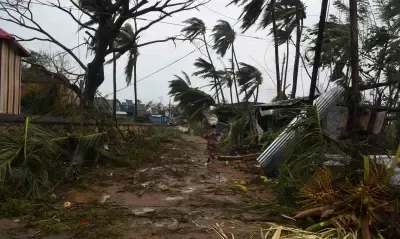
Current projections place the cyclone's landfall somewhere along the Konaseema, Yanam, and Kakinada coastline. The storm is expected to bring sustained winds of 115 to 125 km/h at the time of landfall, with gusts spiking as high as 140 km/h. That places it firmly in severe cyclone territory — powerful enough to uproot trees, damage structures, and drive a dangerous storm surge into low-lying coastal areas.
Coastal intensity is forecast to ramp up as early as the morning of 27 October. Heavy to extremely heavy rainfall is expected across North Andhra and the Central Coastal districts on 27 and 28 October, with isolated pockets facing exceptionally heavy downpours. Districts named on high alert include Kakinada, Anakapalli, Visakhapatnam, Konaseema, and East Godavari, along with other parts of North Andhra.
10 NDRF, 11 SDRF Teams Staged for Response
Officials briefing the Chief Minister confirmed that 10 National Disaster Response Force (NDRF) teams and 11 State Disaster Response Force (SDRF) teams are fully deployed and on standby. The NDRF, India's premier federal disaster response unit, is routinely pre-positioned ahead of Bay of Bengal cyclones; the SDRF provides localised reach into village-level and coastal settlements that larger federal teams may not immediately access.
Naidu issued direct orders for all vulnerable zones to be primed across six operational pillars: evacuation, relief shelters, food supply, drinking water, medical care, and power restoration. The sequencing of that list matters — experience from past cyclones shows that power outages lasting days, not hours, are often what turn a storm event into a prolonged humanitarian crisis.
A Coast Shaped by Cyclone History
The districts now on alert carry long institutional memory of Bay of Bengal storms. Kakinada and the Godavari delta districts have absorbed multiple cyclonic hits over the decades, and the devastation of Cyclone Hudhud in 2014 — which battered Visakhapatnam — forced a fundamental overhaul of the state's warning, evacuation, and shelter protocols. That architecture is now being activated.
Andhra Pradesh's coastal population, including fishing communities whose livelihoods depend on sea access, faces the sharpest immediate risk. Fishing boats have likely been recalled to harbour as a precautionary measure — a standard protocol under the state's cyclone management framework.
What Comes Next
The coming 48 hours before landfall are the most critical window for mass evacuation from low-lying coastal hamlets. With the India Meteorological Department expected to issue updated track and intensity bulletins through the night, district administrations face a race against the clock. The state has the machinery in place. The test now is execution — at scale, in time.
Point of View
And the pre-positioning of both national and state forces suggests the government is treating this as a high-consequence scenario, not a routine weather alert. The real test will be whether evacuation of vulnerable coastal hamlets happens fast enough before the 27 October onset window closes. How the state manages power restoration speed after landfall will shape the political narrative that follows.
NationPress
25 Oct 2026
Frequently Asked Questions
Which areas of Andhra Pradesh are at risk from the Bay of Bengal cyclone in October 2026?
Kakinada, Konaseema, Yanam, Anakapalli, Visakhapatnam, and East Godavari districts, along with other North Andhra regions, are on high alert for the approaching cyclone.
When will the cyclone make landfall in Andhra Pradesh?
According to the Chief Minister's Office, coastal wind intensity is expected from the morning of 27 October 2026, with landfall projected in the Konaseema–Yanam–Kakinada corridor around that time.
What is the expected wind speed of the cyclone hitting Andhra Pradesh?
Winds of 115–125 km/h are forecast at landfall, with gusts reaching up to 140 km/h in some areas.
How many NDRF and SDRF teams are deployed for the Andhra Pradesh cyclone?
Ten NDRF (National Disaster Response Force) teams and eleven SDRF (State Disaster Response Force) teams have been pre-positioned across the state.
What instructions did CM Chandrababu Naidu give for cyclone preparedness?
CM Naidu ordered that all cyclone-affected zones be ready across six areas: evacuation, relief shelters, food supply, drinking water, medical services, and power restoration.