CM Samrat Choudhary flags 23 AIIMS ready, cites Nadda
Synopsis
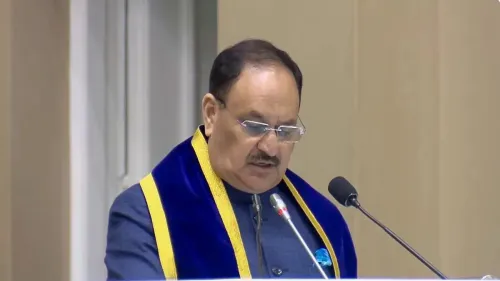
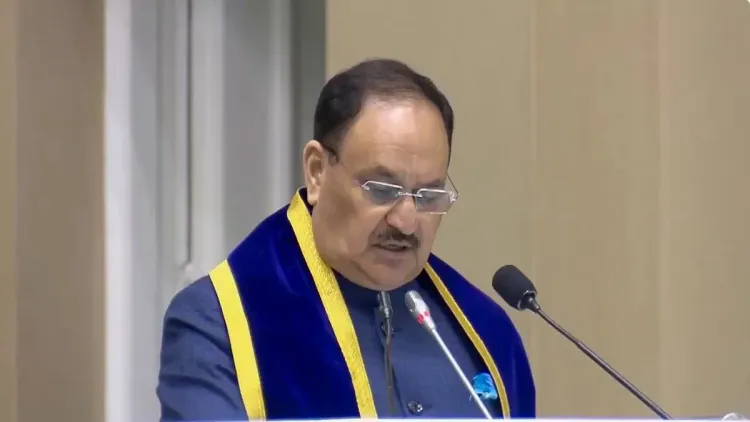
Bihar CM Samrat Choudhary amplified Union Health Minister J.P. Nadda's claim that 23 modern AIIMS are now ready across India, with faculty recruitment and research programmes advancing world-class medical education under the Centre's long-running expansion drive.
Key Takeaways
23 AIIMS are claimed operational across India, according to Union Health Minister J.P.
Nadda as quoted by Bihar CM Samrat Choudhary on 20 November 2026 .
Faculty recruitment and research programmes are cited as the active mechanisms for delivering world-class medical education at the new campuses.
The expansion traces back to the Pradhan Mantri Swasthya Suraksha Yojana (PMSSY) , launched in 2003 to address regional imbalances in apex medical care.
Phased budget approvals in 2006, 2012, and 2015 funded successive rounds of new AIIMS construction beyond the original New Delhi campus.
Key beneficiaries are medical students seeking seats, health faculty hired into new roles, and patients in underserved states accessing tertiary care locally.
Faculty hiring pace and research output will be the defining tests of whether the expanded network delivers on its stated ambitions.
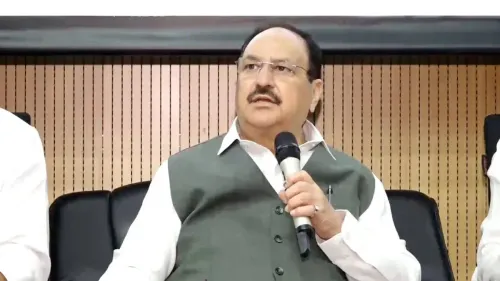
India's medical education infrastructure is being reshaped at scale — and Bihar Chief Minister Samrat Choudhary is amplifying that message. On Friday, 20 November 2026, Choudhary shared a statement on X attributed to Union Minister of Health and Family Welfare J.P. Nadda, asserting that 23 state-of-the-art AIIMS are now operational across India, with faculty recruitment and research programmes driving world-class medical education.
Quoting the Union Minister directly, Choudhary wrote: 'भारत सरकार मेडिकल एजुकेशन और सुविधाओं को बेहतर बनाने के लिए प्रतिबद्ध है' — 'The Government of India is committed to improving medical education and facilities.' The post points to both faculty hiring pipelines and active research programmes at the new institutes as the twin engines of this expansion.From one campus to a national network
The story of AIIMS beyond New Delhi begins with the Pradhan Mantri Swasthya Suraksha Yojana (PMSSY), launched in 2003 specifically to correct the stark geographical imbalance in apex medical care. The logic was blunt: a single AIIMS in the capital could not serve a country of over a billion people spread across 28 states. Phased approvals in the 2006, 2012, and 2015 Union Budgets unlocked funds to build new AIIMS campuses in underserved regions, pushing the network steadily outward from its Delhi anchor.
Each new campus was designed to do three things simultaneously — train more doctors, generate original medical research, and deliver tertiary care to patients who previously had to travel hundreds of kilometres to find it. That is the structural bet successive governments have made under the broader National Health Policy framework, and Minister Nadda's statement, as relayed by CM Choudhary, frames the current moment as a vindication of that bet.
What 23 campuses actually means for students and patients
The practical stakes are significant for three groups. Medical students gain more seats at publicly funded institutes, easing the brutal competition for MBBS and postgraduate placements. Health faculty — a perennial bottleneck — are the focus of the recruitment drives Nadda flagged, since an empty campus without qualified teachers delivers nothing. And tertiary care patients in states that previously lacked apex institutions gain access to specialised treatment without the financial and logistical burden of travelling to Delhi or the nearest metro.
Bihar itself has a direct stake here. The state has historically ranked among those with the most strained public health infrastructure relative to its population, making any expansion of AIIMS-grade capacity in the region a matter of immediate local consequence — which likely explains why CM Choudhary chose to amplify the Union Health Minister's statement.
Faculty hiring and research output — the real test ahead
Buildings are the easier half. The harder challenge — flagged consistently by health policy observers — is filling faculty positions quickly enough and seeding research programmes that justify the 'world-class' label. The Union Budget's next health allocation and the pace of faculty appointment orders will be the clearest indicators of whether the ambition translates into measurable outcomes. Those metrics, not the campus count, will determine whether India's expanded AIIMS network fulfils the promise Minister Nadda and CM Choudhary are signalling today.
Point of View
When fresh AIIMS funding or approvals are plausible. The PMSSY-driven expansion has been one of the more durable bipartisan commitments in Indian health policy, surviving changes of government, which gives the '23 AIIMS' milestone genuine cross-party credibility even as individual parties claim credit. The harder political and administrative question is faculty: India's public medical colleges have long struggled with vacant teaching posts, and any gap between campus readiness and functional staffing risks turning a headline number into a liability. If recruitment and research output data follow, the expansion story holds; if not, the campuses become the next audit controversy.
NationPress
20 Nov 2026
Frequently Asked Questions
How many AIIMS are there in India in 2026?
Union Health Minister J.P. Nadda has stated that 23 state-of-the-art AIIMS are now operational across India, up from the original single campus in New Delhi.
Which scheme funded the new AIIMS campuses in India?
The Pradhan Mantri Swasthya Suraksha Yojana (PMSSY) , launched in 2003 , is the central scheme behind the AIIMS expansion, with phased budget approvals in 2006, 2012, and 2015 driving successive rounds of construction.
Why did Bihar CM Samrat Choudhary post about AIIMS expansion?
CM Choudhary shared the Union Health Minister's statement to highlight the Central government's commitment to medical education infrastructure, a subject of direct relevance to Bihar given the state's historically strained public health system.
What is the main challenge for new AIIMS campuses in India?
Faculty recruitment is the critical bottleneck — building campuses is faster than filling qualified teaching positions, and research programme output will be the true measure of whether the new institutes achieve world-class status.
What is J.P. Nadda's role in India's health sector?
J.P. Nadda serves as India's Union Minister of Health and Family Welfare , responsible for national health policy, AIIMS governance, and the broader public healthcare framework.