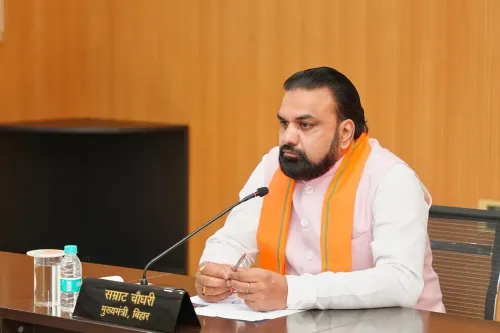
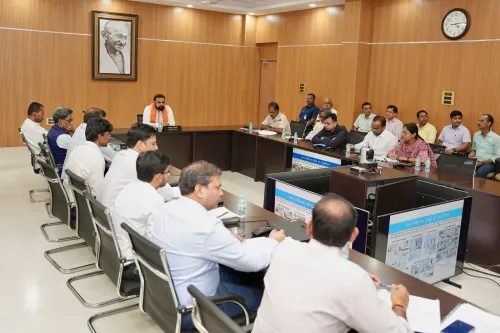
CM Samrat Choudhary Hails 12 Years of India's Health Revolution
Synopsis
Bihar Chief Minister Samrat Choudhary marked 12 years of NDA health governance on 14 June 2026, citing over ₹1.25 lakh crore in free Ayushman Bharat treatment, ₹40,000 crore in Jan Aushadhi savings, 42 crore e-Sanjeevani consultations, 23 AIIMS campuses, and a 110-per-cent rise in MBBS seats as evidence of a nationwide health transformation.
Key Takeaways
Ayushman Bharat has delivered more than ₹1.25 lakh crore worth of free medical treatment to beneficiaries since its launch in September 2018 .
Jan Aushadhi Kendras have generated cumulative savings of ₹40,000 crore for patients through subsidised generic medicines.
The e-Sanjeevani telemedicine platform has facilitated over 42 crore digital consultations, extending specialist access to rural and underserved areas.
MBBS seats have grown by more than 110 per cent and the country now has over 2,100 medical colleges and 23 AIIMS campuses.
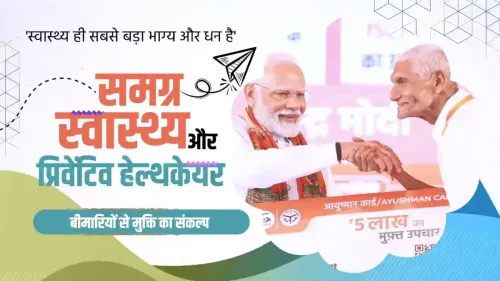
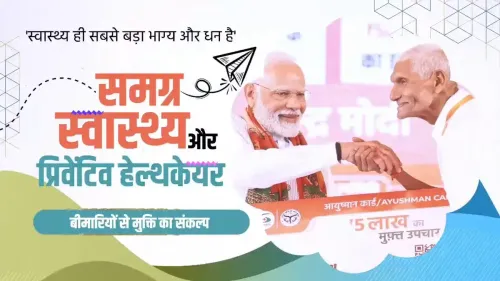
More than 1 crore Ayushman Vay Vandana Cards have been issued to senior citizens to cover their healthcare needs.
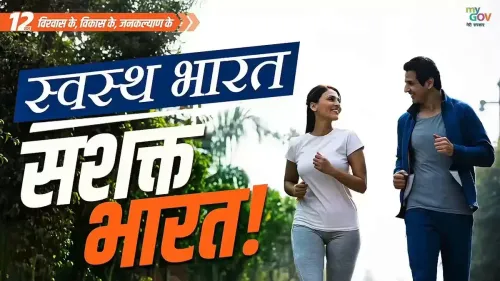
Bihar CM Samrat Choudhary framed these achievements under the #12YearsOfSwasthBharat campaign, reinforcing the ruling party's health governance record.
Bihar Chief Minister Samrat Choudhary on Sunday, 14 June 2026, took to X to mark 12 years of what he described as a health revolution under the National Democratic Alliance government, citing landmark figures across insurance coverage, affordable medicines, telemedicine, and medical education expansion under the hashtag #12YearsOfSwasthBharat.
Context
In his post, Choudhary highlighted that the resolve for a 'Swasth Bharat' (Healthy India) has gained 'new strength and new direction' over the past 12 years. He pointed to free treatment worth more than ₹1.25 lakh crore delivered under Ayushman Bharat, savings of ₹40,000 crore channelled through Jan Aushadhi Kendras (affordable medicine outlets), and over 42 crore digital consultations conducted via the e-Sanjeevani telemedicine platform as evidence of a structural shift in public health delivery.
The post also flagged a more than 110 per cent increase in MBBS seats, the presence of over 2,100 medical colleges, 23 AIIMS campuses across the country, and the issuance of more than 1 crore Ayushman Vay Vandana Cards — a component targeting senior citizens — as indicators that quality healthcare is reaching the last person in society.
Policy Backdrop
Ayushman Bharat Pradhan Mantri Jan Arogya Yojana was launched in September 2018 as the flagship health assurance scheme, providing secondary and tertiary care coverage to economically weaker sections. The National Health Policy 2017 had earlier set the framework for raising government health expenditure and integrating digital health tools into mainstream delivery.
The Pradhan Mantri Jan Aushadhi Yojana, originally initiated in 2008 and relaunched at greater scale in 2015-16, operates dedicated outlets supplying quality generic medicines at significantly lower prices. The e-Sanjeevani platform, rolled out by the Union Health Ministry, extended free remote consultations to rural and underserved populations who previously lacked access to specialist care. Expansion of AIIMS campuses — from a single-digit network before 2014 to 23 institutes — represents one of the largest investments in premier public medical education in the country's history.
Stakeholders and Impact
The primary beneficiaries of these schemes are low-income families and rural patients who historically bore catastrophic out-of-pocket health expenditure. Free hospitalisation cover under Ayushman Bharat and subsidised medicines through Jan Aushadhi Kendras together aim to reduce financial distress linked to medical costs, which has long been a leading driver of household debt in India.
For Bihar specifically — a state with historically low public health infrastructure metrics — the expansion of AIIMS campuses and increased MBBS seats carries particular significance. Greater medical college capacity translates into a larger trained workforce available to staff district and community health centres across the state. The Ayushman Vay Vandana Card for senior citizens also addresses a demographic that faces disproportionately high healthcare costs.
What's Next
Attention will now turn to Bihar's own state budget allocations for health and any fresh agreements between the Centre and the Bihar government on medical college projects or AIIMS expansions. As the ruling party builds its #12YearsOfSwasthBharat narrative ahead of future electoral cycles, state-level leaders like Choudhary are expected to continue amplifying national scheme data to demonstrate on-ground implementation. The broader test will be whether last-mile delivery metrics — particularly in aspirational districts — keep pace with the headline figures being cited.
Point of View
Medicine affordability, telemedicine reach, and medical education expansion into a single post, he maps a coherent arc from financial protection to human-resource development in healthcare. The invocation of 'the last person in society' as the intended beneficiary is a deliberate rhetorical anchor that positions welfare delivery as the party's core identity. The real political test, however, lies in whether Bihar's own district-level health outcomes corroborate the national headline figures being amplified.
NationPress
21 Sept 2026
Frequently Asked Questions
What is Ayushman Bharat and how much free treatment has it provided?
Ayushman Bharat Pradhan Mantri Jan Arogya Yojana is India's flagship health insurance scheme launched in September 2018 that covers hospitalisation costs for economically weaker sections. Bihar CM Samrat Choudhary cited figures indicating more than ₹1.25 lakh crore worth of free treatment has been delivered under the scheme over the past 12 years of NDA governance.
What is e-Sanjeevani and how many consultations has it completed?
e-Sanjeevani is the Union Health Ministry's telemedicine platform that provides free remote medical consultations, particularly to rural and underserved populations. According to figures cited by CM Choudhary, the platform has facilitated over 42 crore digital consultations.
How many AIIMS are there in India now?
India currently has 23 AIIMS campuses, a significant expansion from the single-digit network that existed before 2014. The new institutes were announced across successive Union Budgets as part of the government's push to improve premier public medical education.
What are Jan Aushadhi Kendras and how much have they saved patients?
Jan Aushadhi Kendras are government-backed outlets that supply quality generic medicines at significantly lower prices under the Pradhan Mantri Jan Aushadhi Yojana. CM Choudhary stated that these centres have collectively saved patients ₹40,000 crore compared to branded medicine prices.
What is the Ayushman Vay Vandana Card?
The Ayushman Vay Vandana Card is a component of the Ayushman Bharat scheme specifically designed for senior citizens to cover their healthcare costs. CM Choudhary noted that more than 1 crore such cards have been issued across the country.