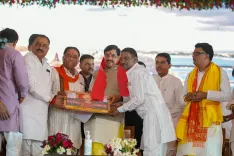
CM Samrat Choudhary hails gharial hatchlings in Gandak
Synopsis
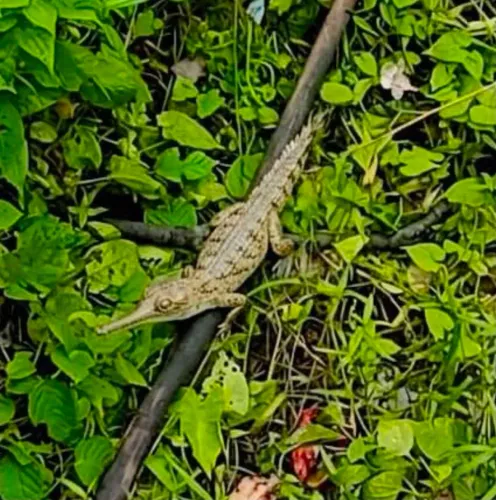
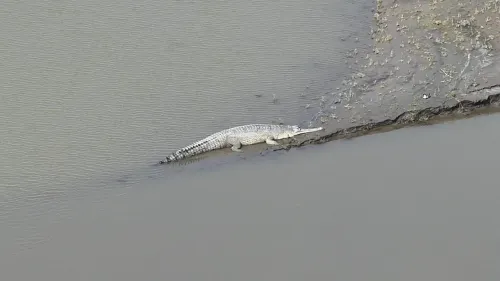
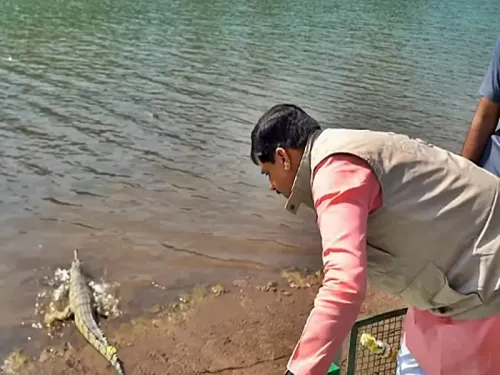
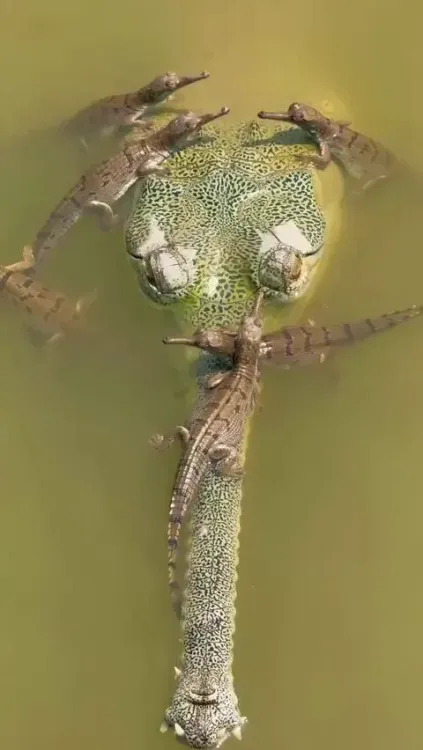
Bihar Chief Minister Samrat Choudhary announced 31 gharial hatchlings have been born and released into the Gandak river at Bagaha, marking a conservation milestone. The CM credited the Bihar Forest Department and Wildlife Institute of India, noting the species population has crossed 1,000.
Key Takeaways
31 gharial hatchlings were born and released into the Gandak river at Bagaha, West Champaran during the current breeding season.
Bihar CM Samrat Choudhary credited the joint effort of the Bihar Forest Department and the Wildlife Institute of India (WII) .
The gharial population is reported to have crossed 1,000 individuals , up from near-extinction levels in the late twentieth century.
The gharial is protected under Schedule I of the Wildlife Protection Act, 1972 , India's highest tier of wildlife protection.
India's gharial recovery efforts trace back to Project Crocodile, launched in 1975 , which established captive breeding and river-release programmes.
The next annual gharial census along the Gandak will be key to independently verifying the reported population milestone.
Bihar Chief Minister Samrat Choudhary on Thursday, June 11, 2026, celebrated a significant conservation milestone, announcing that 31 gharial hatchlings had been born and successfully released into the Gandak river in the Bagaha area of West Champaran district during the current breeding season. The Chief Minister credited the joint efforts of the Bihar Forest Department and the Wildlife Institute of India (WII) for the achievement.
Context
Posting in Hindi, CM Choudhary described the development as 'प्रकृति संरक्षण की दिशा में बड़ी उपलब्धि' ('a major achievement in the direction of nature conservation'). He noted that the gharial population, once pushed to the brink of extinction, has now crossed 1,000 individuals, calling it proof of the state's commitment to clean rivers, rich biodiversity, and wildlife protection. The hatchlings were released into the Gandak, a major Ganga tributary that flows through Bihar and Uttar Pradesh.
Policy Backdrop
India's gharial recovery effort has its roots in Project Crocodile, launched in 1975, which established captive breeding centres and initiated release programmes across the Ganga river system. The gharial is listed under Schedule I of the Wildlife Protection Act, 1972, the highest tier of legal protection available under Indian law, which underpins the state-level recovery programmes that continue today. The Wildlife Institute of India, an autonomous body under the Union Ministry of Environment headquartered in Dehradun, has been a long-standing research and monitoring partner in these efforts.
Bihar has focused specifically on the Gandak river stretch near Bagaha as a key reintroduction site, integrating habitat protection with broader river-basin management goals. The soft-release method — whereby captive-bred hatchlings are acclimatised before being introduced to the wild — has been central to incremental population gains recorded across several basins over the past five decades.
Stakeholders and Impact
The Bihar Forest Department and field staff bear direct operational responsibility for monitoring and protecting the released hatchlings in the Gandak. Riverine communities in West Champaran and adjoining districts are also key stakeholders, as healthier gharial populations signal improved river ecology that benefits local fisheries and livelihoods. The WII's continued involvement ensures scientific rigour in population assessment and breeding-programme design.
A gharial population crossing 1,000 — if confirmed through the next formal census — would mark a notable recovery for a species that had dwindled to fewer than 200 individuals in the wild at its lowest point in the late twentieth century. Conservation groups have long held the Gandak-Ganga system as a bellwether for the health of India's northern riverine ecosystems.
What's Next
Attention will now turn to the results of the next annual gharial census along the Gandak, which will provide independent verification of the population figure cited by the Chief Minister. Any new release sites or expanded breeding-programme budgets announced by the Bihar Forest Department in coordination with WII will be watched closely by conservationists. The trajectory of this programme also carries implications for Bihar's positioning ahead of national and international biodiversity commitments, as states increasingly compete to demonstrate measurable ecological outcomes.
Point of View
A narrative increasingly favoured by BJP-led state governments. The invocation of a joint Bihar Forest Department–WII effort signals an attempt to share credit with a credible central institution, lending scientific weight to what is also a political message. Situated within India's five-decade Project Crocodile legacy, the announcement reinforces Bihar's bid to be seen as a proactive ecological actor ahead of national biodiversity reviews. However, the population figure of over 1,000 remains field data pending formal census verification, which means the claim carries political risk if independent counts diverge.
NationPress
26 Oct 2026
Frequently Asked Questions
What is the current gharial population in India?
Bihar CM Samrat Choudhary stated in June 2026 that the gharial population has crossed 1,000 individuals, a significant recovery from near-extinction levels. This figure is based on field data and awaits confirmation through the next formal annual census.
Where were the gharial hatchlings released in Bihar?
The 31 gharial hatchlings were released into the Gandak river in the Bagaha area of West Champaran district, Bihar, during the current breeding season.
What is Project Crocodile India?
Project Crocodile was launched by India in 1975 to conserve three crocodilian species — the gharial, mugger, and saltwater crocodile — through captive breeding centres and river-release programmes across river systems including the Ganga.
What is the role of the Wildlife Institute of India in gharial conservation?
The Wildlife Institute of India (WII), based in Dehradun, is an autonomous body under the Union Ministry of Environment. It conducts research, captive breeding support, and field monitoring for endangered species including the gharial, and partners with state forest departments on recovery programmes.
Is the gharial an endangered species in India?
Yes, the gharial is listed under Schedule I of the Wildlife Protection Act, 1972, India's highest tier of legal protection. The species had declined to fewer than 200 individuals in the wild at its lowest point, making it critically endangered globally.