CM Himanta Flags Gharial Sighting as Sign of Assam River Revival
Synopsis
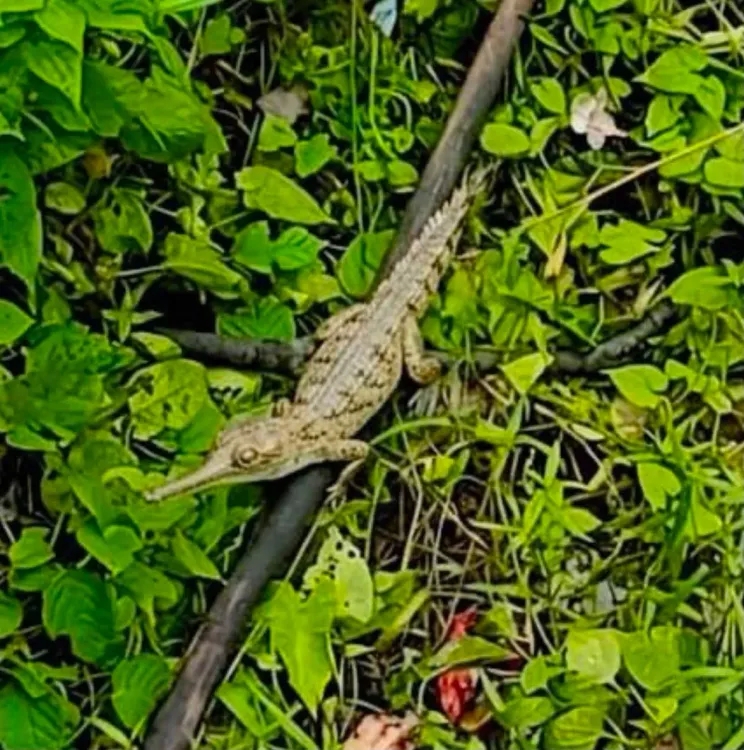
A juvenile Gharial spotted in the Kekaidong River, West Karbi Anglong, has drawn attention from Assam CM Himanta Biswa Sarma, who called it evidence of the state's improving river health and pledged continued commitment to biodiversity protection.
Key Takeaways
Assam CM Himanta Biswa Sarma flagged the sighting of a juvenile Gharial in the Kekaidong River , West Karbi Anglong , on 30 June 2026 .
The Gharial is classified as Critically Endangered on the IUCN Red List, making any confirmed sighting a significant conservation event.
The sighting is being read as an indicator of improving water quality and ecological health in the river system.
West Karbi Anglong is part of a forest-rich district governed under the Karbi Anglong Autonomous Council , with substantial biodiversity value.
CM Sarma called on the state to remain 'steadfast in protecting the rich biodiversity that defines our State.' Wildlife authorities are expected to conduct follow-up surveys to assess whether a breeding population is establishing along the Kekaidong.
Assam Chief Minister Himanta Biswa Sarma on Tuesday, 30 June 2026, highlighted the sighting of a juvenile Gharial in the Kekaidong River, West Karbi Anglong, calling it a reflection of the steady revival of the state's natural ecosystems.
Context
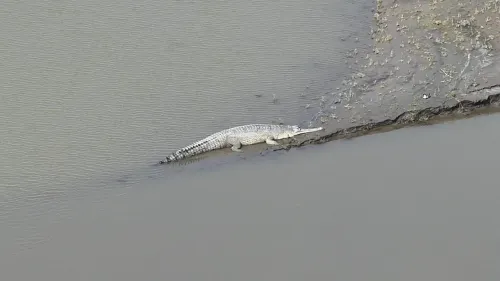
The Chief Minister shared images of the juvenile Gharial — a critically endangered, fish-eating crocodilian native to the Indian subcontinent — spotted in the Kekaidong River in West Karbi Anglong district. Sarma described the sighting as evidence that 'healthy rivers tell their own story,' underscoring the link between clean waterways and the return of indicator species.
The Gharial (Gavialis gangeticus) is listed as Critically Endangered on the IUCN Red List, with its wild population having collapsed dramatically over the 20th century due to habitat loss, sand mining, and fishing net entanglement. Its presence in a river system is widely regarded by ecologists as a strong indicator of water quality and ecological health.
Policy Backdrop
Assam's river systems, fed by the Brahmaputra and its numerous tributaries, are among the most biodiverse in South Asia. The state has in recent years intensified efforts around wetland conservation, anti-poaching drives, and community-based forest protection, particularly in districts such as Karbi Anglong, which hosts significant forest cover under the Karbi Anglong Autonomous Council.
The Gharial was once present across major river systems of the subcontinent but today survives in only a handful of locations, primarily in rivers of northern and northeastern India. Any confirmed sighting of a juvenile — indicating local breeding or dispersal — is treated as a significant conservation event by wildlife authorities.
Stakeholders and Impact
The sighting is significant for both the Assam Forest Department and national wildlife bodies, as it points to improving river health in a region that has faced pressures from encroachment, siltation, and unregulated riverbed activity. Local communities in West Karbi Anglong, many of whom depend on the Kekaidong and surrounding rivers for livelihoods, stand to benefit from sustained ecological recovery.
Conservation organisations tracking Gharial populations across India are likely to treat this as a data point for range-expansion assessments. The juvenile sighting also reinforces the argument for extending protected status or buffer zones along lesser-monitored river stretches in Assam's hill districts.
What's Next
Chief Minister Sarma's post signals that the state government intends to keep biodiversity conservation central to its governance narrative. He stated that the sighting 'encourages us to remain steadfast in protecting the rich biodiversity that defines our State,' suggesting continued policy attention to river and forest ecosystems.
Wildlife officials are expected to conduct follow-up surveys along the Kekaidong River to assess the extent of the Gharial's presence and determine whether a breeding population may be establishing itself. A confirmed breeding record would mark a notable milestone for Gharial recovery in northeastern India.
Point of View
An increasingly resonant theme in Indian politics. The Gharial, as a charismatic and critically endangered species, serves as a powerful proxy for river health, allowing the Chief Minister to signal ecological progress without committing to specific regulatory measures. This sits within a broader BJP-ruled-state pattern of using conservation optics alongside development narratives. The sighting's policy implications, however, are real: if confirmed by survey data, it could trigger formal habitat protection proposals for the Kekaidong corridor.
NationPress
29 Sept 2026
Frequently Asked Questions
What is a Gharial and why is its sighting significant?
A Gharial is a fish-eating crocodilian native to the Indian subcontinent and is classified as Critically Endangered by the IUCN. Its sighting in the Kekaidong River is significant because the species is a strong indicator of clean, healthy river ecosystems and its range has drastically shrunk over the past century.
Where exactly was the Gharial spotted in Assam?
The juvenile Gharial was spotted in the Kekaidong River in West Karbi Anglong district of Assam, as highlighted by Chief Minister Himanta Biswa Sarma on 30 June 2026.
What did Assam CM Himanta Biswa Sarma say about the Gharial sighting?
CM Sarma said the sighting 'reflects the steady revival of Assam's natural ecosystems' and called it an encouragement to remain steadfast in protecting the state's rich biodiversity.
Is the Gharial found in northeastern India?
The Gharial's range in northeastern India is extremely limited and any confirmed presence in Assam's river systems is considered a notable conservation development. The species is more commonly associated with rivers in northern India such as the Chambal.
What will happen after the Gharial sighting in West Karbi Anglong?
Wildlife authorities are expected to carry out follow-up surveys along the Kekaidong River to determine whether a breeding population is present, which could lead to formal habitat protection measures for that river corridor.