CM Samrat Choudhary Hails CG Semi OSAT Launch in Sanand

Synopsis
Bihar CM Samrat Choudhary welcomed the inauguration of the CG Semi OSAT Facility in Sanand, Gujarat — a ₹7,500-crore-plus project under the India Semiconductor Mission — calling it a landmark step toward making India a global semiconductor manufacturing hub under PM Modi's leadership.
Key Takeaways
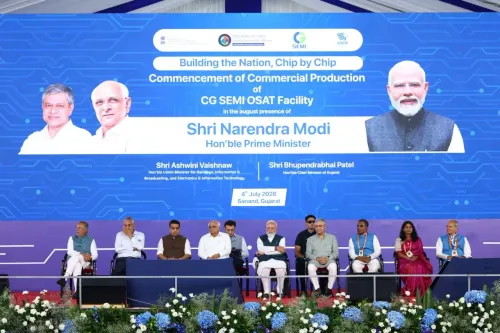
Bihar CM Samrat Choudhary praised the inauguration of the CG Semi OSAT Facility in Sanand, Gujarat on 4 July 2026 .
The facility was established with an investment of over ₹7,500 crore , making it one of the largest semiconductor packaging investments in India to date.
The plant is an OSAT unit focused on semiconductor assembly and testing — a critical link in the global chip supply chain.
The project falls under the India Semiconductor Mission , approved in December 2021 with a total outlay of ₹76,000 crore .
The inauguration advances the Atmanirbhar Bharat goal of reducing India's dependence on imported chips and positioning the country as a global semiconductor manufacturing hub.
Rollout of additional approved OSAT projects and production-linked incentive disbursements remain key milestones to watch.
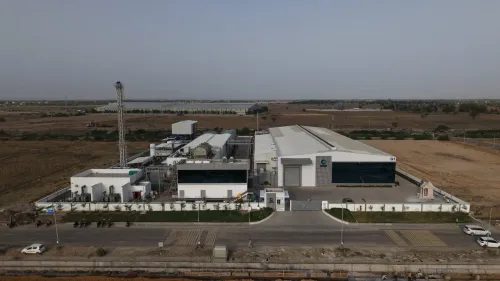
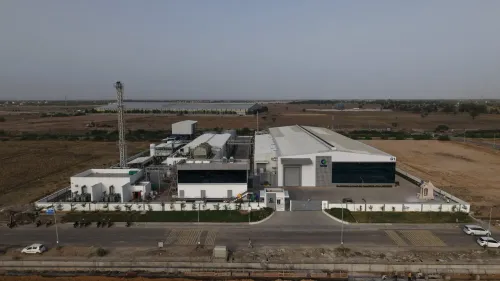
Bihar Chief Minister Samrat Choudhary on Saturday, 4 July 2026, hailed the inauguration of the CG Semi OSAT Facility in Sanand, Gujarat, calling it a historic milestone in India's semiconductor self-reliance journey. The facility, established with an investment of over ₹7,500 crore, marks a significant advance under the India Semiconductor Mission and Prime Minister Narendra Modi's broader push for high-technology domestic manufacturing.
Context
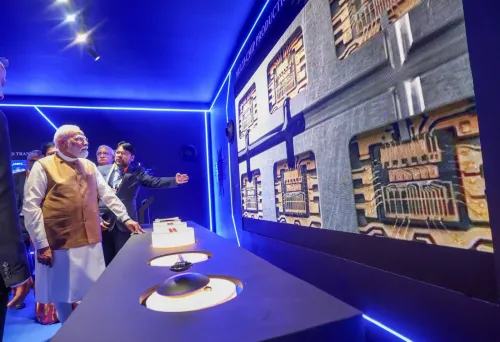
Choudhary took to X to describe the development as 'another historic chapter' (ek aur ऐतिहासिक अध्याय) in India's technological progress and industrial self-reliance. He credited Prime Minister Modi's 'visionary leadership' (दूरदर्शी नेतृत्व) for steering the country toward becoming a global technology power. The post was accompanied by a video and carried the hashtags #SemiconHubBharat and #PMinSanand, indicating the Prime Minister's personal presence at the inauguration.
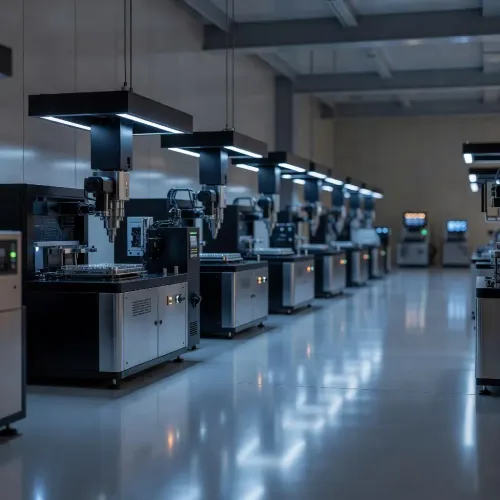
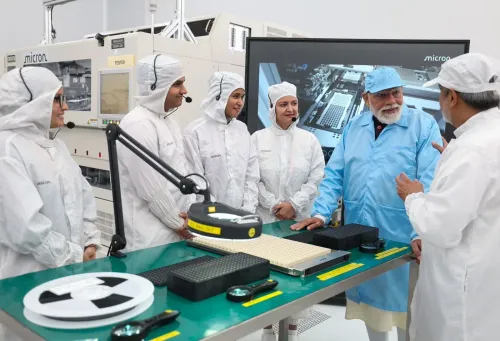
The CG Semi facility is an OSAT (Outsourced Semiconductor Assembly and Test) unit — a category of plant that handles the packaging, assembly, and testing of chips after wafer fabrication. Such units are a critical link in the global semiconductor supply chain and have been a priority target for India's incentive programmes.
Policy Backdrop
The India Semiconductor Mission (ISM) was approved in December 2021 with an outlay of ₹76,000 crore to attract fabrication, OSAT, and design infrastructure to India. The mission was conceived to reduce the country's deep dependence on chip imports — a vulnerability exposed acutely during the global semiconductor shortage of 2020–22. The first Semicon India Conference was convened in 2022 to signal India's intent to global supply-chain planners.
Sanand in Gujarat has emerged as a preferred destination for electronics and semiconductor investments, benefiting from established industrial infrastructure and proximity to logistics corridors. Parallel investments in states such as Assam reflect a deliberate policy of geographic dispersal to build resilient, nationwide capacity in assembly, testing, and packaging.
Stakeholders and Impact
The CG Semi OSAT plant is expected to accelerate commercial chip manufacturing in India and deepen the country's integration into global semiconductor supply chains. Domestic electronics manufacturers — from consumer electronics assemblers to automotive component makers — stand to benefit from shorter, more reliable chip-supply pipelines. The facility is also projected to generate high-skill employment in the semiconductor workforce, a segment India has been actively cultivating through academic and training partnerships.
Choudhary framed the project as central to the Atmanirbhar Bharat vision, arguing it would establish India as 'a major centre of global electronics and semiconductor manufacturing' (वैश्विक इलेक्ट्रॉनिक्स एवं सेमीकंडक्टर विनिर्माण के प्रमुख केंद्र). The broader pattern across successive government approvals suggests a sustained, multi-year commitment rather than a single-event push.
What's Next
Attention will now turn to the rollout timelines for other OSAT and assembly projects already approved under the India Semiconductor Mission, as well as the disbursement of production-linked incentives tied to verified output milestones. The commissioning of the CG Semi Sanand plant adds operational momentum to a pipeline that policymakers hope will position India alongside established East Asian semiconductor hubs within the decade.
If successive approved projects reach commercial production on schedule, India's share in the global semiconductor packaging and testing market could grow meaningfully — a metric that investors and trading partners will watch closely in the quarters ahead.
Point of View
Reinforcing the Atmanirbhar Bharat narrative across regional audiences. The Sanand inauguration fits a deliberate pattern of anchoring high-visibility technology investments in Gujarat, a state that serves both as an industrial showcase and a political stronghold. More substantively, the CG Semi OSAT plant represents the first wave of physical output from the ₹76,000-crore India Semiconductor Mission — shifting the programme from policy announcement to operational reality. Whether downstream production-linked incentive disbursements follow on schedule will determine if the mission's momentum translates into durable supply-chain depth.
NationPress
3 Oct 2026
Frequently Asked Questions
What is the CG Semi OSAT Facility inaugurated in Sanand?
The CG Semi OSAT Facility in Sanand, Gujarat is an Outsourced Semiconductor Assembly and Test plant established with an investment of over ₹7,500 crore. It handles the packaging, assembly, and testing of semiconductor chips and is a key project under India's Semiconductor Mission.
What is India's Semiconductor Mission?
The India Semiconductor Mission is a central government programme approved in December 2021 with an outlay of ₹76,000 crore. It aims to build domestic chip fabrication, assembly, and design capacity to reduce import dependence and integrate India into global semiconductor supply chains.
Why did Bihar CM Samrat Choudhary comment on a Gujarat project?
As a senior BJP leader and Bihar Chief Minister, Samrat Choudhary regularly amplifies major national policy milestones driven by the central government, framing them within the Atmanirbhar Bharat vision championed by Prime Minister Modi.
What is an OSAT facility and why does it matter for India?
OSAT stands for Outsourced Semiconductor Assembly and Test — the stage of chip production covering packaging and quality testing after wafer fabrication. Building OSAT capacity in India reduces dependence on East Asian facilities and strengthens the domestic electronics supply chain.
Where is Sanand and why is it chosen for semiconductor investment?
Sanand is an industrial town in Gujarat known for its well-developed manufacturing infrastructure and logistics connectivity. It has attracted multiple electronics and semiconductor investments, making it a focal point of India's high-technology manufacturing push.