CM Bhagwant Mann Issues 10 Lakh New Ration Cards in Punjab
Synopsis
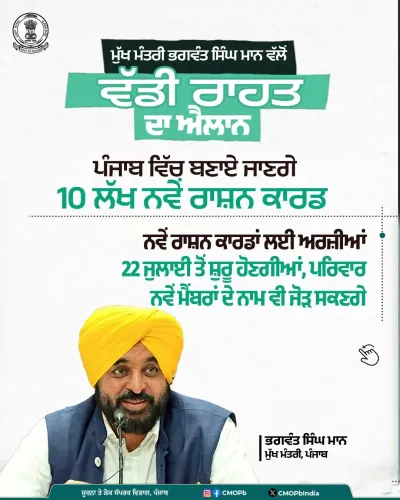
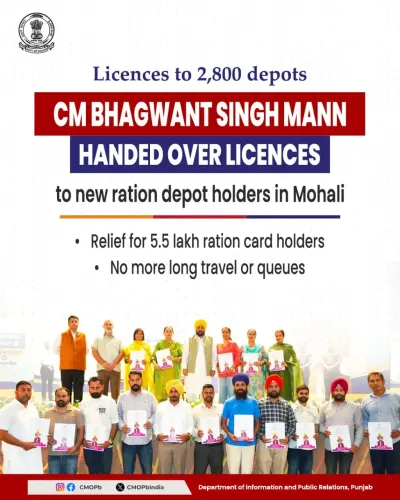
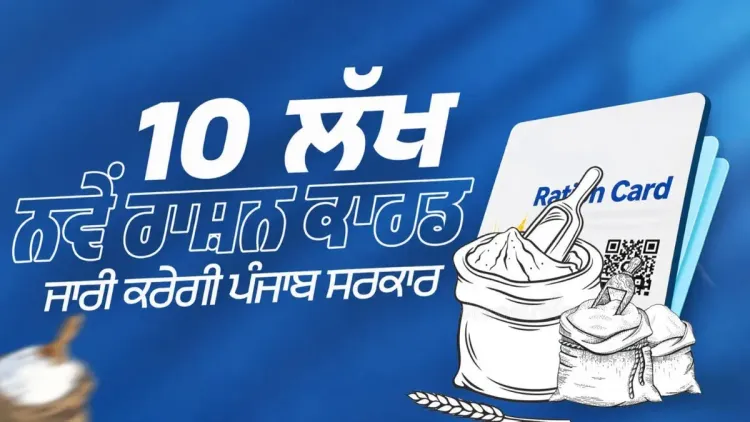
Chief Minister Bhagwant Mann has announced the issuance of 10 lakh new ration cards to needy Punjab families without political recommendations, bundling access to the Meri Rasoi scheme and other state welfare benefits in a transparency-first rollout.
Key Takeaways
10 lakh new ration cards are being issued by the Punjab government to needy families.
Cards will be issued without any recommendation and with full transparency, per the CMO's announcement.
New cardholders will gain access to the Meri Rasoi scheme alongside standard PDS benefits.
CM Bhagwant Mann shared the announcement on 17 November 2026 .
The move aligns with the AAP government's 2022 pledge to eliminate middlemen and leakages from Punjab's public distribution system.
A welfare push with zero middlemen — that is the headline from Chandigarh on Tuesday, 17 November 2026, as the Chief Minister's Office of Punjab announced that Chief Minister Bhagwant Mann has shared details of the state government's decision to issue 10 lakh new ration cards to needy families across the state, entirely without recommendations and with full transparency.
The CMO's post, written in Punjabi, states that the cards will be issued bina kisi sifarish ate poori pardarshta naal — 'without any recommendation and with complete transparency.' Cardholders will gain access not only to subsidised grain through the public distribution system but also to the state's 'Meri Rasoi' scheme and a range of other government welfare facilities.
What 'Meri Rasoi' adds to a ration card
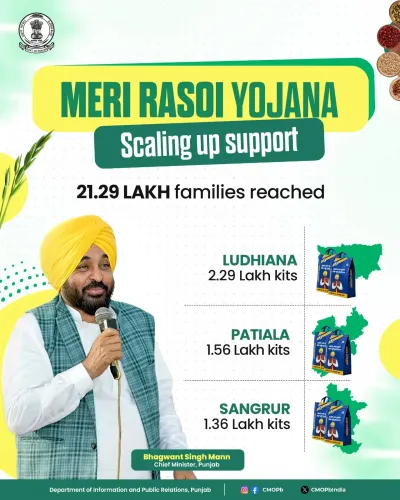
The Meri Rasoi scheme extends food security benefits beyond the standard PDS grain quota, linking ration card holders to a broader set of nutritional and household support entitlements offered by the Punjab government. By bundling Meri Rasoi access with the new card issuance, the administration is positioning the ration card as a single entry point to multiple welfare streams — not merely a slip for monthly flour and rice.
The AAP transparency pledge and Punjab's PDS history
When the Aam Aadmi Party swept Punjab's assembly elections in March 2022, one of its loudest promises was to clean up a public distribution system long plagued by ghost beneficiaries, broker-driven card issuance, and leakages. The explicit 'no-recommendation' framing in Tuesday's announcement is a direct callback to that promise — a signal that beneficiary selection is being driven by need-based data rather than political or bureaucratic patronage.
The scale is significant: 10 lakh households added to the food-subsidy net in one announcement represents a substantial expansion of Punjab's PDS coverage, reaching families who were previously excluded, overlooked, or unable to navigate an opaque application process.
What Punjab watchers will track next
The credibility of this rollout will ultimately rest on the beneficiary lists. Independent audits of who received the new cards — and whether the 'no-recommendation' guarantee held in practice at the block and panchayat level — will be the real test. Progress on integrating new cardholders into the Meri Rasoi framework, and any grievance data from applicants who were denied, will tell the fuller story in the weeks ahead.
Punjab has staked a governance reputation on making welfare direct, verifiable, and free of broker culture. Ten lakh new ration cards, issued cleanly, would be a concrete proof point. The list is out — now comes the audit.
Point of View
' the AAP government is drawing a sharp contrast with the patronage-driven card issuance practices of previous administrations. Bundling Meri Rasoi access with the new cards is smart politics too: it raises the visible value of a ration card, making inclusion more tangible for beneficiaries. The real test of the AAP's anti-leakage credentials, however, will come when independent observers cross-check the beneficiary lists at the ground level — ghost cards and broker-managed lists have survived many a transparency drive in India's PDS history. If Punjab can demonstrate a clean, auditable rollout at this scale, it becomes a replicable template for the party's governance model in other states.
NationPress
17 Nov 2026
Frequently Asked Questions
Who is eligible for the new 10 lakh ration cards in Punjab?
The Punjab government says the cards are for 'needy families' and will be issued without political recommendations, suggesting a need-based eligibility criteria rather than referral-based selection.
What is the Meri Rasoi scheme in Punjab?
Meri Rasoi is a Punjab government scheme that extends food security and nutritional benefits to ration card holders beyond the standard public distribution system grain quota.
How is Punjab ensuring transparency in ration card issuance?
Chief Minister Bhagwant Mann stated that the 10 lakh new cards will be issued without any recommendations and with complete transparency, aiming to eliminate broker-driven and patronage-based card distribution.
How many new ration cards is the Punjab government issuing?
The Punjab government, under CM Bhagwant Mann, is issuing 10 lakh (one million) new ration cards to needy families across the state.
What benefits will new ration card holders get in Punjab?
New ration card holders in Punjab will receive subsidised grain through the public distribution system as well as access to the Meri Rasoi scheme and other state government welfare facilities.