Giriraj Singh Inaugurates 651 Solar Lights in Begusarai
Synopsis
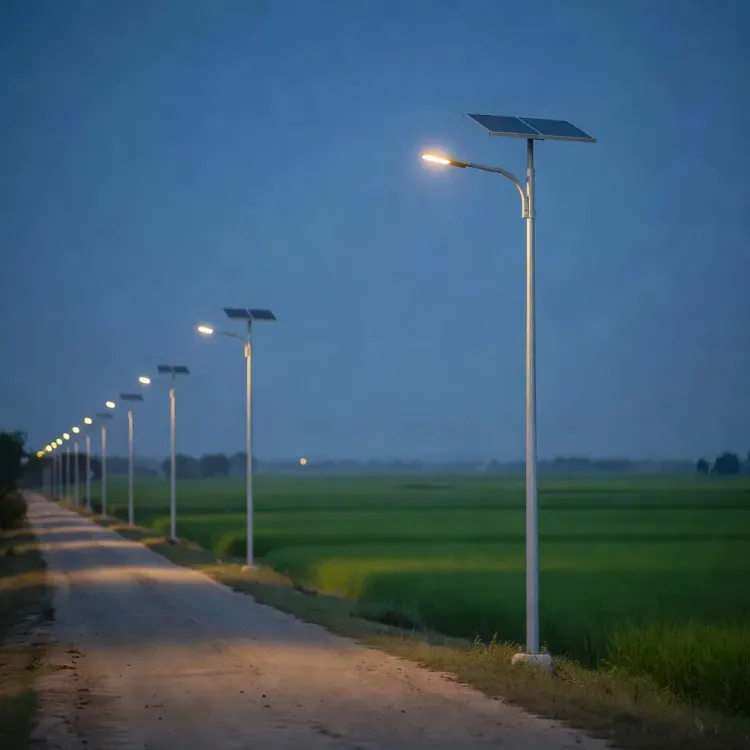
Union Textiles Minister Giriraj Singh attended the inauguration of a Kamalnath Ghosh Foundation-led project installing 651 solar streetlights across 15 wards in 8 villages of Lakhnapur Panchayat, Begusarai, Bihar, on 17 November 2026, promoting clean energy and rural safety.
Key Takeaways
651 solar streetlights are being installed under the project in Lakhnapur Panchayat, Begusarai .
The coverage spans 15 wards across 8 villages within the panchayat.
The project is organised by the Kamalnath Ghosh Foundation , a non-governmental body.
Union Textiles Minister Giriraj Singh attended the inauguration and foundation-laying ceremony on 17 November 2026 .
The initiative aims to improve rural lighting, safety, public facilities, and clean energy adoption in Bihar .
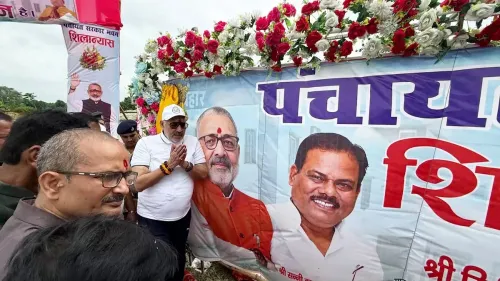
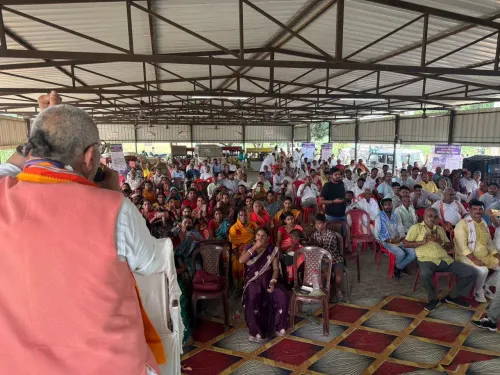
Six hundred and fifty-one solar streetlights for eight villages, all lit through a single foundation-led drive — that is the scale of what Union Textiles Minister Giriraj Singh helped launch on Tuesday, 17 November 2026, in his own constituency of Begusarai, Bihar.
Attending the inauguration and foundation-laying ceremony organised by the Kamalnath Ghosh Foundation in Lakhnapur, Begusarai, Singh said the initiative covers 15 wards across 8 villages within the Lakhnapur Panchayat. In his post, he called it 'ग्रामीण क्षेत्रों में रोशनी, सुरक्षा और जनसुविधाओं को बेहतर बनाने की दिशा में सराहनीय कदम' — 'a commendable step toward improving lighting, safety, and public facilities in rural areas' — and noted it would also advance clean energy adoption.
651 solar lights, 8 villages, one panchayat
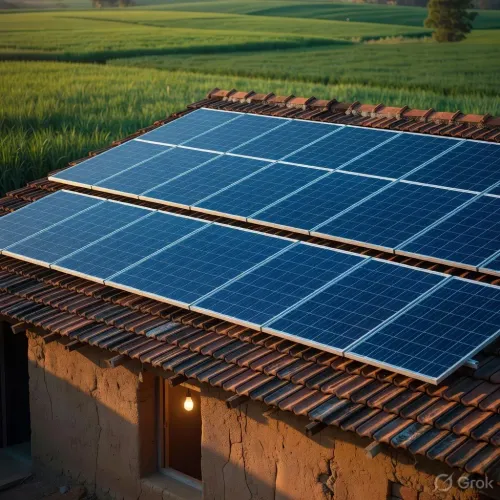
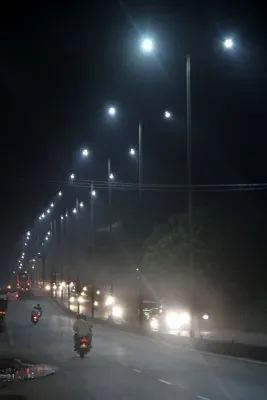
The Lakhnapur Panchayat project represents the kind of last-mile electrification push that national programmes have long targeted but not always completed. Installing 651 solar-powered streetlights across rural wards directly addresses the safety gap that unlit village streets create after dark — for women, children, and daily commuters alike. The project is being executed by the Kamalnath Ghosh Foundation, a non-governmental body, without state or central funding, illustrating how civil-society organisations increasingly fill gaps in rural infrastructure delivery.
Bihar's solar push meets grassroots execution
India's solar ambitions have been codified in policy since the Jawaharlal Nehru National Solar Mission was launched in 2010, but the distance between national targets and village-level outcomes has often been where momentum stalls. Projects like this one in Begusarai represent the grassroots end of that chain — independent of the central grid, powered by rooftop or standalone panels, and maintained locally. Bihar's rural belts, historically dependent on erratic grid supply, stand to benefit disproportionately from decentralised solar solutions. Each solar light installed is also one fewer unit of coal-generated power consumed.
For Singh, whose Lok Sabha seat encompasses exactly these kinds of semi-rural pockets, the event doubles as constituency development and clean-energy advocacy — both politically and substantively aligned with the BJP-led government's broader renewable energy messaging at the Centre.
The next measure of success is straightforward: whether all 651 lights are commissioned on schedule, and whether the Kamalnath Ghosh Foundation extends the model to neighbouring panchayats in Bihar's Begusarai belt. If it does, Lakhnapur becomes a replicable template — not just a ribbon-cutting moment.
Point of View
Backing a foundation-led initiative in his own Begusarai seat reinforces his local development credentials while aligning with the Centre's clean-energy narrative. The choice of a solar project is also symbolically significant — rural electrification remains a live electoral issue in Bihar. If the foundation model scales, it could signal a replicable approach to last-mile energy access that supplements, rather than waits on, state delivery.
NationPress
17 Nov 2026
Frequently Asked Questions
What is the solar street light project inaugurated in Begusarai?
The Kamalnath Ghosh Foundation is installing 651 solar-powered streetlights across 15 wards in 8 villages of Lakhnapur Panchayat in Begusarai, Bihar, to improve rural lighting, safety, and clean energy access.
Who attended the Lakhnapur solar light inauguration?
Union Textiles Minister Giriraj Singh , the Lok Sabha MP from Begusarai , attended the inauguration and foundation-laying ceremony organised by the Kamalnath Ghosh Foundation on 17 November 2026 .
How many villages will benefit from the Lakhnapur solar project?
8 villages within the Lakhnapur Panchayat of Begusarai, spread across 15 wards , will benefit from the installation of 651 solar streetlights .
Is the Lakhnapur solar project a government scheme?
No. The project is organised by the Kamalnath Ghosh Foundation , a non-governmental organisation, and is not directly part of a central or state government scheme, though it aligns with India's broader solar energy and rural electrification goals.
What is Giriraj Singh's constituency in Bihar?
Giriraj Singh is the Lok Sabha MP from Begusarai , Bihar. He also serves as the Union Minister of Textiles in the central government.