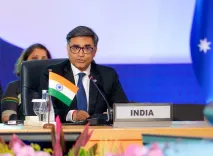
Owaisi visits home of late Islamic scholar Mufti Sadiq Faheem
Synopsis
AIMIM president Asaduddin Owaisi personally visited the family of late Islamic scholar Hazrat Maulana Mufti Sadiq Mohiuddin Faheem on 17 November 2026, offering condolences and praying for the departed soul's elevation in paradise.
Key Takeaways
Asaduddin Owaisi posted a condolence message on 17 November 2026 for late Islamic scholar Hazrat Maulana Mufti Sadiq Mohiuddin Faheem .
Owaisi personally visited the scholar's home to perform a last farewell and meet the grieving family.
He prayed for the scholar's forgiveness and elevation to Jannat-ul-Firdous (the highest paradise) in his public post.
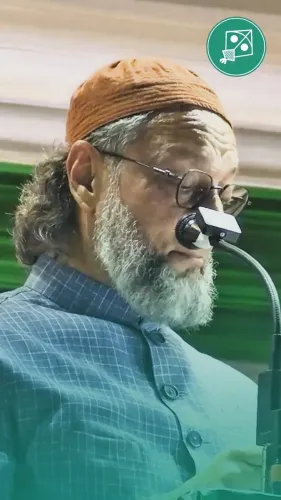
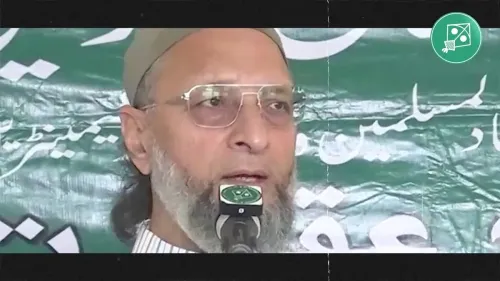
The AIMIM national handle shared a video of the condolence visit alongside Owaisi's personal post.
The gesture reflects Owaisi's established pattern of direct community engagement in and around Hyderabad .
A scholar's passing drew AIMIM president Asaduddin Owaisi to a grieving household on the evening of Tuesday, 17 November 2026 — the Hyderabad MP arriving in person to offer condolences to the family of Hazrat Maulana Mufti Sadiq Mohiuddin Faheem, a respected Aalim-e-Deen (Islamic religious scholar) whose death was announced earlier in the day.
Owaisi shared the news on X, writing in Urdu: 'Allah Ta'ala unki deeni khidmaat ko qubool farmaye, unki maghfirat farmaye aur Jannat-ul-Firdous mein aala maqam ata farmaye' — 'May Allah accept his religious services, grant him forgiveness, and bestow upon him an elevated station in Jannat-ul-Firdous.' He added that upon hearing of the passing, he went directly to the scholar's home, performed the last rites of farewell (aakhri deedar), and personally conveyed his condolences to the family.
Who was Mufti Sadiq Mohiuddin Faheem
The deceased is referred to in the post as a Maroof Aalim-e-Deen — a well-known scholar of the faith. Beyond this, details of his institutional affiliations and the specific circumstances of his passing have not been independently confirmed. His standing in the community is reflected in Owaisi's decision to visit the family in person rather than issue a routine statement alone.
Owaisi's personal tribute and what it signals
Indian political figures across the spectrum routinely issue public condolences upon the death of religious scholars, but personal visits carry a distinct weight — they signal proximity to community life that a social-media post alone cannot convey. For Owaisi, whose political identity and constituency base in Hyderabad are deeply intertwined with Muslim community institutions, paying his respects at the scholar's home is consistent with a long-standing pattern of direct community engagement.
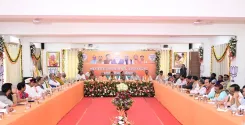
The AIMIM national handle also shared a video of the visit, documenting the moment for a wider audience. The public sharing of a private condolence call reflects the dual nature of such gestures — genuine grief and community solidarity, made visible.
Point of View
Rather than limiting himself to a social-media tribute, underscores how community-embedded politics works in constituencies like Hyderabad, where proximity to religious institutions carries real electoral and social currency. The public documentation of a private condolence call is itself a political act — not cynically, but structurally: it communicates availability, respect, and rootedness. Across Indian political traditions, such gestures toward faith leaders function as markers of legitimacy within specific communities. Owaisi's act follows a well-worn template, but the template endures because it still means something to the people it is directed at.
NationPress
17 Nov 2026
Frequently Asked Questions
Who was Mufti Sadiq Mohiuddin Faheem?
Hazrat Maulana Mufti Sadiq Mohiuddin Faheem was described by AIMIM president Asaduddin Owaisi as a 'Maroof Aalim-e-Deen' — a well-known Islamic religious scholar. No further verified biographical details are currently available.
Why did Asaduddin Owaisi visit the scholar's home?
Owaisi visited the home of the late Mufti Sadiq Mohiuddin Faheem to offer personal condolences to the family, perform a last farewell, and express his grief upon the scholar's passing on 17 November 2026.
What did Owaisi say in his condolence post?
Owaisi prayed that Allah accept the scholar's religious services, grant him forgiveness, and bestow upon him an elevated station in Jannat-ul-Firdous (the highest level of paradise). He also noted that he personally visited the family after hearing the news.
Is Asaduddin Owaisi known for making personal condolence visits?
Yes. Owaisi, as AIMIM president and Hyderabad's Lok Sabha MP, has a long pattern of personally engaging with his constituency's religious and community institutions, including visiting bereaved families of scholars and community leaders.
What is AIMIM and who leads it?
AIMIM — the All India Majlis-e-Ittehadul Muslimeen — is a political party based in Hyderabad. It is led by Asaduddin Owaisi , who also serves as the Lok Sabha Member of Parliament from Hyderabad.