Owaisi mourns Urdu poet Bashir Badr with couplet tribute

Synopsis
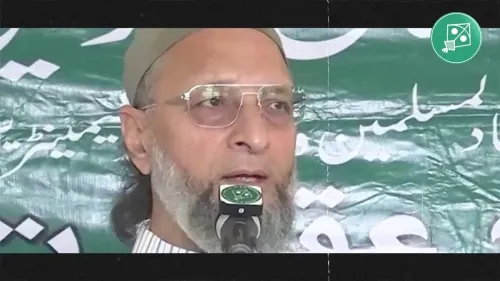
AIMIM president Asaduddin Owaisi mourned celebrated Urdu poet Bashir Badr on 28 May 2026, quoting one of his most resonant couplets and offering an Islamic prayer for the poet's soul. The tribute underscores Owaisi's longstanding engagement with Urdu literary heritage.
Key Takeaways
Asaduddin Owaisi , AIMIM president and Hyderabad MP, posted a tribute to Urdu poet Bashir Badr on 28 May 2026 .
The post quoted a Badr couplet on the pain of displacement versus the ease of destruction.
Owaisi recited Inna lillahi wa inna ilayhi raji'un and prayed for divine mercy for the poet's soul.
Bashir Badr was one of modern India's most widely read Urdu ghazal poets, known for humanist verse that crossed community lines.
The tribute reflects AIMIM's consistent positioning as a custodian of Urdu language and Muslim cultural identity.
Statements from literary academies and cultural bodies on Badr's legacy are expected to follow.
AIMIM president Asaduddin Owaisi on Thursday, 28 May 2026 paid tribute to renowned Urdu poet Bashir Badr, sharing a couplet from the poet's celebrated body of work alongside an Islamic prayer for the departed soul.
Context
Owaisi's post opened with a well-known couplet attributed to Bashir Badr: 'log TuuT jaate haiñ ek ghar banāne meñ / tum taras nahīñ khāte bastiyāñ jalāne meñ' — rendered in English as: 'People are broken building a single home / you feel no pity burning entire settlements down.' The verse, characteristic of Badr's humanist and socially conscious ghazal tradition, was followed by the Arabic phrase Inna lillahi wa inna ilayhi raji'un ('Indeed, we belong to Allah, and indeed to Him we shall return'), the Islamic expression recited upon news of a death.
Owaisi concluded with the prayer: 'May Allah grant Bashir Badr saheb Magfirah Amin' — seeking divine forgiveness and mercy for the poet's soul.
Who was Bashir Badr
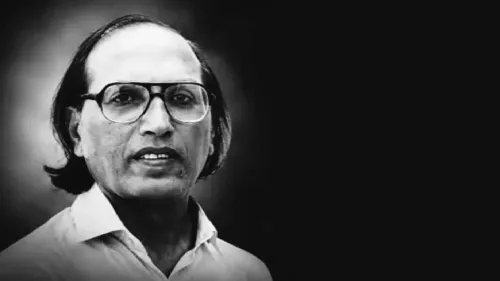
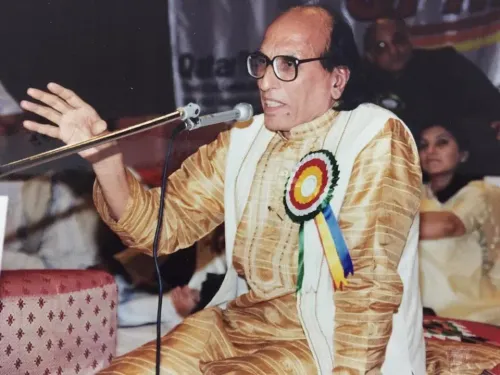
Bashir Badr was one of modern Urdu literature's most widely read poets, celebrated for ghazals that combined lyrical simplicity with emotional depth. His verses crossed regional and community lines, finding audiences far beyond traditional Urdu-speaking circles. He was regarded as a bridge between classical Urdu poetic conventions and contemporary sensibility.
His couplets were frequently quoted in public discourse, cinema, and political speech, making him one of the most cited Urdu voices of his generation in India.
Policy and cultural backdrop
Indian politicians regularly use social media to acknowledge the passing of literary and cultural figures, particularly those associated with their community's heritage. For Owaisi, whose constituency of Hyderabad has a deep-rooted Urdu literary tradition, such tributes carry both cultural and political resonance.
AIMIM has consistently positioned itself as a custodian of Urdu language and Muslim cultural identity in public life. Owaisi has a documented record of quoting Urdu poetry — from Faiz Ahmed Faiz to Mirza Ghalib — in parliamentary speeches and on social media, framing literary heritage as inseparable from political articulation.
Stakeholders and impact
The tribute is likely to resonate with Urdu literary communities across India, as well as readers and admirers of Badr's poetry regardless of religious affiliation. Literary academies, including the Sahitya Akademi, and Urdu institutions may be expected to issue their own statements on the poet's legacy.
The choice of couplet — evoking displacement and the destruction of homes — will also be read by many as carrying social commentary, consistent with the thematic concerns Owaisi regularly raises in his political messaging.
What's next
Tributes from other political parties, literary organisations, and cultural bodies are expected to follow. The response from institutions dedicated to Urdu literature will shape the formal shape of mourning and commemoration around Bashir Badr's legacy in the days ahead.
Point of View
He simultaneously performs cultural stewardship and reinforces a policy argument without making an explicit political statement. This is a well-worn but effective mode of political communication in Indian public life, where literary quotation grants plausible deniability while sharpening a message. The tribute also signals AIMIM's continued effort to claim ownership of Urdu literary heritage as a marker of Muslim political identity ahead of future electoral cycles.
NationPress
11 Oct 2026
Frequently Asked Questions
Why did Owaisi quote Bashir Badr's couplet?
Owaisi quoted a Bashir Badr couplet as part of a condolence tribute following the poet's passing, a practice common among Indian politicians marking the death of literary and cultural figures.
What does 'Inna lillahi wa inna ilayhi raji'un' mean?
It is an Arabic phrase meaning 'Indeed, we belong to Allah, and indeed to Him we shall return,' recited by Muslims upon learning of someone's death.
What is AIMIM's connection to Urdu literature?
AIMIM, led by Asaduddin Owaisi, has consistently positioned itself as a defender of Urdu language and Muslim cultural heritage, with Owaisi frequently quoting Urdu poetry in parliament and on social media.
What was Bashir Badr known for?
Bashir Badr was known for modern Urdu ghazals that combined classical form with accessible, emotionally resonant language, making him one of the most quoted Urdu poets of his generation in India.