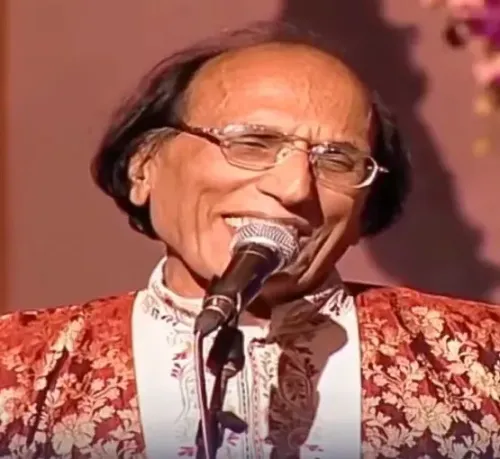
Urdu poet Dr Bashir Badr dies at 91 in Bhopal, ending an era
Synopsis
Dr Bashir Badr — one of the most quoted Urdu poets of the post-Independence era — died at 91 in Bhopal on 28 May. His ghazals, shared in drawing rooms and on social media alike, outlasted the dementia that claimed his memory in his final years. With him ends a living link to a tradition that made Urdu poetry a popular, not just elite, art form.
Key Takeaways
Dr Bashir Badr , celebrated Urdu poet, died in Bhopal on 28 May at the age of 91 .
He passed away at approximately 12 noon ; funeral arrangements were being finalised on Thursday.
He had been suffering from dementia for several years, which progressively affected his memory and recognition.
Born in 1935 , he rose to prominence in the post-Independence era and was widely known for his ghazals on love, longing, and human emotion.
He was a celebrated presence at mushairas across India and is credited with making Urdu poetry accessible to mainstream audiences.
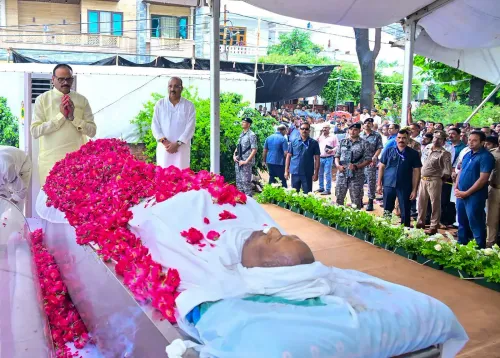
Renowned Urdu poet Dr Bashir Badr passed away in Bhopal on Thursday, 28 May, at the age of 91, leaving behind a literary legacy that shaped generations of readers and writers across the subcontinent. He breathed his last at around 12 noon, according to family members.
A Long Decline
According to family sources, Dr Badr had been living with dementia for several years — a condition that progressively eroded his memory and left him unable to recognise even those closest to him. His health had been deteriorating steadily in recent months, and despite ongoing medical care, his condition worsened until his death. Funeral arrangements were yet to be finalised as of Thursday afternoon, though family sources indicated that the last rites may be conducted on the same day.
The Voice He Left Behind
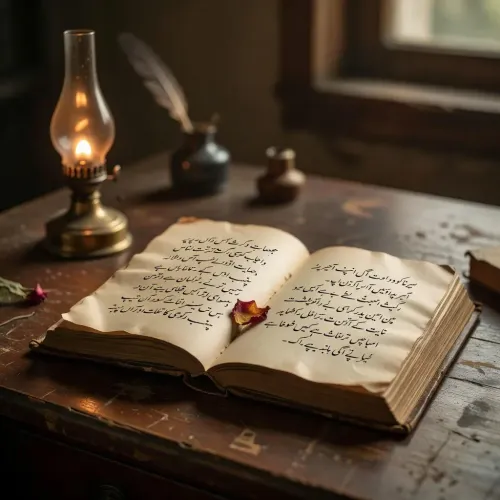
Dr Badr's couplets captured the full spectrum of human emotion — love, longing, loss, and quiet resilience — with a simplicity that made them instantly memorable. Among his most celebrated verses: 'Ujale apni yaadon ke hamare saath rahne do / Na jaane kis gali mein zindagi ki shaam ho jaaye', and 'Ham bhi darya hain hamen apna hunar maaluum hai / Jis taraf bhi chal padenge raasta ho jaayega'. His lines were not merely recited — they were lived, shared in everyday conversations and across social platforms, embedded in the public consciousness long before the internet made virality a metric.
A Career That Bridged Eras
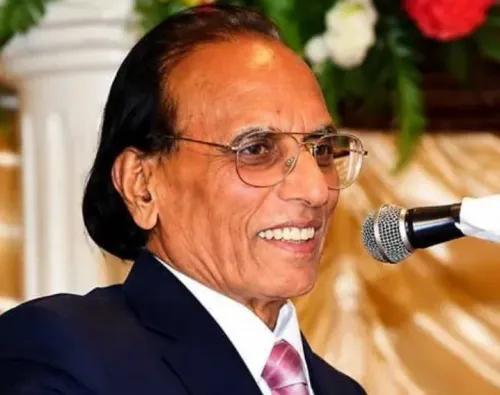
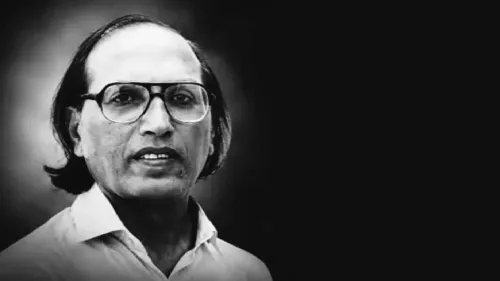
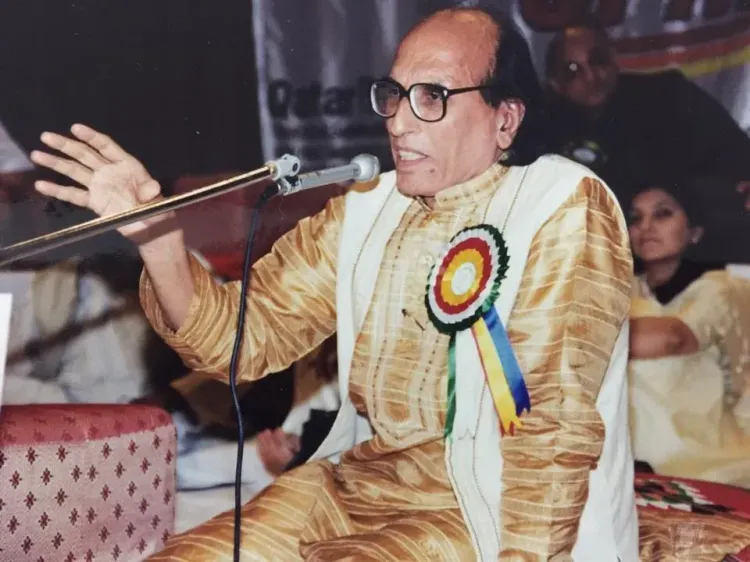
Born in 1935, Dr Bashir Badr rose to prominence in the post-Independence period, becoming one of the most widely read and quoted poets in contemporary Urdu literature. His ghazals — laced with reflections on life, relationships, and the passage of time — earned him admirers across India and beyond. He was celebrated for bridging classical Urdu traditions with modern sensibilities, making the form accessible to audiences who might otherwise have found it remote. A familiar face at mushairas across the country, he was as admired for his recitation as for the verses themselves, often elaborating on the inspiration behind each couplet with characteristic warmth.
Tributes and Legacy
Tributes have been pouring in from writers, scholars, and admirers who regard him as a towering presence in Urdu poetry. His passing is being described by the literary community as the end of an era — one in which poetry was both a high art and a popular language. Notably, the cruel irony of his final years was not lost on those who loved his work: a poet who gave others the words to articulate memory and longing spent his last chapter unable to access his own. Yet his body of work endures as a testament to the permanence of great writing. As he himself wrote: 'Musafir hai ham bhi musafir ho tum bhi / Kisi mod pe phir mulaqaat hogi'.
Point of View
Shared by people who had never attended a mushaira. That his final years were consumed by dementia, stripping memory from a man who gave others language for theirs, is among the more poignant ironies in recent literary history. His real legacy is not in the awards or the mushaira stages, but in the fact that lines he wrote decades ago are still the first thing people reach for when words fail them.
NationPress
11 Oct 2026
Frequently Asked Questions
Who was Dr Bashir Badr?
Dr Bashir Badr was one of India's most celebrated Urdu poets, born in 1935 and known for his ghazals that blended classical tradition with modern sensibility. He was a prominent figure at mushairas across India and is widely regarded as one of the most quoted poets in contemporary Urdu literature.
When and where did Dr Bashir Badr pass away?
Dr Bashir Badr passed away in Bhopal on Thursday, 28 May, at approximately 12 noon. He was 91 years old.
What was Dr Bashir Badr's illness?
According to family members, Dr Badr had been suffering from dementia for several years. The condition progressively eroded his memory and left him unable to recognise close acquaintances; his health had been declining steadily in recent months.
What are some of Dr Bashir Badr's most famous couplets?
Among his most celebrated verses are 'Ujale apni yaadon ke hamare saath rahne do / Na jaane kis gali mein zindagi ki shaam ho jaaye' and 'Ham bhi darya hain hamen apna hunar maaluum hai / Jis taraf bhi chal padenge raasta ho jaayega'. His couplets on love, longing, and resilience remain widely shared in everyday conversation and on social platforms.
What is Dr Bashir Badr's literary legacy?
Dr Badr is credited with making Urdu poetry accessible to a broad audience by bridging classical traditions and modern sensibilities. His ghazals influenced generations of readers and writers, and his couplets remain embedded in popular memory across India and the diaspora.