Owaisi extends Eid ul Adha greetings, reflects on qurbani
Synopsis
AIMIM president and Hyderabad MP Asaduddin Owaisi marked Eid ul Adha 2026 with a heartfelt message calling qurbani an act of sincerity and devotion to God, not a mere ritual — a reflection shared with Muslims across India.
Key Takeaways
AIMIM president Asaduddin Owaisi extended Eid ul Adha greetings on 29 May 2026 via a post on X.
He described qurbani as 'an act of sincerity and devotion for Allah's divine acceptance,' not merely a ritual.
The message referenced the devotional significance of the first nine days of Dhul Hijjah , which precede Eid.
Owaisi is the president of AIMIM , a Telangana-based party focused on Muslim political representation since 1958 .
The post is consistent with his pattern of direct community outreach during major Islamic festivals.
AIMIM president Asaduddin Owaisi extended Eid ul Adha greetings to Muslims across the country on Thursday, 29 May 2026, describing the festival's act of sacrifice as a profound expression of sincerity and devotion rather than a mere ritual observance.
What Owaisi said
In a post on X, the Hyderabad MP wrote: 'Eid ul Adha Mubarak to you all. May Allah accept the worship of the past nine days and our qurbani. For us, qurbani is not merely a ritual, but an act of sincerity and devotion for Allah's divine acceptance.' The message underlines the spiritual significance of qurbani (sacrifice), situating it within the broader arc of devotion that defines the Dhul Hijjah season.
Context
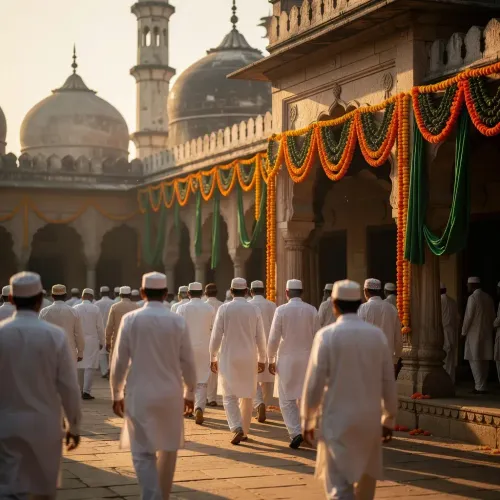
Eid ul Adha, observed on the 10th of Dhul Hijjah in the Islamic lunar calendar, commemorates the willingness of Prophet Ibrahim to sacrifice his son as an act of obedience to God. The festival is marked by communal prayers, the ritual of qurbani (the slaughter of livestock), and the distribution of meat among family, neighbours, and those in need. It is one of the two major Islamic festivals celebrated by Muslims worldwide, including India's estimated 20 crore-plus Muslim population.
Owaisi's message references the 'past nine days' of worship — alluding to the first nine days of Dhul Hijjah, which hold special devotional significance in Islamic tradition, culminating in the Day of Arafah before Eid.
Policy backdrop
AIMIM, founded in 1958 and headquartered in Hyderabad, Telangana, has long positioned itself as a vehicle for Muslim political representation in India. Owaisi, as both party president and a sitting Lok Sabha MP, regularly uses social media to engage directly with the community on religious, cultural, and political matters. Festival greetings of this kind are a consistent feature of his public communication, reinforcing community ties during significant religious occasions.
Such messaging by minority-focused party leaders occurs against the backdrop of ongoing national debates on secularism, minority rights, and the role of religion in public life — debates in which Owaisi has been a prominent and outspoken voice in Parliament.
Stakeholders and impact
The post is directed at Indian Muslims broadly, and resonates particularly in states with large Muslim populations such as Telangana, Maharashtra, Uttar Pradesh, and Bihar — all regions where AIMIM has an electoral or organisational presence. By framing qurbani as an act of inner devotion rather than outward ritual, Owaisi's message carries a reflective, spiritual tone that goes beyond a standard seasonal greeting.
What's next
Following the Eid period, attention will turn to Owaisi's parliamentary and public statements on state and national issues, including any positions he articulates in upcoming Lok Sabha sessions. His post-festival engagements often signal the political themes his party intends to foreground in the weeks ahead.
Point of View
Yet politically functional for a party whose identity is inseparable from Muslim cultural life. By foregrounding the inner meaning of qurbani over its outward form, he positions AIMIM's leadership as reflective and devout rather than merely transactional. This fits a broader pattern among minority-focused parties of using religious occasions to deepen grassroots loyalty in electorally competitive states. The message also arrives at a time when questions of minority representation and religious freedom continue to animate parliamentary debate, lending even ceremonial posts a degree of political resonance.
NationPress
11 Oct 2026
Frequently Asked Questions
What did Asaduddin Owaisi say on Eid ul Adha 2026?
Owaisi wished Muslims 'Eid ul Adha Mubarak' and said that qurbani is 'not merely a ritual, but an act of sincerity and devotion for Allah's divine acceptance,' also invoking the worship of the preceding nine days of Dhul Hijjah.
What is Eid ul Adha and why is it celebrated?
Eid ul Adha is an Islamic festival observed on the 10th of Dhul Hijjah, commemorating Prophet Ibrahim's willingness to sacrifice his son in obedience to God. It is marked by communal prayers and the ritual of qurbani, with meat distributed among family, neighbours, and the needy.
What is qurbani in Islam?
Qurbani refers to the ritual sacrifice of livestock — typically a goat, sheep, cow, or camel — performed during Eid ul Adha. It symbolises submission to God and is followed by the distribution of meat to family members and those in need.
Who is Asaduddin Owaisi?
Asaduddin Owaisi is the president of the All India Majlis-e-Ittehadul Muslimeen (AIMIM) and a Lok Sabha MP representing the Hyderabad constituency. He is one of India's most prominent Muslim political leaders.
What is AIMIM and where is it based?
AIMIM, the All India Majlis-e-Ittehadul Muslimeen, is a political party founded in 1958 and headquartered in Hyderabad, Telangana. It focuses on Muslim political representation and has a presence in several states including Telangana, Maharashtra, and Bihar.