CM Samrat Choudhary hails INS Malvan induction at Karwar
Synopsis
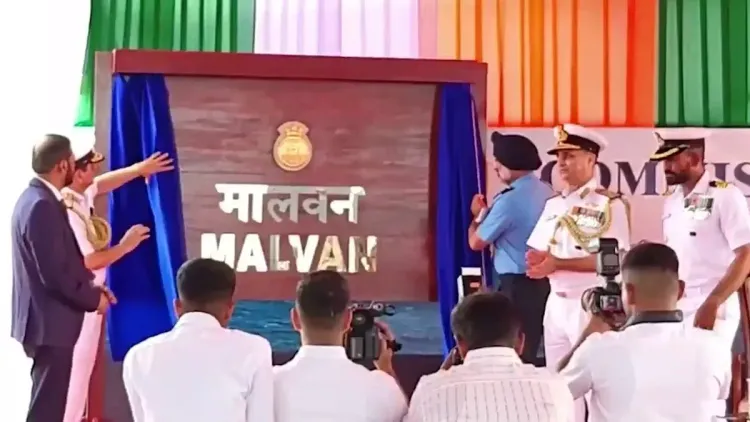
Bihar CM Samrat Choudhary hailed the induction of INS Malvan — built with over 80% indigenous content — into the Indian Navy at Karwar's INS Kadamba on 22 July 2026, calling it a milestone for Aatmanirbhar Bharat and India's anti-submarine warfare capability.
Key Takeaways
INS Malvan was inducted into the Indian Navy at INS Kadamba, Karwar, Karnataka on 22 July 2026 .
The warship is built with more than 80 per cent indigenous technology and equipment , according to CM Choudhary's post.
The induction strengthens India's anti-submarine warfare capability and maritime strategic posture.
Bihar CM Samrat Choudhary linked the achievement to the Aatmanirbhar Bharat and Make in India programmes led by PM Narendra Modi .
The commissioning follows the 2022 induction of INS Vikrant , India's first indigenous aircraft carrier, as part of a broader naval indigenisation drive.
The Indian Navy's 2025–2030 acquisition roadmap envisages further indigenous warship and submarine inductions.
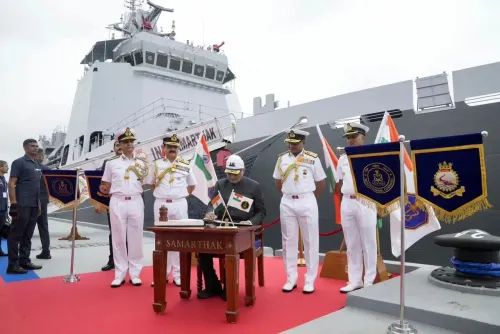
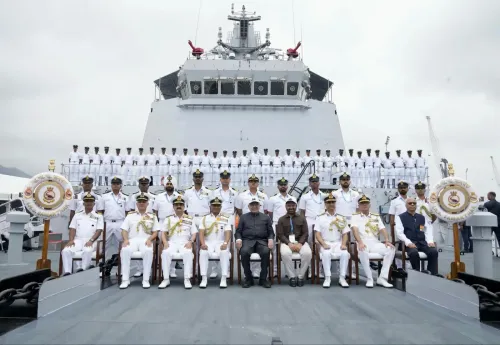
Bihar Chief Minister Samrat Choudhary on Wednesday, 22 July 2026 welcomed the induction of INS Malvan into the Indian Navy at INS Kadamba, the naval base in Karwar, Karnataka, describing the warship as a landmark achievement for India's defence self-reliance and anti-submarine warfare capability.
Context
Choudhary posted in Hindi on X, stating: 'स्वदेशी सामर्थ्य से सशक्त हो रही भारतीय नौसेना' ('The Indian Navy is being empowered by indigenous capability'). He highlighted that INS Malvan has been built with more than 80 per cent indigenous technology and equipment, calling it a realisation of the Aatmanirbhar Bharat and Make in India vision. The Chief Minister credited Prime Minister Narendra Modi for leading India toward new heights in maritime security and defence self-reliance.
The induction ceremony took place at INS Kadamba, the Western Naval Command's principal base on the Karnataka coast, which serves as a strategic hub for warships and submarines operating in the Arabian Sea.
Policy Backdrop
INS Malvan's commissioning fits within a sustained policy arc that began with the launch of Make in India in September 2014, which set domestic manufacturing targets across sectors, including defence shipbuilding. The Defence Procurement Procedure 2016 subsequently mandated higher indigenous content thresholds for naval platforms, pushing public and private shipyards to absorb and develop critical technologies.
The Aatmanirbhar Bharat programme, announced in 2020, deepened this push by earmarking specific defence categories exclusively for domestic design, development, and production. The commissioning of INS Vikrant — India's first indigenous aircraft carrier — in September 2022 marked a previous high point in this trajectory, and INS Malvan's induction is being cited as a continuation of that momentum in the anti-submarine warfare domain.
Stakeholders and Impact
The Indian Navy gains an additional anti-submarine warfare platform, strengthening its ability to monitor and respond to undersea threats across India's sea lines of communication in the Indian Ocean. Defence shipyards involved in the vessel's construction stand to benefit from the validation of indigenous design and manufacturing processes, potentially supporting future export prospects.
The broader defence industrial base — including public sector undertakings and private suppliers contributing to the reported 80-plus per cent indigenous content — receives a significant signal that the government intends to sustain procurement from domestic sources. Regional stakeholders in Karnataka, where INS Kadamba is located, also note the strategic importance of the Karwar base as India's largest naval facility on the western seaboard.
What's Next
The Indian Navy's 2025–2030 acquisition roadmap includes further indigenous warship and submarine inductions, and the next Union Budget allocations for defence research and development will be closely watched as an indicator of the pace at which this programme advances. Political leaders across party lines have used such inductions to reinforce narratives around national security and industrial capability ahead of state and national electoral cycles.
As India continues to expand its undersea domain awareness amid evolving regional capability developments, the commissioning of platforms like INS Malvan is expected to remain a central element of the government's public communication on defence modernisation.
Point of View
Which is a recurring communication pattern ahead of electoral cycles. The emphasis on anti-submarine warfare also subtly signals awareness of evolving undersea competition in the Indian Ocean without naming any adversary.
NationPress
21 Oct 2026
Frequently Asked Questions
What is INS Malvan and why was it inducted?
INS Malvan is a warship inducted into the Indian Navy at INS Kadamba, Karwar, to strengthen India's anti-submarine warfare capability. It is reported to be built with more than 80 per cent indigenous technology, making it a flagship example of the Make in India and Aatmanirbhar Bharat defence programmes.
Where is INS Kadamba located?
INS Kadamba is India's largest naval base, located in Karwar, Karnataka, on the western coast. It serves as a primary hub for the Western Naval Command and hosts warships and submarines operating in the Arabian Sea.
What did Bihar CM Samrat Choudhary say about INS Malvan?
Bihar Chief Minister Samrat Choudhary posted on X on 22 July 2026 welcoming the induction of INS Malvan, calling it a significant achievement for India's maritime security and crediting PM Narendra Modi's leadership for advancing defence self-reliance.
How does INS Malvan relate to Make in India?
INS Malvan is cited as a Make in India success because it is built with over 80 per cent indigenous content. The Make in India initiative, launched in 2014, set domestic manufacturing targets for the defence sector to reduce import dependence.
What is India's broader plan for indigenous naval platforms?
The Indian Navy's 2025–2030 acquisition roadmap includes further indigenous warship and submarine inductions. This follows earlier milestones such as the commissioning of INS Vikrant, India's first indigenous aircraft carrier, in September 2022.