INS Samarthak commissioned: Navy's first indigenous multi-purpose vessel joins fleet
Synopsis
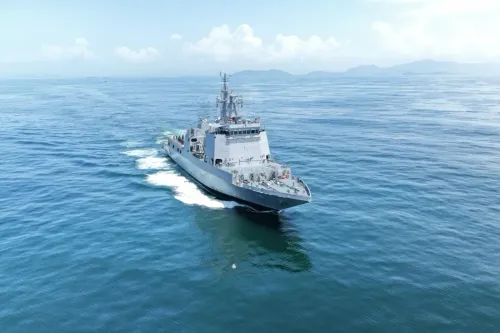
India's Navy just got its first wholly indigenous multi-purpose vessel. INS Samarthak, commissioned at Karwar by Vice President C. P. Radhakrishnan, carries over 75 per cent indigenous content and will serve as a testbed for next-generation weapons, sensors, and unmanned systems — a tangible signal that Aatmanirbhar Bharat is moving from slogan to steel.
Key Takeaways
INS Samarthak commissioned on 16 October 2026 at Karwar, Karnataka by Vice President C.
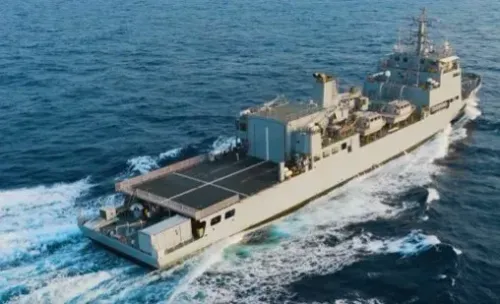
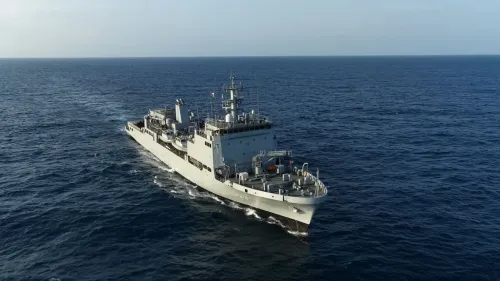
It is the Indian Navy's first indigenous Multi-Purpose Vessel , with over 75 per cent indigenous content .
The vessel will be used for trials of next-generation weapons, sensors , and unmanned systems , as well as HADR missions and offshore patrolling.
Vice President linked the commissioning to PM Narendra Modi's vision of a Viksit and Aatmanirbhar Bharat .
Project Seabird continues to expand Karwar's naval infrastructure, boosting both operational capacity and regional economic development.
Chief of the Naval Staff Admiral Krishna Swaminathan and other senior flag officers attended the ceremony.
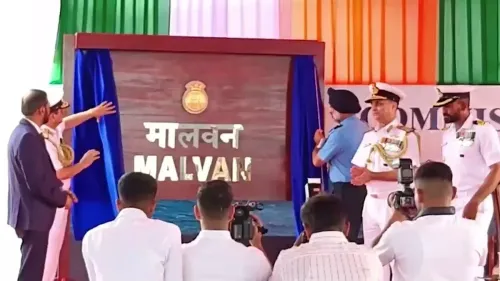
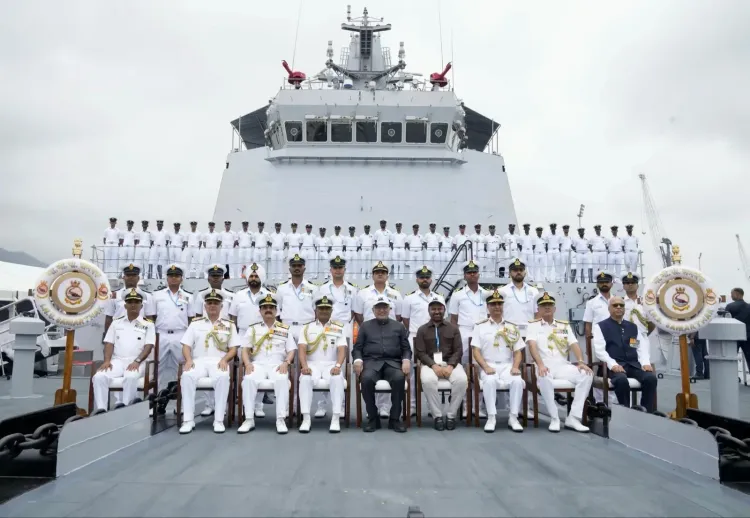
Vice President C. P. Radhakrishnan on Friday, 16 October 2026, commissioned INS Samarthak — the Indian Navy's first indigenous Multi-Purpose Vessel — at Karwar in Karnataka, declaring that self-reliance in defence is 'no longer merely an aspiration but an emerging reality.' The commissioning marks a landmark in India's Aatmanirbhar Bharat push, with the vessel carrying over 75 per cent indigenous content.
What INS Samarthak Brings to the Fleet
INS Samarthak is designed as a versatile platform for the trials and evaluation of next-generation weapons, sensors, and emerging technologies. Its operational scope spans maritime surveillance and reconnaissance, offshore patrolling, launch and recovery of targets, operations involving unmanned systems, and humanitarian assistance and disaster relief (HADR) missions.
According to an official statement, the vessel's multi-role architecture will allow the Navy to adapt more rapidly to evolving technological developments and translate indigenous innovation directly into operational capability — a key gap that purpose-built trial vessels address.
A Milestone for Indigenous Defence Manufacturing
Radhakrishnan emphasised that, with over 75 per cent indigenous content, INS Samarthak reflects India's deepening self-reliance in defence manufacturing and contributes to the nation's strategic autonomy. He linked the commissioning to the broader vision of a Viksit Bharat and Aatmanirbhar Bharat articulated by Prime Minister Narendra Modi.
The Vice President also drew on India's maritime heritage, recalling the naval traditions of Chhatrapati Shivaji Maharaj and the Chola dynasty, both of which projected maritime power across the Indian Ocean and Southeast Asia. Notably, the commissioning of INS Samarthak comes at a time when the Navy is steadily expanding its indigenously built surface and submarine fleet, reducing dependence on imported platforms.
Karwar's Strategic Role and Project Seabird
Karwar's deep natural harbour and its proximity to the Arabian Sea make it a critical node in India's maritime security architecture, the Vice President observed. He highlighted the ongoing modernisation of naval infrastructure at the base under Project Seabird, which is enhancing the Navy's capacity to base, sustain, and operate both ships and submarines.
Officials noted that Project Seabird is also generating wider economic and employment opportunities for the Karwar region, positioning the port town as a long-term hub for India's western naval operations.
Senior Naval Leadership Present at Ceremony
The commissioning ceremony was attended by Admiral Krishna Swaminathan, Chief of the Naval Staff; Vice-Admiral Sanjay Vatsayan, Flag Officer Commanding-in-Chief; Vice-Admiral Sanjay Sadhu, Controller Warship Production and Acquisition; Rear Admiral Vikram Menon, Flag Officer (Karnataka); and retired Rear Admiral G. K. Harish.
With INS Samarthak now formally in service, the Navy is expected to accelerate its evaluation pipeline for indigenous weapons and sensor systems, bringing future platforms closer to operational readiness at a faster pace.
Point of View
But the real measure of Aatmanirbhar Bharat in defence lies in the pace at which indigenously tested platforms actually enter operational service. A trials-and-evaluation vessel with 75 per cent local content is a credible step — but India's defence indigenisation record has historically been stronger at commissioning ceremonies than at delivery timelines. The vessel's unmanned-systems mandate is the detail worth watching: if it accelerates induction of indigenous drones and autonomous platforms, it could compress the Navy's procurement cycle in ways that balance-of-power arithmetic demands. Karwar's strategic expansion under Project Seabird adds operational depth to India's western seaboard — critical context given persistent Indian Ocean competition.
NationPress
16 Oct 2026
Frequently Asked Questions
What is INS Samarthak and why is it significant?
INS Samarthak is the Indian Navy's first indigenous Multi-Purpose Vessel, commissioned on 16 October 2026 at Karwar in Karnataka. It is significant because it carries over 75 per cent indigenous content and will serve as a dedicated platform for testing next-generation weapons, sensors, and unmanned systems, advancing India's self-reliance in defence manufacturing.
Who commissioned INS Samarthak?
Vice President C. P. Radhakrishnan commissioned INS Samarthak at Karwar on 16 October 2026. The ceremony was also attended by Chief of the Naval Staff Admiral Krishna Swaminathan and other senior naval officers.
What roles will INS Samarthak perform?
INS Samarthak will conduct trials and evaluation of next-generation weapons and sensors, maritime surveillance and reconnaissance, offshore patrolling, launch and recovery of targets, operations involving unmanned systems, and humanitarian assistance and disaster relief missions.
What is Project Seabird and how does it relate to INS Samarthak?
Project Seabird is an ongoing programme to develop and modernise naval infrastructure at Karwar, enhancing the Navy's ability to base and sustain ships and submarines. The commissioning of INS Samarthak at Karwar underscores the base's growing strategic role under this project.
How does INS Samarthak contribute to Aatmanirbhar Bharat?
With over 75 per cent indigenous content, INS Samarthak is a concrete example of India's push for self-reliance in defence manufacturing under the Aatmanirbhar Bharat initiative. Vice President Radhakrishnan stated at the ceremony that self-reliance in defence is now 'an emerging reality' rather than merely an aspiration.