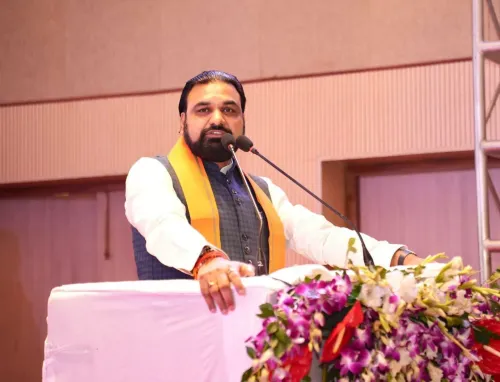
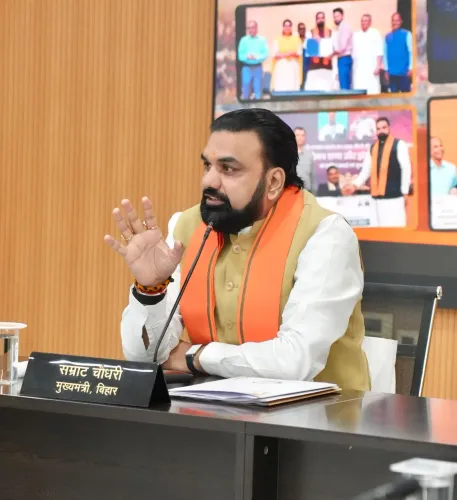
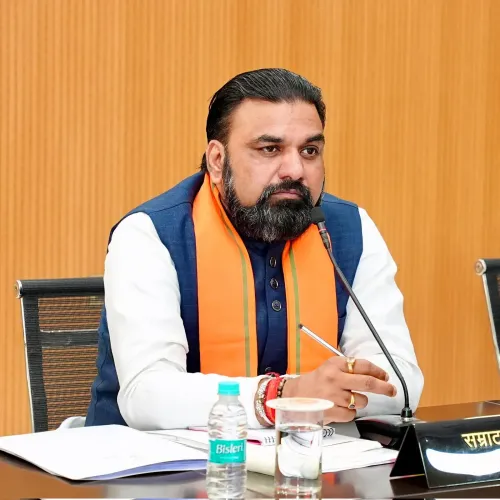
CM Samrat Choudhary pledges Son-Falgu river corridor for Bihar

Synopsis
Bihar Chief Minister Samrat Choudhary has announced a government resolve to construct a corridor from the Son River to the Falgu River, targeting stronger water connectivity and agricultural development across central and southern Bihar, aligning with national river-linking priorities.
Key Takeaways
Bihar CM Samrat Choudhary announced on 25 October 2026 a commitment to build a water corridor from the Son River to the Falgu River .
The project aims to strengthen water connectivity and support holistic development in Bihar's central and southern regions.
The Son River has irrigated Bihar districts via canal networks since the mid-20th century; the Falgu River flows through Gaya district with religious and agricultural importance.
The announcement aligns with India's National River Linking Project framework, formalized in the early 2000s for basin-to-basin water transfer.
Feasibility reports, state budget allocations, and environmental clearances are the next required steps before construction can begin.
Bihar farmers and riverine communities in the Magadh region stand as the primary beneficiaries if the project advances.
A new water artery is being planned across Bihar's heartland. On Sunday, 25 October 2026, Bihar Chief Minister Samrat Choudhary announced a firm government commitment to build a corridor connecting the Son River to the Falgu River — a project aimed at strengthening water connectivity and accelerating development across the state's central and southern districts.
Posting under the hashtag #NewBihar, CM Choudhary wrote: 'A resolve has been taken to construct a corridor from the Son River to the Falgu River in the direction of Bihar's holistic development and better utilisation of water resources. The government is committed to advancing this project to strengthen water connectivity and give fresh momentum to development.'
What links the Son and the Falgu
The Son River is one of Bihar's most historically productive water sources — its canal networks have irrigated central and southern districts since the mid-20th century. The Falgu River, flowing through Gaya district, carries deep religious significance and serves local agriculture, but has long suffered from erratic seasonal flow. A corridor between the two rivers would, in principle, channel water from the Son's relatively surplus basin toward the Falgu's drier reaches.
Bihar sits at the sharp end of a paradox common to the Gangetic plains: devastating floods in one season, punishing drought in another. Water infrastructure that connects rivers and stabilises seasonal flow has been a policy priority for successive Bihar governments — and a recurring demand from farming communities in the Magadh region around Gaya.
How this fits India's broader river-linking ambition
India's National River Linking Project, formalized in the early 2000s, envisaged exactly this kind of basin-to-basin water transfer to improve irrigation coverage and reduce flood-drought extremes. State-level corridor projects like the Son-Falgu link are practical building blocks of that larger national architecture — easier to execute than inter-state transfers, but meaningful contributors to regional water security.
The Bihar government under BJP leadership has repeatedly flagged water management as central to its development agenda. This announcement reinforces that posture, particularly in the run-up to budget discussions where infrastructure allocations will determine whether the resolve translates into shovel-ready work.
What needs to happen before the corridor becomes real
A commitment is not yet a contract. Feasibility studies, environmental clearances, and formal budget allocations are the three gates this project must pass through. Given the corridor's alignment with both state and national infrastructure priorities, funding pathways exist — but the timeline and exact scope remain to be defined through official project reports.
For Bihar's farmers and riverine communities, the announcement is a signal. Whether it becomes a milestone depends on what the next budget cycle and engineering surveys reveal.
Bihar has long carried the weight of underdevelopment quietly. A river corridor that joins water to ambition could change the arithmetic — one district at a time.
Point of View
Aspirational, and tethered to a genuine development gap without committing to a specific timeline or budget. Bihar's chronic flood-drought cycle has made water infrastructure a politically potent and economically necessary lever for any chief minister. By framing the project under the #NewBihar banner, CM Choudhary is threading it into the BJP's broader 'viksit Bharat' development narrative ahead of what will likely be a budget-heavy political season. The real test of intent arrives when feasibility studies and allocation figures hit the floor of the state assembly.
NationPress
25 Oct 2026
Frequently Asked Questions
What is the Son River to Falgu River corridor project in Bihar?
It is a proposed water infrastructure corridor announced by Bihar CM Samrat Choudhary to connect the Son River with the Falgu River in Gaya district, aimed at improving water connectivity and irrigation across central and southern Bihar.
Why is the Falgu River important in Bihar?
The Falgu River flows through Gaya district in southern Bihar and holds significant religious importance, particularly as a site of Hindu pilgrimage. It also serves local agriculture, though its seasonal flow is erratic.
How does this project relate to India's National River Linking Project?
India's National River Linking Project, formalized in the early 2000s, envisions transferring water between surplus and deficit river basins. The Son-Falgu corridor is a state-level initiative that mirrors this national framework by linking a relatively water-rich basin to a drier one.
What are the next steps for the Son-Falgu corridor?
The project still requires feasibility studies, formal funding allocations in the Bihar state budget, and environmental or inter-state clearances before construction can begin.
Who benefits from the Son-Falgu river corridor?
Bihar's farming communities and riverine populations in the central and southern districts — particularly in the Magadh region around Gaya — stand to benefit most from improved irrigation and more stable seasonal water supply.