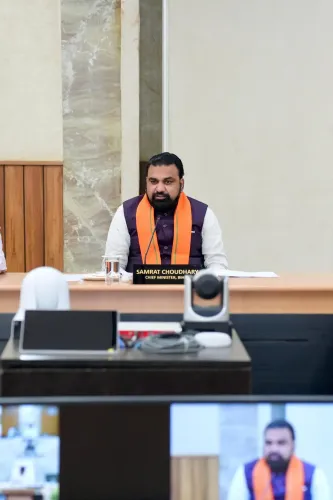
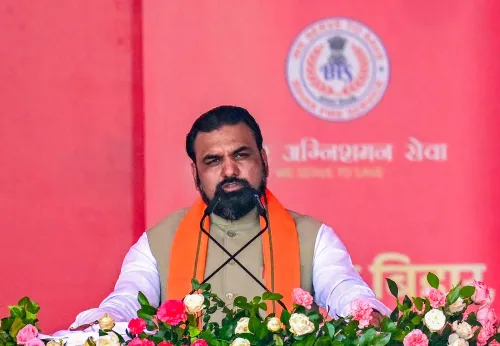
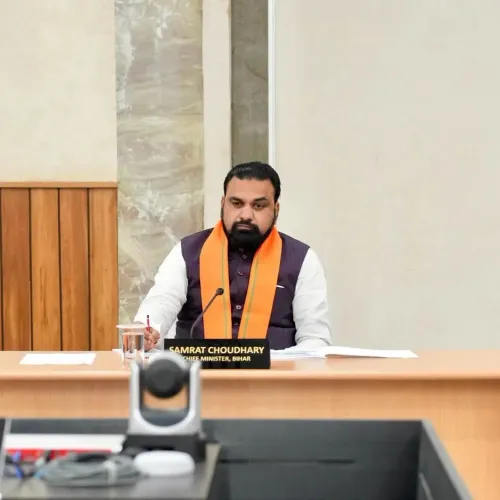
CM Samrat Choudhary meets Rajnath Singh on Bihar border security
Synopsis
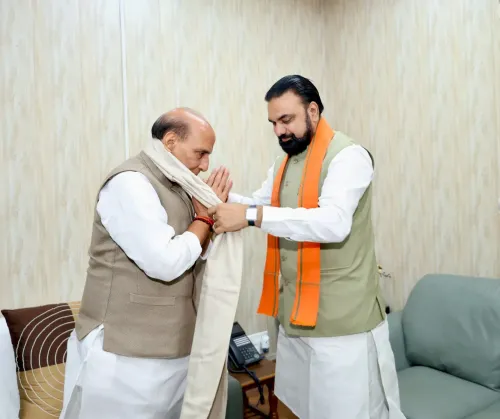
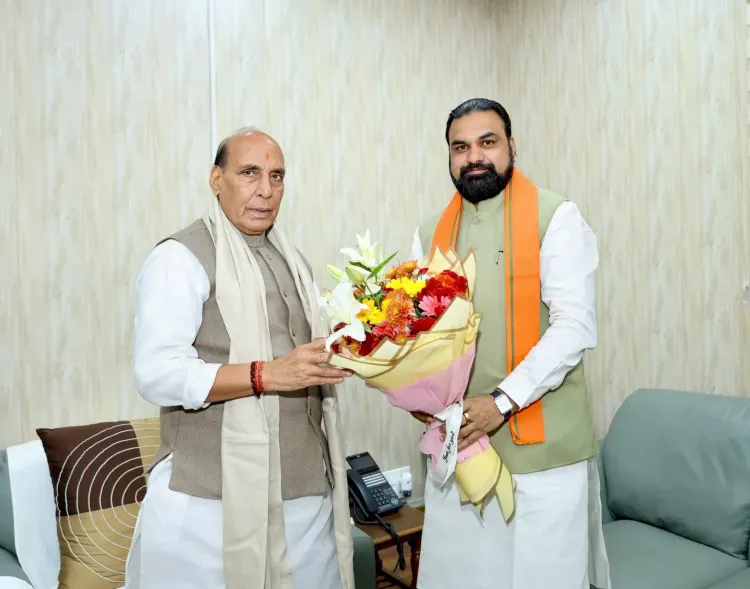
Bihar Chief Minister Samrat Choudhary met Union Defence Minister Rajnath Singh in New Delhi on 2 November 2026, holding detailed talks on the security of Bihar's international border districts, particularly along the Nepal frontier.
Key Takeaways
Bihar CM Samrat Choudhary met Union Defence Minister Rajnath Singh in New Delhi on 2 November 2026 .
The meeting focused specifically on the security situation in Bihar's border districts adjoining Nepal .
The Chief Minister's Office described the discussion as 'extensive' ( vistaarpoorvak charcha ).
No joint statement or immediate policy announcement followed the meeting.
Bihar shares a long open border with Nepal, overseen by the Sashastra Seema Bal (SSB) , and faces persistent concerns around smuggling, trafficking, and infiltration.
Any follow-up — deployments, infrastructure funding, or a formal review mechanism — will signal how seriously New Delhi responds.
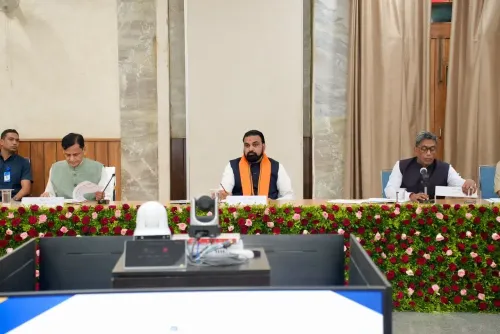
Border security landed at the top of Bihar's agenda in New Delhi on Monday, 2 November 2026, when Chief Minister Samrat Choudhary sat down with Union Defence Minister Rajnath Singh to hold detailed talks on the security situation in the state's frontier districts — a conversation that signals Patna is actively pressing the Centre for sharper attention to its vulnerable edges.
The Chief Minister's Office confirmed the meeting through an official post, stating that CM Choudhary, during his Delhi visit, held an extensive discussion (vistaarpoorvak charcha) with the Defence Minister specifically on the security of Bihar's border districts. No joint statement was issued immediately after the meeting.
Why Bihar's border belt demands attention
Bihar shares a long international frontier with Nepal, with districts such as Sitamarhi, Madhubani, Supaul, Araria, Kishanganj, and West Champaran running along the open border. The Indo-Nepal border is historically porous — an arrangement governed by the 1950 Treaty of Peace and Friendship that allows free movement of people, but one that security agencies have flagged repeatedly for smuggling, trafficking, and infiltration risks. State governments bordering Nepal have periodically escalated their concerns to New Delhi, particularly when cross-border crime spikes or when the broader regional security environment shifts.
Samrat Choudhary's push at the Centre
The Chief Minister's decision to personally raise the matter with Rajnath Singh — rather than routing it through administrative channels — underscores the political weight Bihar's ruling coalition attaches to border management. Rajnath Singh, a senior leader of the BJP and one of the most experienced hands in India's national security apparatus, has overseen multiple rounds of border infrastructure upgrades and Sashastra Seema Bal (SSB) capacity-building along the Nepal frontier since taking charge of the defence portfolio.
A familiar but consequential channel
Chief ministers from border states routinely engage the defence and home ministries on local security matters — this is standard centre-state coordination, not a crisis signal. But the specificity of the agenda (border districts, not generic law and order) and the seniority of the interlocutor suggest the Bihar government is pushing for concrete measures: additional deployment, infrastructure investment, or a formal security review mechanism for the frontier belt. What follows this meeting — a joint announcement, a coordinated SSB operation, or enhanced funding for border area development — will be the real measure of its impact.
For residents of Bihar's border belt, this conversation in a Delhi office could eventually translate into a more visible, more capable security presence on the ground.
Point of View
Which typically handles internal border policing — is a deliberate signal that Patna frames its Nepal frontier concerns as a defence-grade issue, not merely a law-and-order problem. This approach mirrors a broader pattern among BJP-allied state governments of leveraging personal access to senior central ministers to fast-track security requests. The meeting also fits into the NDA's ongoing political calculus in Bihar ahead of any future electoral cycle, where demonstrating proactive governance on border safety resonates with voters in frontier constituencies. Whether it yields operational change or remains symbolic depends entirely on the follow-through from New Delhi.
NationPress
2 Nov 2026
Frequently Asked Questions
Why did Bihar CM Samrat Choudhary meet Rajnath Singh?
Bihar CM Samrat Choudhary met Union Defence Minister Rajnath Singh on 2 November 2026 in New Delhi to hold detailed discussions on the security of Bihar's international border districts, particularly those adjoining Nepal.
Which districts in Bihar share a border with Nepal?
Bihar's Nepal-bordering districts include Sitamarhi, Madhubani, Supaul, Araria, Kishanganj, and West Champaran — a long open frontier overseen primarily by the Sashastra Seema Bal (SSB).
What are the main security concerns on Bihar's Nepal border?
The Indo-Nepal open border in Bihar is associated with concerns around smuggling, human trafficking, and infiltration. The porous nature of the border, governed by the 1950 Treaty of Peace and Friendship, makes enforcement challenging.
What could come out of the Bihar CM–Defence Minister meeting?
Possible outcomes include increased SSB deployment, investment in border infrastructure, or a formal joint security review mechanism for Bihar's frontier districts — though no announcement was made immediately after the meeting.
Who is Bihar Chief Minister Samrat Choudhary?
Samrat Choudhary is the Chief Minister of Bihar. The Chief Minister's Office of the Government of Bihar confirmed his New Delhi visit and the meeting with Defence Minister Rajnath Singh on 2 November 2026.