CM Samrat Choudhary Pays Tribute to Ram Prasad Bismil on Birth Anniversary
Synopsis
Bihar Chief Minister Samrat Choudhary marked the birth anniversary of revolutionary poet and freedom fighter Pandit Ram Prasad Bismil on 11 June 2026, calling his sacrifice and patriotism an enduring inspiration for all Indians.
Key Takeaways
Bihar CM Samrat Choudhary paid tribute to Pandit Ram Prasad Bismil on his birth anniversary, 11 June 2026 .
Bismil was born on 11 June 1897 in Shahjahanpur and was hanged on 19 December 1927 after the Kakori train robbery case of 1925 .
Choudhary described Bismil as a 'great freedom fighter, ardent patriot and revolutionary poet' whose courage will always inspire Indians.
BJP-led governments have since 2014 actively commemorated armed revolutionaries through renaming drives, state events, and curriculum efforts.
The more prominent annual commemoration falls on 19 December , Bismil's martyrdom day, when state-level programmes are typically held.
Bihar Chief Minister Samrat Choudhary on Thursday, 11 June 2026, paid tribute to revolutionary poet and freedom fighter Pandit Ram Prasad Bismil on his birth anniversary, hailing his sacrifice and patriotism as an enduring inspiration for the nation.
Context
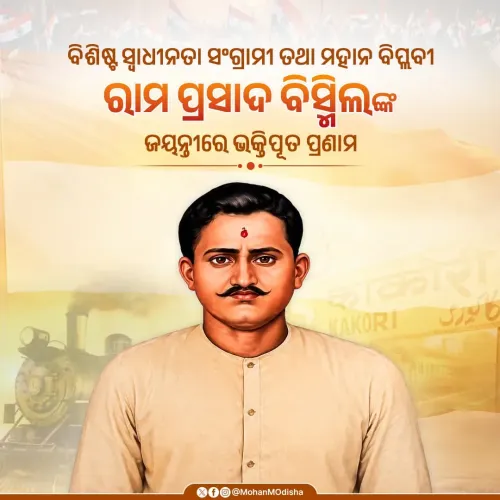
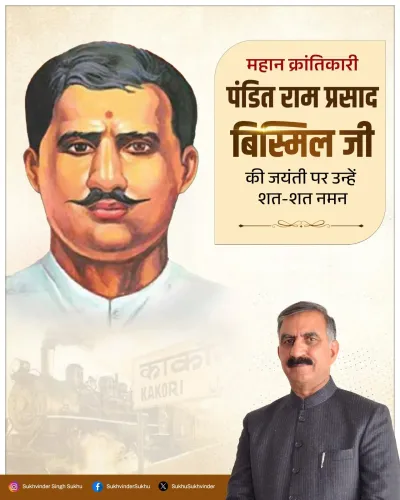
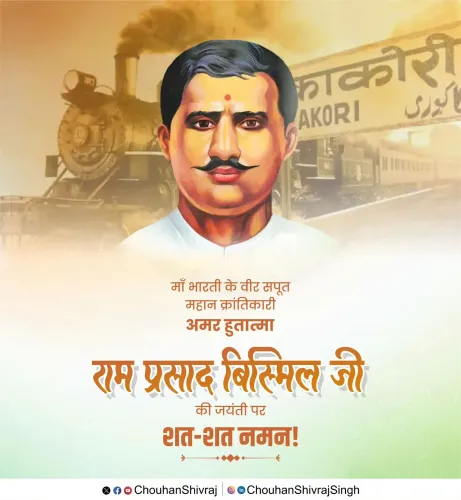
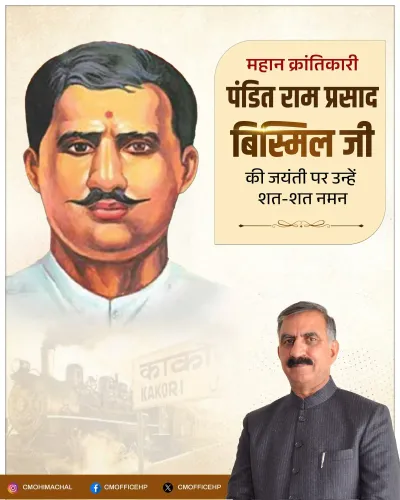
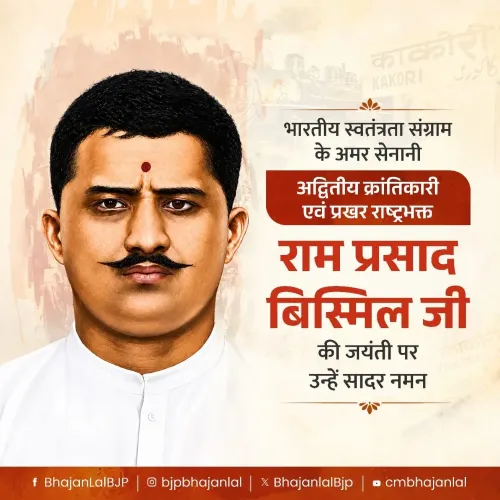
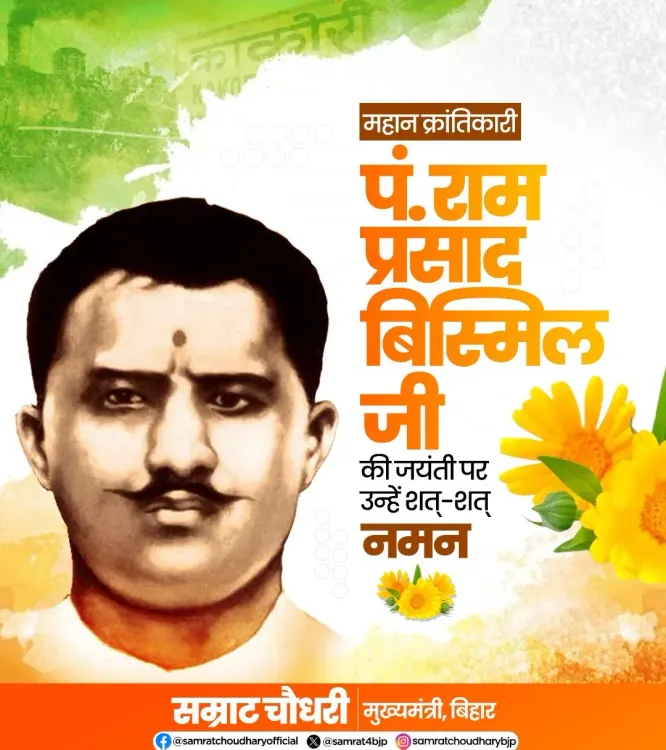
In his post, CM Choudhary offered a heartfelt salute to Bismil, describing him as a 'mahaan swatantrata senani, prakhar rashtrbhakt evam krantikari kavi' ('great freedom fighter, ardent patriot and revolutionary poet'). He wrote that Bismil's 'incomparable sacrifice, indomitable courage and patriotism will always inspire the countrymen.' The tribute was accompanied by an image and the hashtag #RamPrasadBismil.
Pandit Ram Prasad Bismil was born on 11 June 1897 in Shahjahanpur, present-day Uttar Pradesh. He is remembered both for his stirring patriotic poetry — including the immortal lines of 'Sarfaroshi Ki Tamanna' — and for his role in the armed resistance against British colonial rule.
Policy Backdrop
Bismil was a central figure in the Kakori train robbery of 1925, in which revolutionaries intercepted a British government treasury train in Kakori, Uttar Pradesh. Convicted by a British court, he was hanged on 19 December 1927 at Gorakhpur Jail, aged 30, alongside fellow revolutionaries Ashfaqullah Khan, Roshan Singh, and Rajendra Lahiri.
Since 2014, BJP-led governments at the Centre and in states have made a sustained effort to bring armed revolutionaries like Bismil into mainstream nationalist commemoration — renaming public infrastructure, organising state-level events on martyrdom anniversaries, and incorporating these figures more prominently into educational narratives.
Stakeholders and Impact
Tributes of this kind are directed primarily at Indian youth and students in states like Bihar and Uttar Pradesh, where Bismil retains a strong cultural and historical presence. For the BJP, foregrounding revolutionary figures supplements the party's broader nationalist messaging by highlighting militant strands of the independence movement that sit alongside the Gandhian tradition.
Bismil's poetry, particularly 'Sarfaroshi Ki Tamanna', continues to be recited at patriotic events, school functions, and political rallies across northern India, giving his legacy a living resonance beyond formal commemoration.
What's Next
The more significant annual marker in the Bismil calendar is 19 December — his martyrdom day — when state governments typically organise larger commemorative programmes. Observers will watch whether Bihar announces any institutional steps, such as curriculum updates, public infrastructure naming, or state-sponsored events, to mark that occasion. The pattern of social-media tributes by senior leaders often precedes or accompanies such policy-level gestures.
Point of View
The party seeks to broaden its ideological heritage and appeal to younger voters in Hindi-belt states where revolutionary lore carries emotional weight. The gesture is low-cost but symbolically significant: it signals cultural ownership of the full spectrum of the independence movement. Whether it translates into concrete policy — curriculum changes, infrastructure renaming in Bihar — will be the real test of institutional commitment.
NationPress
19 Sept 2026
Frequently Asked Questions
Who was Pandit Ram Prasad Bismil?
Pandit Ram Prasad Bismil was a revolutionary poet and freedom fighter born on 11 June 1897 in Shahjahanpur . He was a key figure in the Kakori train robbery of 1925 and was hanged by British authorities on 19 December 1927 . He is also celebrated as the author of the patriotic poem 'Sarfaroshi Ki Tamanna' .
Why did Bihar CM Samrat Choudhary post about Ram Prasad Bismil?
Bihar CM Samrat Choudhary posted the tribute on 11 June 2026 to mark the birth anniversary of Pandit Ram Prasad Bismil , calling his sacrifice and patriotism an eternal inspiration for the country.
What was the Kakori conspiracy?
The Kakori train robbery was a 1925 armed action in which Indian revolutionaries, including Bismil , intercepted a British government treasury train near Kakori in present-day Uttar Pradesh . The British arrested and convicted the conspirators; Bismil and three others were hanged in 1927 .
When is Ram Prasad Bismil's birth anniversary?
Pandit Ram Prasad Bismil's birth anniversary falls on 11 June . He was born on 11 June 1897 .
How does the BJP commemorate revolutionary freedom fighters?
Since 2014 , BJP -led governments have organised annual commemorations, renamed public sites, and worked to integrate armed revolutionaries like Bismil into mainstream nationalist narratives alongside Gandhian-era leaders.