CM Samrat Choudhary Hails PM Modi's 25 Years of Public Service
Synopsis
Bihar Chief Minister Samrat Choudhary marked PM Narendra Modi's 25 years in public life, tracing his journey from Gujarat CM to Prime Minister and framing the #SevaSankalpAbhiyan as a covenant with 140 crore Indians.
Key Takeaways
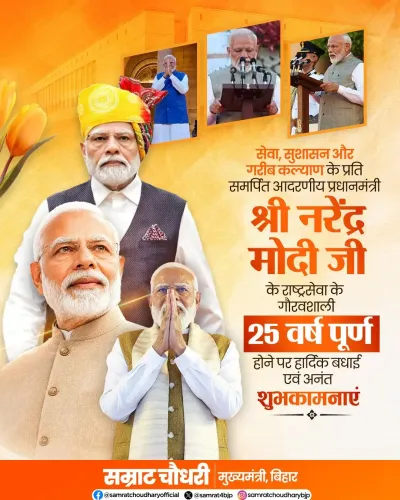
Bihar Chief Minister Samrat Choudhary posted a tribute on October 14, 2026 marking PM Narendra Modi's 25 years in public service.
Choudhary traced Modi's arc from Gujarat Chief Minister (2001–2014) to Prime Minister of India , citing good governance and public welfare as the defining thread.
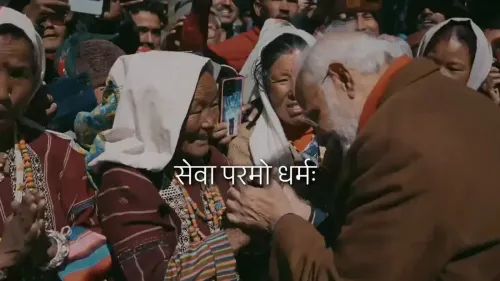
The phrase 'Seva mera yogdan' — 'Service is my contribution' — was invoked as a commitment to the aspirations of 140 crore Indians .
The post is part of a coordinated BJP messaging campaign under #SevaSankalpAbhiyan and #SevaMeraYogdan .
As Bihar CM, Choudhary's amplification of the tribute carries local political resonance in a state where governance delivery is a key voter concern.
Twenty-five years. That is the arc Bihar Chief Minister Samrat Choudhary chose to mark on Wednesday, October 14, 2026 — saluting Prime Minister Narendra Modi's quarter-century in public life with a tribute that frames the journey from Gandhinagar to New Delhi as a masterclass in purpose-driven leadership.
Writing in Hindi, CM Choudhary described the Prime Minister's career as 'jan seva ka dhyey aur rashtra pratham ka sankalp' — 'the goal of people's service and the resolve to put the nation first' — arguing that such commitment transforms a leader into a symbol of mass trust. The post closes with a sharply compact declaration: 'Seva mera yogdan' — 'Service is my contribution' — which he calls not merely three words but a covenant with the aspirations of 140 crore Indians.
From Gujarat CM to India's PM: the journey Choudhary traces
Narendra Modi was sworn in as Chief Minister of Gujarat in 2001 and held the post until May 2014, when he was elected Prime Minister. That thirteen-year run in Gandhinagar built the governance record — infrastructure push, investor summits, administrative reform — that became the template BJP presented to the national electorate. Choudhary's post explicitly references this arc, citing 'good governance, public welfare, and the building of a Viksit Bharat' (Developed India) as the through-line of Modi's public life.
What the #SevaSankalpAbhiyan messaging signals
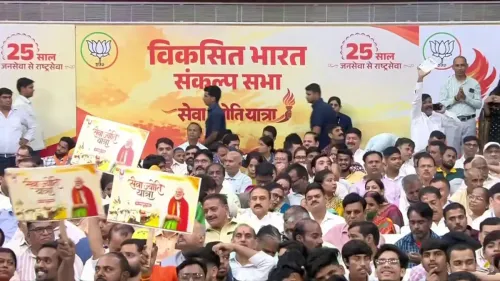
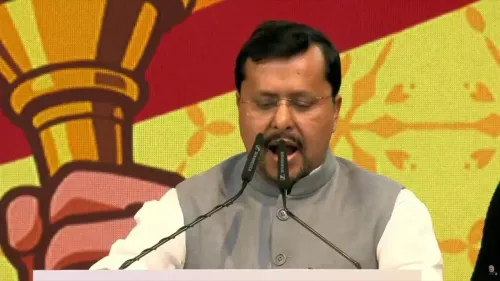
The tribute is pegged to the hashtags #SevaSankalpAbhiyan and #SevaMeraYogdan, indicating a coordinated BJP outreach campaign. Senior party leaders across states routinely anchor such messaging cycles to milestones in Modi's political biography — reinforcing the party's central narrative of service and development ahead of electoral and policy cycles. Choudhary, as Bihar CM and a prominent voice within the BJP's state leadership, is a natural amplifier for that message.
For a state like Bihar — where welfare delivery, infrastructure investment, and aspirational governance are perennial voter concerns — framing national leadership in terms of lived commitment to public service carries pointed local resonance. The kicker, as Choudhary himself supplies it: service is not a slogan, it is a sankalp — a vow.
Point of View
Tying local governance credibility to national leadership imagery. The invocation of the Gujarat-to-Delhi arc is deliberate — it repositions development governance as a long-held personal value rather than a political pivot. For Choudhary in Bihar, aligning with that narrative ahead of any future electoral cycle is also a signal of ideological solidarity within the party hierarchy. The #SevaSankalpAbhiyan hashtag suggests a broader, multi-state messaging exercise whose full shape will emerge in coming weeks.
NationPress
14 Oct 2026
Frequently Asked Questions
Why is Bihar CM Samrat Choudhary praising PM Modi's 25 years of service?
CM Choudhary posted the tribute as part of the BJP's #SevaSankalpAbhiyan campaign, marking PM Modi's 25-year public service journey from Gujarat Chief Minister to Prime Minister of India.
When did Narendra Modi become Prime Minister of India?
Narendra Modi was sworn in as Prime Minister of India in May 2014 , after serving as Chief Minister of Gujarat from 2001 to 2014 .
What is #SevaSankalpAbhiyan?
#SevaSankalpAbhiyan is a BJP outreach campaign under which party leaders highlight PM Modi's service record and governance philosophy; its full scope and exact timeline have not been officially detailed.
What does 'Seva mera yogdan' mean?
Seva mera yogdan translates to 'Service is my contribution' — a phrase CM Choudhary described as a national covenant representing the aspirations of 140 crore Indians .
What is Samrat Choudhary's role in the BJP?
Samrat Choudhary is the Chief Minister of Bihar and a senior BJP leader, making him one of the party's most prominent state-level voices in eastern India.