CM Conrad Sangma Distributes Land Pattas on GAD Land in Tura
Synopsis
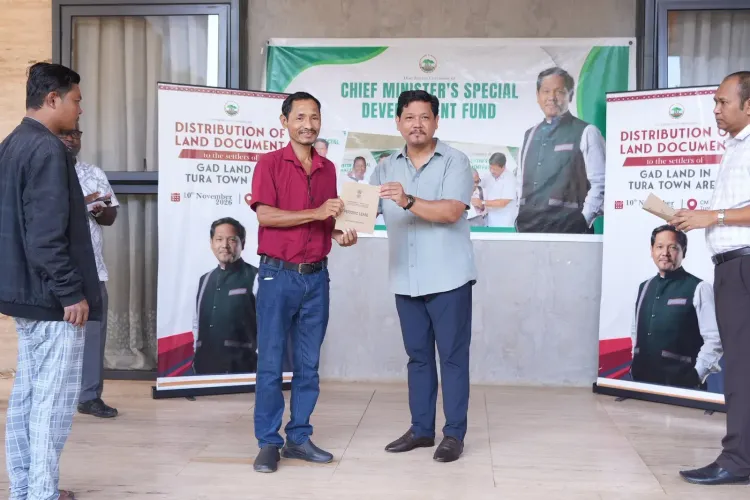
Meghalaya Chief Minister Conrad Sangma handed over land pattas to families settled on GAD land in Tura Town on November 10, 2026, resolving years of encroachment disputes, court cases, and eviction notices and granting residents access to loans, government schemes, and essential services.
Key Takeaways
CM Conrad Sangma personally distributed land pattas to settler families on GAD (General Administration Department) land in Tura Town , West Garo Hills, on November 10, 2026 .
The pattas grant formal ownership rights, enabling residents to access bank loans, government certifications, and welfare schemes they were previously excluded from.
The move resolves a long-standing cycle of encroachment disputes, court cases, and eviction notices on state-owned land in Tura.
Meghalaya's urban land challenges are compounded by customary land systems and Sixth-Schedule protections that complicate formal titling.
The distribution signals a regularisation-over-enforcement approach, converting informal settlers into legally recognised residents.
Similar patta drives in other Meghalaya towns and pending GAD court cases remain on watch for future action.
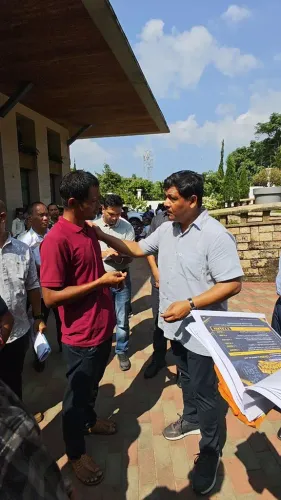
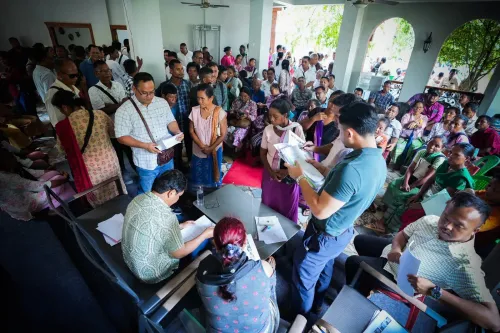
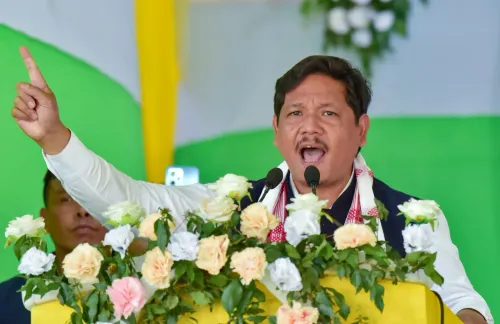
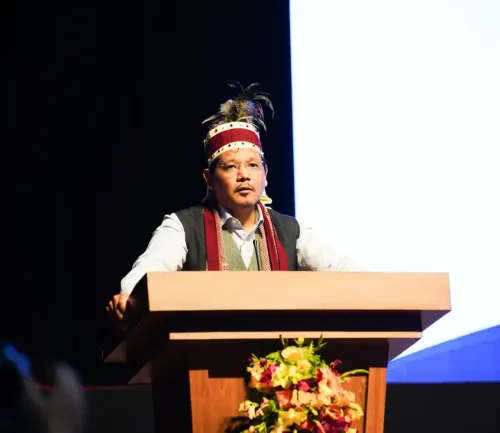
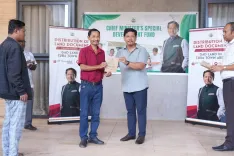
Decades of legal limbo ended for families living on government-administered land in Tura Town on Tuesday, November 10, 2026, as Meghalaya Chief Minister Conrad Sangma personally handed over land pattas — formal title documents — to settler families occupying General Administration Department (GAD) land in the West Garo Hills headquarters.
What a patta means for a family in Tura
For the families who have lived on this land for years, a patta is far more than a piece of paper. It is collateral for a bank loan, proof of address for a government scheme, and a defence against an eviction notice. CM Sangma framed the distribution in precisely those terms, stating that the pattas 'bring greater security and certainty, helping them access loans, certifications, government schemes and essential services.'
Without formal title, residents of GAD land existed in an administrative grey zone — present in the city, invisible to its welfare architecture. That changes with this distribution.
Years of encroachment, court cases, and law-and-order strain
Tura Town, the main urban centre of the Garo Hills region, has long grappled with unauthorised occupation of state-owned land. The pattern is common across Meghalaya's urban centres, where the intersection of customary land systems, Sixth-Schedule protections, and formal state ownership has historically made clear title difficult to establish.
The result — repeated litigation, eviction notices, and recurring law-and-order concerns — imposed costs on residents and on the administration alike. Sangma acknowledged as much, noting that the step 'brings clarity for both the people and the Government and helps put an end to years of contention.'
Regularisation as governance — not just gesture
Land-title regularisation of this kind converts long-term occupation into recognised legal rights, unlocking the full stack of state welfare for residents who were previously excluded. Credit access, scheme eligibility, formal certifications — each of these becomes reachable the moment a patta is in hand.
The broader pattern across Meghalaya points to a persistent tension between informal settlement and government land management. By acting on GAD properties in Tura, the state government signals a preference for resolution over enforcement — trading protracted litigation for a settled, taxable, scheme-eligible population. Whether similar distributions follow in other Meghalaya towns will be the real measure of scale.
For now, families in Tura hold something they did not hold yesterday: legal ground beneath their feet.
Point of View
It is also smart politics in the Garo Hills heartland: transforming a liability (long-running land disputes) into a governance dividend. The Sixth-Schedule framework that governs Meghalaya makes formal land titling structurally complex, which means this kind of executive intervention carries unusual weight. The real test of intent will be whether the model is extended systematically across the state's other disputed urban land pockets, or remains a local headline.
NationPress
10 Nov 2026
Frequently Asked Questions
What is a land patta and why does it matter?
A land patta is an official government document that recognises a person's ownership or occupancy rights over a piece of land. In practice it allows the holder to use the land as collateral for loans, prove residency for government schemes, and contest eviction — rights that families without formal title do not have.
What is GAD land in Meghalaya?
GAD land refers to property administered by the state's General Administration Department — essentially land owned and managed by the Meghalaya government. Unauthorised settlement on such land has been a recurring issue in Tura and other urban centres in the state.
Why has land ownership been complicated in Meghalaya?
Meghalaya operates under the Sixth Schedule of the Indian Constitution, which protects customary tribal land systems and gives significant autonomy to District Councils. This framework can create ambiguity between traditional community rights and formal state land ownership, making clear titling difficult in urban areas.
What benefits do the families in Tura now get after receiving pattas?
With formal land title, the families can now access bank loans using their land as collateral, obtain address-based certifications, enrol in government welfare schemes, and have legal standing to resist future eviction proceedings.
Will similar land patta distributions happen in other Meghalaya towns?
Chief Minister Sangma has not announced a specific statewide timeline as of this report, but the broader pattern of GAD land encroachment across Meghalaya's urban centres means similar drives in other towns remain a logical next step to watch.