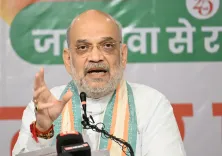
CM Conrad Sangma hands over land pattas in Tura Town

Synopsis
Meghalaya Chief Minister Conrad Sangma handed over land pattas to families in Chinap A'slang, Tura Town on 30 July 2026, advancing a programme to regularise GAD land occupation across 754 households in eight localities. The drive gives residents formal title, unlocking loans and government services.
Key Takeaways
127 land pattas are ready for handover under a programme covering 754 households across eight localities in Tura Town.
Depositors grew from 42 households in December 2025 to 210 by the time of the handover event.
In Chinap A'slang , 25 of 93 households completed their premium deposit and received documents on 30 July 2026 .
Land pattas unlock access to bank loans, government schemes, and official certifications for recipient families.
The drive addresses decades of unresolved GAD land occupation in the West Garo Hills urban belt.
544 households are yet to deposit the required premium, representing the programme's remaining challenge.
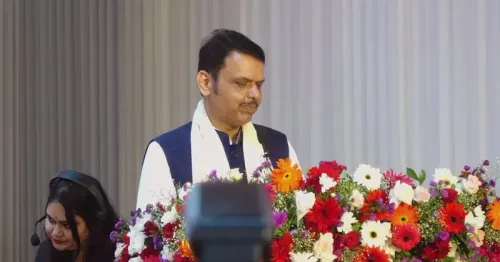
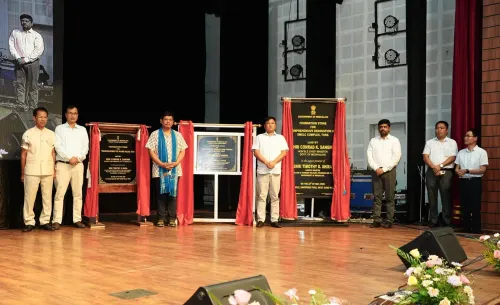
For families living on Government-Acquired Department (GAD) land in Tura Town, a decades-long uncertainty over their homes took a concrete turn on Thursday, 30 July 2026 — when Meghalaya Chief Minister Conrad Sangma personally handed over land pattas, giving hundreds of households their first formal claim to the ground beneath their feet.
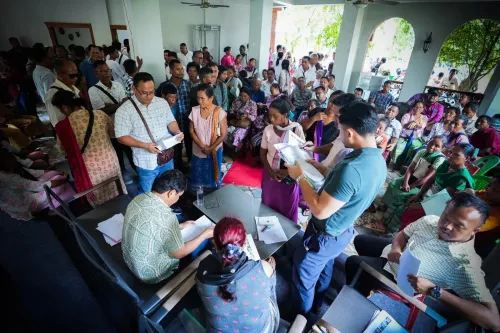
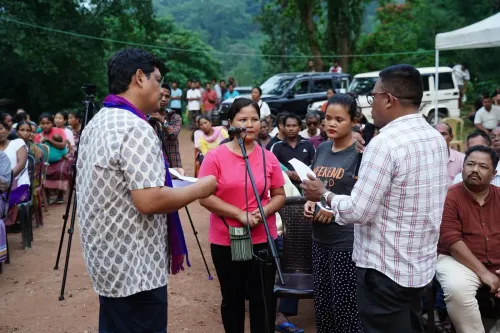
The handover, held in the Chinap A'slang locality of Tura, is part of a broader programme covering 754 households across eight localities in the Tura Town area. Of those, 127 land pattas are now ready for distribution — a number that reflects rapid momentum: where only 42 households had deposited the required premium as of December 2025, that count has since climbed to 210. In Chinap A'slang alone, 25 of 93 households completed their deposit and received documents at today's event.
What a land patta unlocks for Garo Hills families
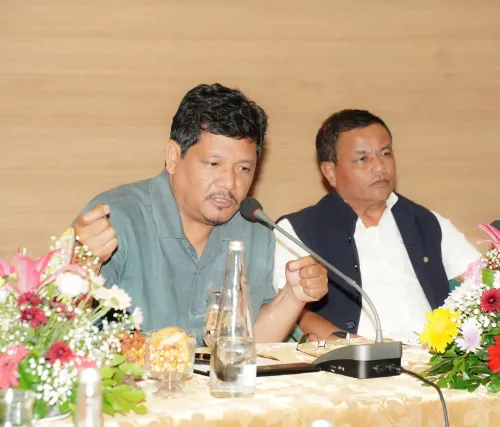
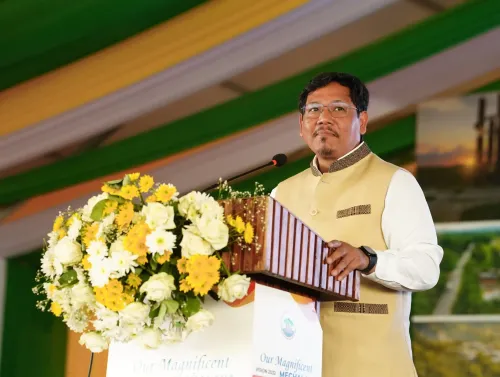
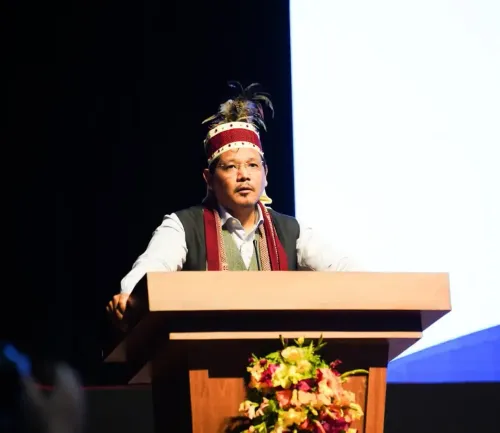
A land patta is far more than a piece of paper. For families who have lived for years — sometimes generations — on land without formal title, the document opens direct access to bank loans, government welfare schemes, and certifications that require proof of residence. Chief Minister Sangma underscored this in his remarks, noting that recipients 'can find security especially in availing loans, necessary certifications, government schemes and services.'
Tura, the headquarters of West Garo Hills district, is the commercial and administrative hub of the Garo Hills region. Urban growth here, as in much of Northeast India, has long outpaced formal land documentation — leaving residents in a legal grey zone that cuts them off from formal credit and entitlements.
A long-running GAD land tangle in Meghalaya's urban belt
Meghalaya operates under the Sixth Schedule of the Constitution, which protects customary tribal land systems — but that framework sits uneasily alongside government land records in fast-growing towns. GAD land occupations in Tura represent exactly this friction: families settled on government-acquired plots without formal regularisation, unable to prove ownership to banks or state agencies.
State governments have periodically attempted title-distribution drives to cut through this tangle, but follow-through has historically been slow. The current push — with a structured premium-deposit mechanism and locality-by-locality rollout — signals a more systematic approach. The remaining 544 households yet to deposit their premium represent the next test of that resolve.
With momentum building from 42 depositors to 210 in roughly seven months, the question now is whether the administration can carry that pace through to full coverage — and whether similar drives will follow in other Meghalaya towns where GAD land occupation remains unresolved.
Point of View
Not just a ceremonial handover. If the remaining 544 households are brought in, the programme could serve as a replicable model for other Northeast towns where GAD land occupation remains a quiet but persistent governance gap.
NationPress
14 Sept 2026
Frequently Asked Questions
What is a land patta and why does it matter in Meghalaya?
A land patta is an official document conferring legal title to a plot of land. In Meghalaya, where many urban families occupy government-acquired land without formal records, a patta gives them the legal standing to apply for bank loans, access government schemes, and obtain certifications that require proof of residence.
What is GAD land in Tura Town?
GAD refers to Government-Acquired Department land — plots acquired by the government where families have settled over decades without formal ownership documents. Regularising these occupations through land pattas resolves the legal ambiguity around such settlements.
How many households are covered by the Tura Town land patta programme?
The programme covers 754 households across eight localities in Tura Town. As of 30 July 2026, 210 households have deposited the required premium and 127 pattas are ready for handover.
What happened at Chinap A'slang on 30 July 2026?
Meghalaya Chief Minister Conrad Sangma personally handed over land pattas to eligible families in Chinap A'slang. Of the locality's 93 households , 25 had completed their premium deposit and received their documents at the event.
What is Tura Town and where is it located?
Tura is the headquarters of West Garo Hills district in Meghalaya and the principal urban centre of the Garo Hills region in Northeast India.