CM Conrad Sangma Greets Meghalaya on Behdieñkhlam
Synopsis
Meghalaya Chief Minister Conrad Sangma on 9 July 2026 extended Behdieñkhlam greetings to the Pnar community in both the Pnar language and English, invoking unity, the removal of evil, and prosperity for all communities in the state.
Key Takeaways
Conrad Sangma , Chief Minister of Meghalaya and NPP national president, posted Behdieñkhlam greetings on 9 July 2026 .
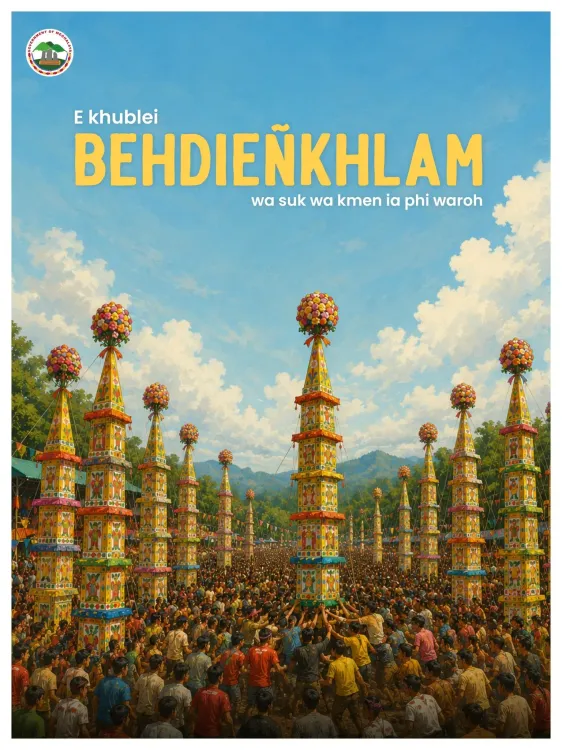
The message was bilingual — opening with Behdieñkhlam wa suk wa kmen ia phi waroh! in the Pnar language before switching to English.
Behdieñkhlam is the annual festival of the Pnar (Jaintia) community in Jowai, Jaintia Hills , focused on driving away evil and seeking prosperity.
The Chief Minister called for communities to 'come together to drive away evils from our society and bring harmony and prosperity.' Meghalaya state governments have historically provided logistical support for major tribal festivals, consistent with Sixth Schedule constitutional protections.
The inclusive framing — 'our communities' — addressed the state's diverse tribal population beyond the Pnar community alone.
Meghalaya Chief Minister Conrad Sangma extended warm greetings to the Pnar (Jaintia) community and all residents of the state on the occasion of Behdieñkhlam, the annual tribal festival celebrated in Jowai, Jaintia Hills, on Thursday, 9 July 2026. The Chief Minister used his official X account to convey wishes in both the Pnar language and English, calling for unity, the removal of evil, and collective prosperity.
In his post, Conrad Sangma wrote: 'Behdieñkhlam wa suk wa kmen ia phi waroh!' — wishing joy and good health to all — before adding in English, 'May the festival bring our communities together to drive away evils from our society and bring harmony and prosperity.' The bilingual message underscores the Chief Minister's effort to connect with the indigenous community in their own tongue while addressing the wider state audience.
Context
Behdieñkhlam is one of the most significant festivals of the Pnar community, indigenous to the Jaintia Hills region of eastern Meghalaya. The festival involves elaborate rituals centred on driving away disease and evil spirits, and invoking divine blessings for a prosperous harvest. It is typically observed with processions, community feasts, and traditional games, drawing participants and visitors from across the region.
The name itself translates roughly to 'chasing away the demon of plague,' reflecting the festival's deep roots in the community's spiritual and agrarian life. Celebrated annually in Jowai, the headquarters of West Jaintia Hills district, it is a key marker of Pnar cultural identity.
Policy Backdrop
Successive state governments in Meghalaya have extended official support to major tribal festivals, providing logistical assistance and participating in public celebrations to promote cultural continuity. Such engagement aligns with the constitutional protections afforded to tribal customs and institutions under the Sixth Schedule of the Indian Constitution, which grants significant autonomy to tribal communities in the Northeast.
Northeast India has seen a broader pattern of state administrations using official participation in indigenous festivals as a tool for reinforcing social cohesion and preserving tribal identity amid rapid socio-economic change. Chief Minister Sangma, who also serves as the national president of the National People's Party (NPP), has consistently positioned himself as a champion of tribal culture and governance in the region.
Stakeholders and Impact
The primary stakeholders are the Jaintia (Pnar) community and the broader tribal population of Meghalaya, for whom Behdieñkhlam is not merely a festival but a living expression of communal solidarity and ancestral tradition. Official acknowledgement from the Chief Minister carries symbolic weight, reinforcing the state's commitment to preserving indigenous heritage.
The greeting also resonates with the wider non-Pnar population of Meghalaya, given the Chief Minister's inclusive call for 'our communities' to unite — a framing that speaks to the state's diverse tribal mosaic, which includes the Khasi and Garo communities alongside the Pnar.
What's Next
Observers will watch for any official state programmes, cultural events, or budget allocations announced in connection with Behdieñkhlam 2026 in Jowai. The festival season in Meghalaya typically prompts renewed conversations around tourism promotion and infrastructure for indigenous cultural sites. The Chief Minister's public message may also signal continued state-level engagement with tribal governance bodies active in the Jaintia Hills.
Point of View
He signals institutional respect for indigenous identity in a state where tribal affiliation is the primary political currency. The move fits a broader Northeast governance pattern where elected leaders use festival messaging to consolidate support among specific community blocs without making divisive policy announcements. For the NPP, whose support base spans multiple tribal groups, such inclusive framing — 'our communities' rather than 'the Jaintia community' — is a careful balancing act. It also reinforces the party's positioning as the natural custodian of Meghalaya's tribal cultural legacy ahead of any future electoral cycle.
NationPress
9 Jul 2026
Frequently Asked Questions
What is Behdieñkhlam festival in Meghalaya?
Behdieñkhlam is the annual traditional festival of the Pnar (Jaintia) community, celebrated primarily in Jowai in the Jaintia Hills region of Meghalaya. It involves rituals to drive away evil and disease and to seek divine blessings for prosperity and a good harvest.
Who is Conrad Sangma?
Conrad Sangma is the Chief Minister of Meghalaya and the national president of the National People's Party (NPP). He represents the Tura constituency and has led the state government since 2018.
Where is Behdieñkhlam celebrated?
Behdieñkhlam is celebrated in Jowai, the headquarters of West Jaintia Hills district in eastern Meghalaya, and in surrounding Pnar-inhabited areas of the Jaintia Hills region.
What does Behdieñkhlam mean?
The name Behdieñkhlam roughly translates to 'chasing away the demon of plague' in the Pnar language, reflecting the festival's spiritual origins in protecting the community from disease and evil.
How does the Meghalaya government support tribal festivals?
Successive Meghalaya state governments have provided logistical and administrative support for major tribal festivals including Behdieñkhlam, consistent with constitutional protections for tribal customs under the Sixth Schedule of the Indian Constitution.