CM Conrad Sangma Pitches Meghalaya as Global Responsible Tourism Model
Synopsis
At the Global Responsible Tourism Summit 2026, Meghalaya CM Conrad Sangma reflected on eight years of tourism-led growth, pledging electric vehicles, biodegradable alternatives, and waste reduction to set a global benchmark for sustainable, community-driven tourism.
Key Takeaways
Conrad Sangma addressed the Global Responsible Tourism Summit and Awards 2026 on November 20, 2026 .
Sangma has positioned tourism as a core livelihood and economic driver for Meghalaya since taking office in March 2018 .
The state's brand strategy centres on culture, traditions, music, food, and natural beauty, with community participation as a core pillar.
Sangma called for concrete action including electric vehicle adoption , biodegradable alternatives , and waste reduction in tourism zones.
The summit was co-organised by Meghalaya Tourism and Outlook India .
Sangma set an explicit ambition: position Meghalaya as a global benchmark for responsible tourism that pairs growth with sustainability and community livelihoods.
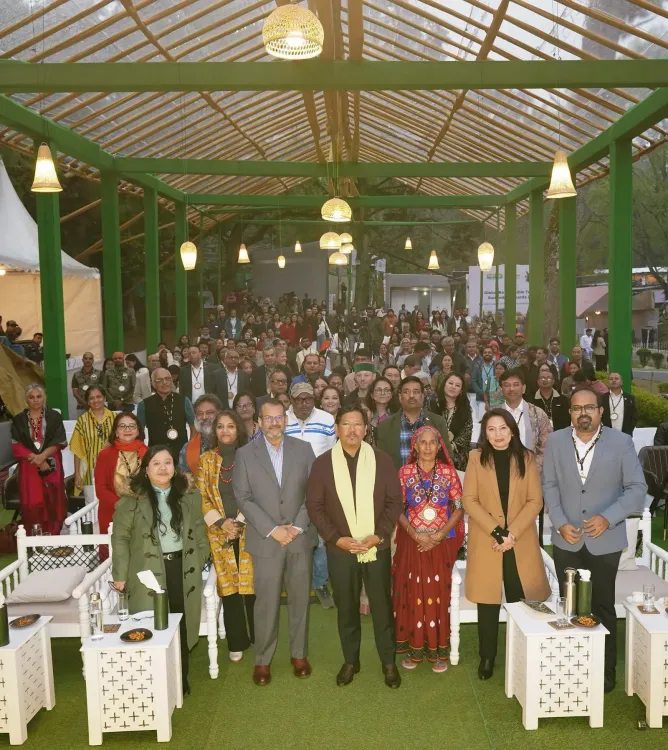
Eight years into a deliberate bet on sustainable tourism, Meghalaya Chief Minister Conrad Sangma stood at the Global Responsible Tourism Summit and Awards 2026 on Friday, November 20 and made the case that his state is ready to set a benchmark the world can follow — not just admire from a distance.
Eight years of building the Meghalaya tourism brand
Sangma, who has helmed the state since March 2018, framed the summit as a moment of stocktaking. 'Our focus has been to build the Meghalaya tourism brand through our culture, traditions, music, food and natural beauty, while ensuring that local communities and stakeholders grow alongside the sector,' he said. The pitch is deliberate: tourism not as a revenue line, but as a livelihood engine for one of India's most tribal-dominated northeastern states.
Meghalaya's natural endowments — rainforests, living-root bridges, some of the wettest landscapes on earth — have long attracted visitors. What Sangma's government has attempted over eight years is to layer policy infrastructure on top of that raw appeal, turning footfall into framework.
From conversation to concrete action: EVs, biodegradables, and waste reduction
The Chief Minister's sharpest line at the summit cut through the usual sustainability rhetoric: 'Responsible tourism must go beyond conversations. It must reflect in our everyday actions.' He pointed to three specific levers his administration is pushing — adoption of electric vehicles, a shift to biodegradable alternatives, and aggressive waste reduction across tourism zones.
These are not abstract aspirations. Across Indian states, the pressure to decarbonise heritage and nature tourism sites has grown sharply, with northeastern states receiving increased central support for green tourism infrastructure. Meghalaya's move to anchor its brand identity around measurable environmental commitments places it ahead of most state playbooks.
Government's role: policy, infrastructure, support systems
'Our responsibility as a Government is to create the policies, infrastructure and support systems to make this possible,' Sangma said, drawing a clear line between the state's enabling role and the community's agency. The summit was organised in partnership with Meghalaya Tourism and media organisation Outlook India, signalling a triangulation of government, industry, and civil society that responsible tourism frameworks typically require to generate lasting grassroots impact.
Sangma closed with a call to action — 'Together, we must turn our shared vision into lasting grassroots impact' — a line that doubles as both a political commitment and a governance accountability marker. The eyes now turn to implementation: whether EV adoption in tourism corridors, community livelihood impact reporting, and biodegradable mandates move from summit stage to village road.
Point of View
He is attempting to shift the conversation from aspiration to accountability. For the NPP and its Northeast-centric identity, this is also strategic positioning: demonstrating governance credentials in a sector that is visible, measurable, and directly tied to community welfare. The real test is whether the policy infrastructure he describes translates into verifiable livelihood and environmental outcomes on the ground.
NationPress
20 Nov 2026
Frequently Asked Questions
What is the Global Responsible Tourism Summit 2026?
The Global Responsible Tourism Summit and Awards 2026 is an event focused on sustainable and community-driven tourism practices, co-organised in this edition by Meghalaya Tourism and Outlook India, with Meghalaya CM Conrad Sangma as a featured speaker.
What has Conrad Sangma done for Meghalaya tourism?
Since becoming Chief Minister in March 2018, Conrad Sangma has positioned tourism as a primary economic driver for Meghalaya, building a state brand around culture, natural beauty, and community participation, while pushing policies on green infrastructure and responsible travel practices.
What is Meghalaya's responsible tourism plan?
Meghalaya's responsible tourism approach includes adoption of electric vehicles in tourism zones, use of biodegradable alternatives, waste reduction measures, and policies designed to ensure local communities benefit directly from tourism growth.
Why is Northeast India important for sustainable tourism in India?
Northeast Indian states like Meghalaya possess rich biodiversity, tribal cultures, and natural heritage, making them ideal candidates for responsible tourism models. Central government support for tourism infrastructure in the region has further accelerated state-level sustainability initiatives.
What is the National People's Party's stance on tourism?
Under Conrad Sangma's leadership as both Meghalaya CM and national president of the National People's Party, tourism has been positioned as a key governance priority — a vehicle for rural livelihoods, cultural preservation, and international recognition of the Northeast.