CM Dhami accuses Congress of caste-colouring Haldwani incident
Synopsis
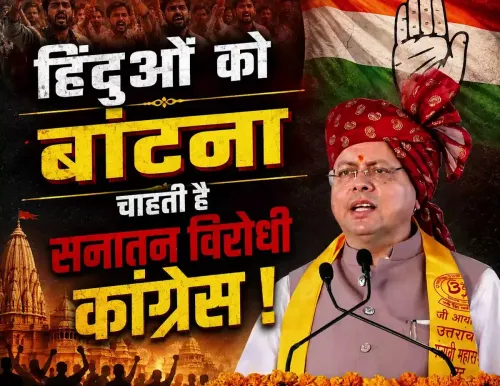
Uttarakhand CM Pushkar Singh Dhami has charged Congress with using caste framing to politically exploit a Haldwani incident, calling it a bid to divide a state long defined by social harmony — a clash that foreshadows the 2027 assembly election battle.
Key Takeaways
CM Pushkar Singh Dhami accused Congress on 27 September 2026 of giving the Haldwani incident a caste colour to divide society.
Dhami described searching for caste in every issue as a defining trait of Congress politics.
He countered by invoking Uttarakhand's long-standing identity as a state of social harmony and brotherhood.
Haldwani in Nainital district has periodically been the site of politically contested law-and-order incidents.
The BJP has governed Uttarakhand since its 2022 landslide , consistently preferring development and unity narratives over caste framing.
The exchange signals early positioning ahead of Uttarakhand assembly elections due in 2027 .
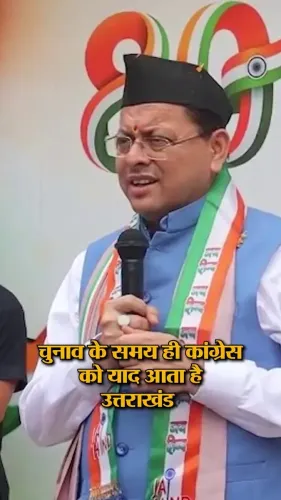
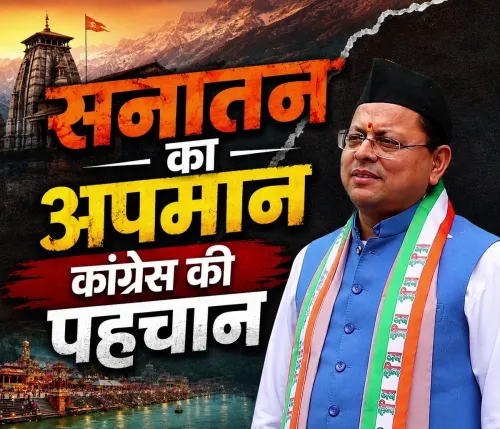
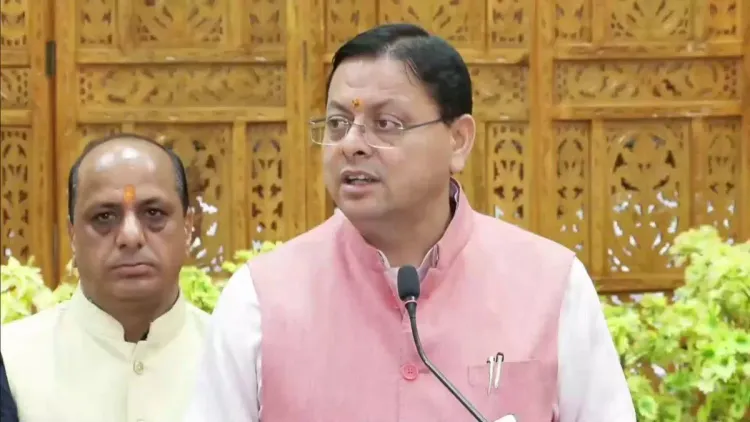
A sharp political charge from the hills: Uttarakhand Chief Minister Pushkar Singh Dhami accused the Indian National Congress on Sunday, 27 September 2026, of deliberately casting a recent incident in Haldwani in caste terms — a move he says is designed to fracture the state's social fabric.
Posting in Hindi on X, CM Dhami wrote: 'Kaangres ne Haldwani ki ghatna ko jaatiya rang dekar samaaj ko baantne ki koshish ki.' — 'Congress tried to divide society by giving a caste colour to the Haldwani incident. Searching for caste in every issue is becoming part of their politics, whereas Uttarakhand's identity has always been one of social harmony and brotherhood.'
Haldwani at the centre of a political flashpoint
Haldwani, the largest commercial town in Nainital district, has periodically been the site of law-and-order incidents that draw competing political readings. When such events occur, the interpretive battle between the ruling BJP and the opposition Congress often begins within hours — each side framing the episode to suit its electoral narrative. Dhami's post follows that familiar pattern, moving quickly to contest the framing before it hardens in public discourse.
The Chief Minister's pushback is pointed: he does not dispute that an incident occurred, but he rejects the caste lens entirely, positioning it as an opportunistic graft onto what he describes as an otherwise cohesive society. That distinction — between acknowledging an event and accepting its opposition-supplied interpretation — is doing the real political work here.
BJP's anti-caste-politics playbook in Uttarakhand
Uttarakhand, carved out of Uttar Pradesh in 2000, has historically seen less overt caste arithmetic than its neighbour states. The BJP has leaned into a pahari (hill people) identity narrative that cuts across jati lines, and since the party's landslide win in the 2022 assembly elections, Dhami's government has framed major initiatives — from the Uniform Civil Code to anti-encroachment drives — around development and legal uniformity rather than community identity.
Nationally, the BJP has repeatedly positioned itself against caste-based mobilisation by opposition parties, casting such appeals as divisive rather than corrective. Dhami's post slots neatly into that wider argument: Congress, the charge goes, reaches for caste as its default tool whenever a local incident provides an opening, and doing so in Uttarakhand — a state it frames as a model of communal and caste harmony — makes the offence doubly cynical in the BJP's telling.
The 2027 election shadow
With Uttarakhand assembly elections due in 2027, the interpretive contest over every significant local incident will intensify. A law-and-order episode in Haldwani — a city that bridges the hills and the plains and carries genuine demographic complexity — is exactly the kind of event both parties will fight to define. Dhami's rapid public rebuttal signals that his government intends to hold the 'harmony' narrative tightly, leaving no space for the opposition's framing to settle.
Whether an official inquiry into the Haldwani incident surfaces findings that complicate either side's story remains the question that could reopen this chapter before the campaign season begins in earnest.
Point of View
The BJP forecloses a potential vote-bank consolidation play ahead of 2027. Uttarakhand's relatively low-caste-salience political environment gives the BJP structural advantage in this framing war — the 'harmony' counter-narrative resonates more here than it would in Bihar or UP. Congress, for its part, faces the harder task of raising genuine grievances around local incidents without being painted as divisive. The sharpness of Dhami's language — and the speed of the post — suggests the party's internal read is that the Haldwani incident carries real political charge worth neutralising fast.
NationPress
27 Sept 2026
Frequently Asked Questions
What did CM Dhami say about the Haldwani incident?
CM Pushkar Singh Dhami accused Congress of trying to give the Haldwani incident a caste colour to divide society, saying the party has made searching for caste in every issue a part of its politics.
What happened in Haldwani that triggered the political row?
The exact details of the referenced Haldwani incident have not been officially confirmed yet. Dhami's post addresses the political framing of the event rather than its specific details.
Why does Uttarakhand see less caste politics than other states?
Uttarakhand has historically been characterised by relatively strong social cohesion and a shared 'pahari' (hill people) identity that cuts across caste lines, making overt caste mobilisation less electorally potent than in plains states like Bihar or Uttar Pradesh.
When are the next Uttarakhand assembly elections?
The next Uttarakhand assembly elections are due in 2027 , and political tensions over incidents such as the one in Haldwani are expected to intensify as the campaign season approaches.
What is the BJP's broader position on caste politics in India?
The BJP, nationally and in states it governs, has consistently positioned itself against caste-based mobilisation by opposition parties, framing such appeals as socially divisive. In Uttarakhand, the party has preferred narratives of development and unity since its 2022 election win.