CM Dhami Approves ₹495 Crore for Uttarakhand Projects
Synopsis
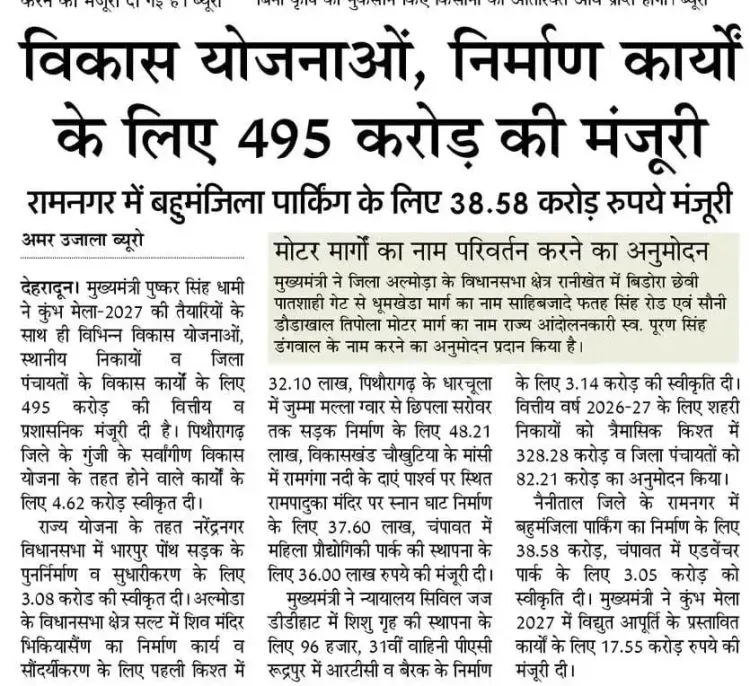
Chief Minister Pushkar Singh Dhami has approved ₹495 crore in financial sanctions for various development schemes and construction works in Uttarakhand, the Chief Minister's Office announced on 8 July 2026. The approval continues the state's practice of bundling project clearances to accelerate infrastructure delivery in its hilly terrain.
Key Takeaways
₹495 crore in financial approvals granted by Chief Minister Pushkar Singh Dhami on 8 July 2026 .
The sanction covers various development schemes and construction works across Uttarakhand .
Uttarakhand 's mountainous geography makes consolidated financial sanctions a key tool for unlocking project execution.
The Dhami government has prioritised infrastructure and welfare expenditure since taking office in 2021 .
District-wise project lists and tendering schedules are expected in subsequent government releases.
Residents of hill districts and the state's construction sector are the primary stakeholders of such approvals.
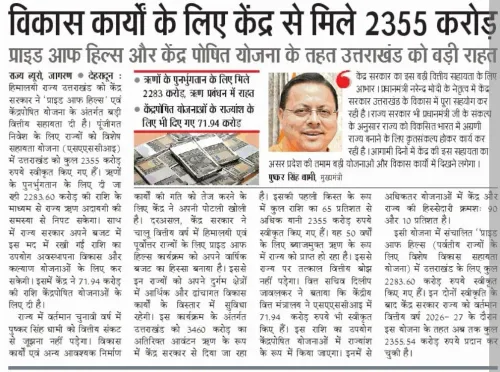
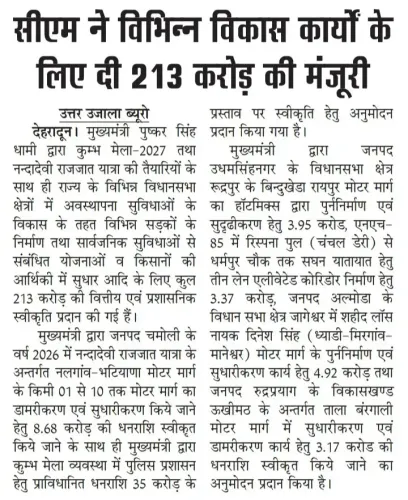
The Chief Minister's Office of Uttarakhand announced on Wednesday, 8 July 2026 that Chief Minister Pushkar Singh Dhami has granted financial approval worth ₹495 crore for a range of development schemes and construction works across the state.
The official post stated: 'मुख्यमंत्री श्री पुष्कर सिंह धामी ने प्रदान की विभिन्न विकास योजनाओं एवं निर्माण कार्यों हेतु ₹495 करोड़ की वित्तीय स्वीकृति' — ('Chief Minister Pushkar Singh Dhami has granted financial approval of ₹495 crore for various development schemes and construction works.')
Context
Uttarakhand, a Himalayan state formed in 2000, faces persistent challenges in connectivity, public infrastructure and service delivery owing to its difficult terrain. Financial sanctions of this scale are a primary administrative tool used by successive state governments to translate budgeted outlays into on-ground project execution. The Dhami government, in office since 2021, has consistently prioritised infrastructure and welfare expenditure as central planks of its governance agenda.
Policy Backdrop
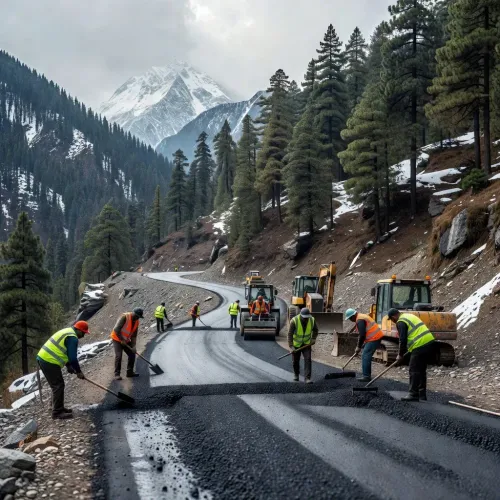
Large-scale financial sanctions covering roads, public buildings and welfare schemes have been a recurring feature of Uttarakhand's governance cycle. Because a significant share of the state's geography is mountainous and remote, approvals of this nature are often necessary to unlock contractor mobilisation and trigger actual construction activity. The present sanction of ₹495 crore continues an established administrative practice of bundling multiple project approvals into consolidated financial orders, enabling departments to initiate tendering simultaneously.
Since assuming office, Chief Minister Dhami has used periodic financial sanction orders to accelerate project pipelines across sectors including rural roads, drinking water, public buildings and welfare infrastructure. The Government of Uttarakhand is responsible for planning, budgeting and executing these schemes under both state-funded and centrally sponsored programmes.
Stakeholders and Impact
The primary beneficiaries of such approvals are Uttarakhand's residents — particularly those in hill districts where infrastructure gaps are most acute. The construction sector, including contractors, engineers and daily-wage workers operating in the state, also stands to benefit from the release of project funds. Timely financial sanctions are critical in a state where the construction window is often constrained by monsoon seasons and harsh winters.
For the state exchequer, approvals of this magnitude represent a significant commitment of public resources. Accountability mechanisms — including district-level project monitoring and assembly scrutiny — will determine how efficiently the sanctioned funds translate into completed assets.
What's Next
Detailed project lists, district-wise allocations and tendering schedules are expected to be released through subsequent government orders or disclosed during assembly sessions. Physical progress reports and utilisation certificates will be the key indicators of whether the ₹495 crore sanction delivers measurable outcomes on the ground. Civil society groups and opposition legislators are likely to seek a project-by-project breakdown to assess geographic equity and sectoral priorities in the allocation.
Point of View
Consolidated approval orders to maintain project momentum in a state where seasonal and logistical constraints can stall execution. For a Chief Minister who has positioned infrastructure delivery as a core electoral promise, such announcements serve both an administrative and a political signalling function — demonstrating fiscal activity ahead of the next budget cycle. The absence of a project-by-project breakdown, however, limits public accountability and invites scrutiny over whether allocations are geographically balanced across Uttarakhand's thirteen districts. Watchers of Himalayan state governance will note that the real test lies not in the sanction figure but in the pace of tendering and physical completion that follows.
NationPress
8 Jul 2026
Frequently Asked Questions
What is the ₹495 crore financial approval by CM Dhami for?
Chief Minister Pushkar Singh Dhami has approved ₹495 crore for various development schemes and construction works in Uttarakhand, as announced by the Chief Minister's Office on 8 July 2026. Detailed project lists are yet to be released publicly.
Who is Pushkar Singh Dhami?
Pushkar Singh Dhami is the Chief Minister of Uttarakhand, serving since 2021. He has focused on accelerating infrastructure development and welfare schemes across the Himalayan state.
How does Uttarakhand fund its infrastructure projects?
Uttarakhand funds infrastructure through a mix of state budget allocations and centrally sponsored schemes. The government issues periodic financial sanction orders to release funds and enable tendering for construction works.
Which districts will benefit from the ₹495 crore sanction?
The district-wise breakdown of the ₹495 crore sanction has not yet been made public. Details are expected in subsequent government orders or during assembly sessions.
Why are large financial sanctions important for Uttarakhand?
Uttarakhand's hilly and remote terrain makes it difficult to execute infrastructure projects quickly. Consolidated financial sanctions allow multiple departments to begin tendering simultaneously, helping the state utilise its budgeted funds before seasonal constraints like monsoons or winters halt construction.