CM Dhami at VHP Banbasa Event, Warns Against Harmony Disruption
Synopsis
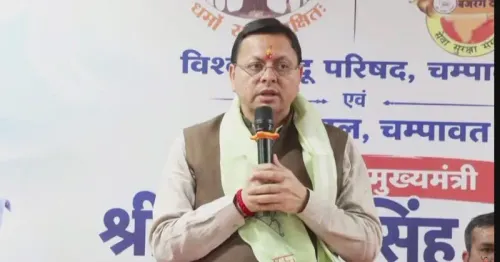
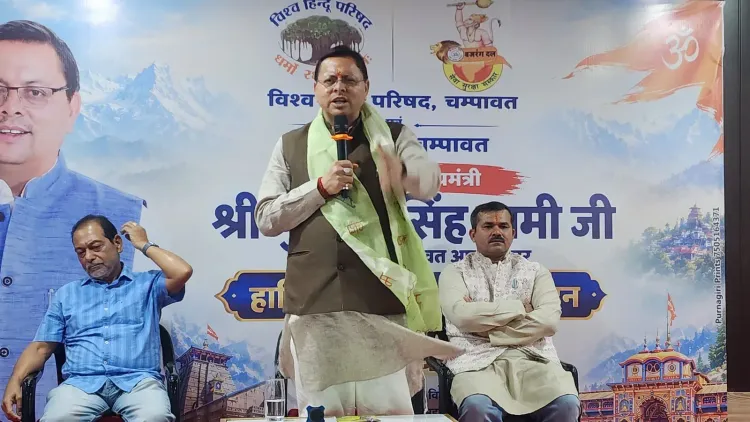
Uttarakhand Chief Minister Pushkar Singh Dhami addressed a VHP event in border town Banbasa on October 18, pledging to protect the state's cultural heritage and warning of strict legal action against anyone who disturbs its peace and social harmony.
Key Takeaways
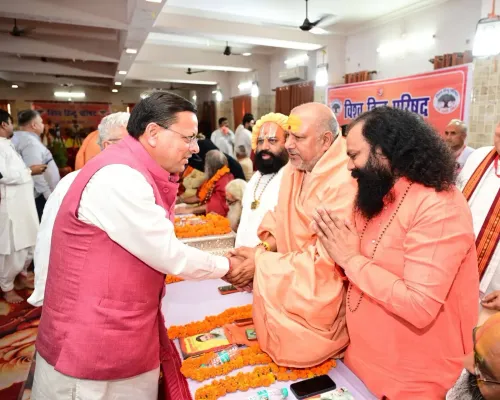
CM Pushkar Singh Dhami participated in a Vishwa Hindu Parishad event in Banbasa, Champawat district on October 18, 2026 .
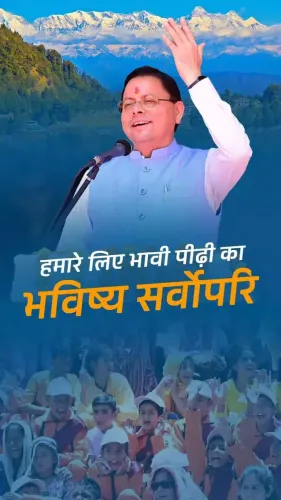
He called preservation of Uttarakhand's culture, religious traditions, and social harmony a 'supreme priority' of his government.
Dhami issued a direct warning that those attempting to disturb state peace will face 'strict action in accordance with the law.' The address reinforced the Devbhoomi identity as a core governing framework linking development with cultural custodianship.
Banbasa is a strategically sensitive Nepal-border town in Champawat district, adding geographic weight to the social-harmony message.
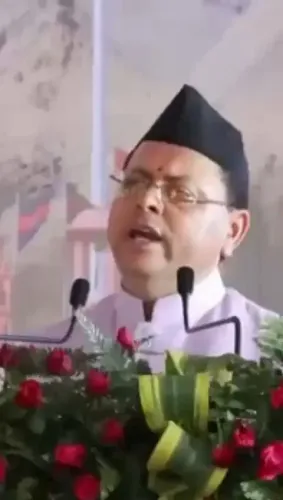
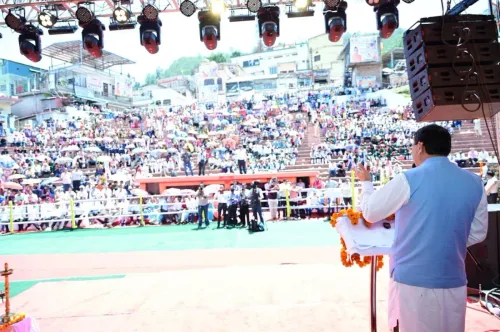
At a Vishwa Hindu Parishad gathering in Banbasa, near the Nepal border in Champawat district, Uttarakhand Chief Minister Pushkar Singh Dhami delivered a pointed address on Sunday, October 18, 2026 — pledging strict legal action against anyone who attempts to disturb the state's peace and social harmony.
Speaking to what he described as a 'देवतुल्य जनता' ('godlike people'), Dhami framed the preservation of Uttarakhand's rich culture, religious traditions, and social cohesion as 'the highest priorities' of his government. 'Protection of Devbhoomi Uttarakhand's prosperous culture, religious traditions, and social harmony is among the supreme priorities of our government,' he said, underscoring the dual mandate of development and heritage.
The Banbasa Address and VHP's Role
Banbasa sits at a strategically sensitive location — a border town that has historically been a focal point for discussions on cross-border movement and communal equilibrium. The Vishwa Hindu Parishad (VHP), which organised the event, is one of India's most prominent Hindu nationalist organisations, conducting religious, cultural, and social programmes across the country. Dhami's participation and his tagging of @VHPDigital in the post signals a deliberate alignment of state messaging with the organisation's platform.
The Chief Minister also stressed that the government is 'continuously working' to strengthen cultural heritage alongside the state's all-round development — a twin-track narrative that has become a signature of BJP-ruled Uttarakhand governance.
The Warning on Social Harmony — and Who It Is Aimed At
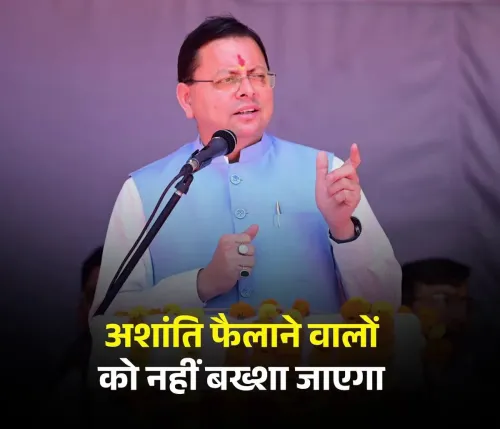
The sharpest line in Dhami's address was a direct warning: those who attempt to 'disturb the state's peace and social harmony' will face strict action 'in accordance with the law.' While no specific group or incident was named, such language in the context of border districts and VHP gatherings carries unmistakable political weight.
Uttarakhand governments — across parties — have consistently linked the 'Devbhoomi' identity with firm responses to perceived disruptions of communal order. Under Dhami, that framing has intensified, with the state positioning itself as both a cultural custodian and a firm enforcer of its social compact.
Devbhoomi as a Governing Philosophy
The concept of Devbhoomi — 'Land of the Gods' — is not merely a tourism tagline for Uttarakhand; it is increasingly a governing philosophy. The state is home to some of Hinduism's most revered pilgrimage circuits, and successive administrations have tied infrastructure and development spending to the upkeep of this identity. Dhami's government has made explicit the idea that economic development and cultural preservation are inseparable goals, and events like the one in Banbasa serve as visible demonstrations of that commitment.
As assembly discussions on cultural heritage and border-region governance continue to take shape, Sunday's address will likely set the tone for how the Dhami administration communicates its social-order agenda in the months ahead.
Point of View
This messaging simultaneously signals internal governance firmness and plays to a national BJP narrative on protecting cultural character. Whether the warning translates into concrete legislative or administrative action will determine whether it is a governing signal or a political one.
NationPress
19 Oct 2026
Frequently Asked Questions
Why did CM Dhami attend the VHP event in Banbasa?
CM Pushkar Singh Dhami attended the Vishwa Hindu Parishad event in Banbasa to address participants on the Uttarakhand government's commitment to preserving the state's culture, religious traditions, and social harmony, framing these as top governance priorities.
Where is Banbasa and why is it significant?
Banbasa is a town in Champawat district of Uttarakhand, situated near the India-Nepal border. Its location makes it a sensitive area in discussions about cross-border dynamics and communal equilibrium, lending added weight to statements on social harmony made there.
What did CM Dhami say about social harmony disruption?
CM Dhami warned that anyone who attempts to disturb the peace and social harmony of Uttarakhand will face strict legal action. He did not name a specific group or incident but made clear the government's zero-tolerance stance.
What is Vishwa Hindu Parishad (VHP)?
The Vishwa Hindu Parishad (VHP) is a prominent Hindu nationalist organisation in India that conducts religious, cultural, and social programmes across the country. It operates under the broader Sangh Parivar umbrella.
What does 'Devbhoomi' mean for Uttarakhand's governance?
'Devbhoomi' means 'Land of the Gods' and refers to Uttarakhand's identity as a state rich in Hindu pilgrimage sites and traditions. Under CM Dhami, this concept has become a central governing philosophy that ties infrastructure development with active cultural preservation.