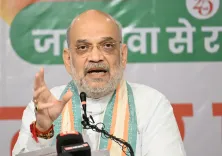
CM Dhami Vows to Guard Uttarakhand's Culture and Demography
Synopsis
Uttarakhand CM Pushkar Singh Dhami on 15 June 2026 pledged to protect the state's folk traditions and demography, invoking PM Modi's 'Vikas bhi, Virasat bhi' vision and warning that no tampering with the state's sacred character would be accepted.
Key Takeaways
CM Pushkar Singh Dhami reaffirmed on 15 June 2026 that his government is actively working to protect and promote Uttarakhand 's folk culture, traditions, and cultural heritage.
He invoked PM Modi 's principle of 'Vikas bhi, Virasat bhi' as the ideological foundation for the state's dual development-and-heritage agenda.
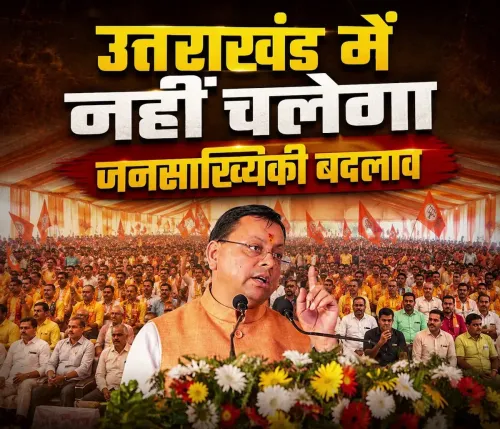
Dhami issued a firm warning that any 'tinkering' with the state's demography or its divine character ( devatva ) would not be tolerated.
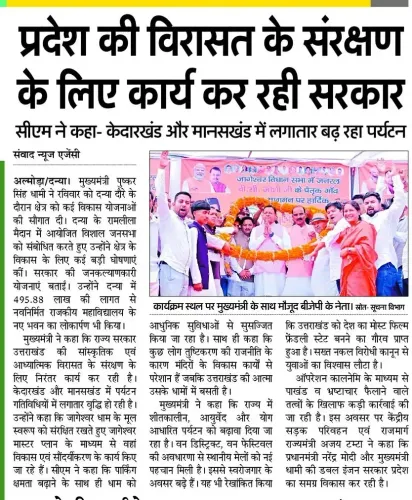
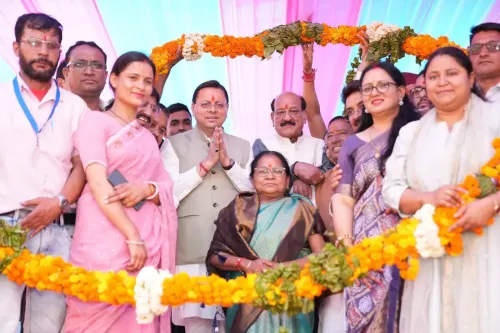
MLA Rajkumar Porimla , Mahant Dilip Rawat , and several other elected representatives and local residents were present at the event.
The stance builds on existing frameworks including the national PRASAD scheme and Uttarakhand's 2017-18 state cultural policy .
Analysts will watch for concrete legislative or executive follow-up on the demography-protection pledge in the coming months.
Uttarakhand Chief Minister Pushkar Singh Dhami on Monday, 15 June 2026 reaffirmed his government's commitment to preserving the state's folk culture, traditions, and cultural heritage, invoking Prime Minister Narendra Modi's guiding principle of 'Vikas bhi, Virasat bhi' ('Development as well as Heritage'). In a sharp warning, he declared that no tampering with Uttarakhand's demography or its sacred character — what he termed 'devatva' — would be tolerated.
Context
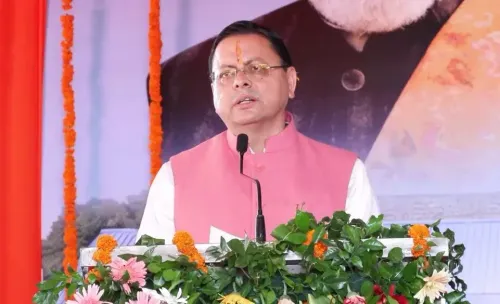
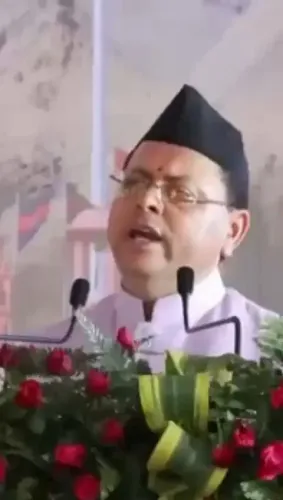
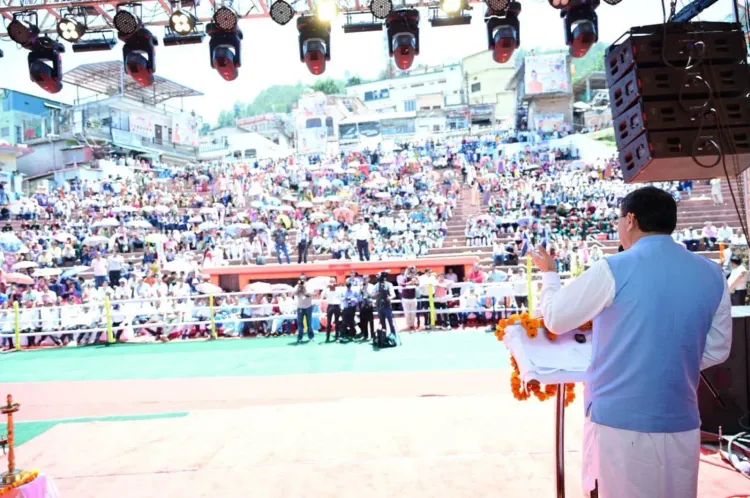
Addressing an event attended by MLA Rajkumar Porimla, Mahant Dilip Rawat, and several other elected representatives and local residents, CM Dhami stated that the state government was working continuously for the 'protection and promotion of folk culture, folk traditions, and cultural heritage.' The gathering reflected the administration's effort to anchor development policy in a visible commitment to regional identity.
Dhami's post on X quoted the sentiment directly: 'Pradesh ki demography evam devatva ke swaroop se kisi bhi prakar ka khilwad sweekar nahi kiya jayega' — meaning, 'Any kind of tinkering with the state's demography and its divine character will not be accepted.'
Policy Backdrop
PM Modi's 'Vikas bhi, Virasat bhi' framework has been a central plank of BJP-led governance since the mid-2010s, pairing large-scale infrastructure investment with explicit cultural conservation mandates. At the national level, the PRASAD scheme (launched 2014-15) tied pilgrimage infrastructure upgrades to heritage protection at religious sites, and Uttarakhand has been among its primary beneficiaries given the state's Char Dham pilgrimage circuit.
The state itself formalised this dual approach in a 2017-18 cultural policy document that emphasised documentation of folk traditions and languages alongside tourism growth. The Char Dham all-weather road project (2021-22) similarly included provisions to protect the sacred landscape and local customs around the four dhams, setting a precedent for integrating cultural safeguards into infrastructure planning.
Stakeholders and Impact
Uttarakhand's hill communities, folk practitioners, and pilgrimage-economy workers are the primary stakeholders in any policy that links development with heritage. The state has long grappled with twin pressures: out-migration of young residents seeking urban employment, and in-migration that local voices argue alters the demographic and cultural fabric of the hills.
Dhami's explicit reference to 'demography' signals that the administration views cultural preservation and demographic stability as inseparable concerns. BJP-governed Himalayan states have increasingly used the rhetoric of 'devatva' — the sacred geography of the region — to frame regulatory and policy choices around land use, residency, and community identity.
What's Next
Observers will watch whether Monday's public commitment translates into concrete executive orders or assembly legislation — particularly around land-use regulation, heritage-committee formation at the district level, or residency norms. CM Dhami has previously signalled intent to act on demographic concerns, and the presence of elected representatives at the event suggests political groundwork is being laid for follow-through.
The forward implication is clear: Uttarakhand's government is positioning cultural and demographic protection not as a peripheral concern but as a core governance priority alongside the infrastructure push — a stance that will likely shape both legislative and administrative decisions in the months ahead.
Point of View
A framing that has proven electorally potent in Uttarakhand. The presence of sitting MLAs at the event suggests the messaging is being coordinated across constituencies ahead of potential legislative action. Whether this remains rhetorical positioning or translates into enforceable policy — on land use, conversion, or residency — will determine its real governance weight.
NationPress
14 Sept 2026
Frequently Asked Questions
What did CM Dhami say about Uttarakhand's demography on 15 June 2026?
CM Dhami declared that no tampering with Uttarakhand's demography or its sacred divine character ( devatva ) would be accepted, while reaffirming the state's commitment to folk culture and tradition preservation.
What does 'Vikas bhi, Virasat bhi' mean and who coined it?
'Vikas bhi, Virasat bhi' means 'Development as well as Heritage' and is a guiding principle articulated by Prime Minister Narendra Modi to link infrastructure growth with the preservation of India's cultural and religious heritage.
What is Uttarakhand's policy on cultural heritage preservation?
Uttarakhand formalised a cultural policy in 2017-18 emphasising documentation and promotion of folk traditions and languages alongside tourism. The state also benefits from the central government's PRASAD scheme , which funds pilgrimage infrastructure with heritage conservation conditions.
Who attended the event where CM Dhami made this statement?
MLA Rajkumar Porimla , Mahant Dilip Rawat , and several other elected representatives and local residents were present at the event alongside CM Dhami.
What concrete steps could follow Dhami's demography protection pledge?
Observers are watching for possible executive orders or assembly legislation on land-use regulation, district-level heritage committee formation, or residency norms that could translate the pledge into enforceable policy.