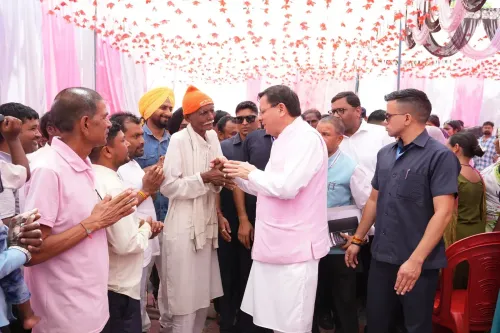
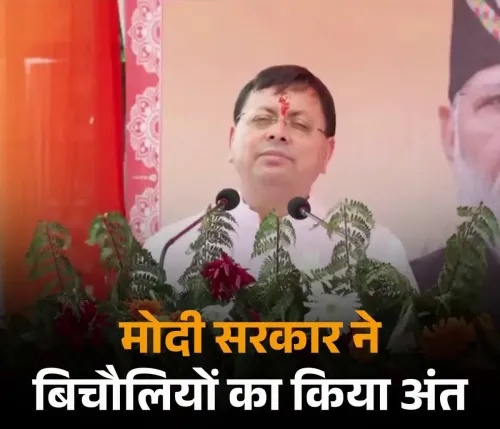
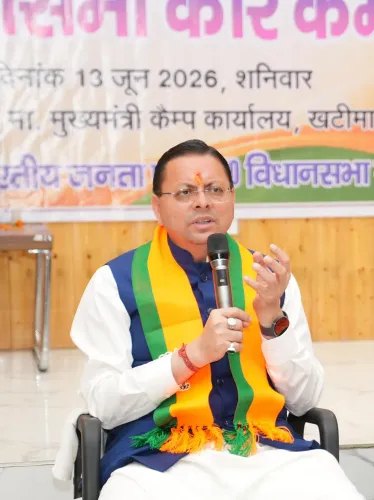
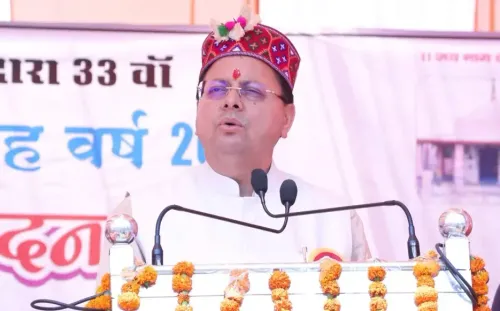
CM Dhami Credits Modi for Welfare Reach, Slams Congress
Synopsis
Uttarakhand Chief Minister Pushkar Singh Dhami on June 12, 2026, credited PM Modi's leadership for prioritising welfare of the poor and reaching the last beneficiary, while alleging Congress spent decades trapping the poor in a cycle of deprivation through vote-bank politics.
Key Takeaways
CM Pushkar Singh Dhami posted on June 12, 2026 crediting PM Modi for making 'garib kalyan' the top governance priority.
He alleged Congress kept the poor in a 'vicious cycle of poverty and deprivation' through political exploitation over decades.
The NDA government has expanded Direct Benefit Transfer since 2014 to reduce subsidy leakages and improve last-mile delivery.
Pradhan Mantri Garib Kalyan Anna Yojana , launched in March 2020 , provided free foodgrains to poor households and was extended through 2023 .
NITI Aayog 's Multidimensional Poverty Index from 2021 onward has documented reductions in deprivation indicators under central schemes.
The post is part of a broader BJP pattern of state leaders amplifying the Centre's welfare narrative against Congress's historical record.
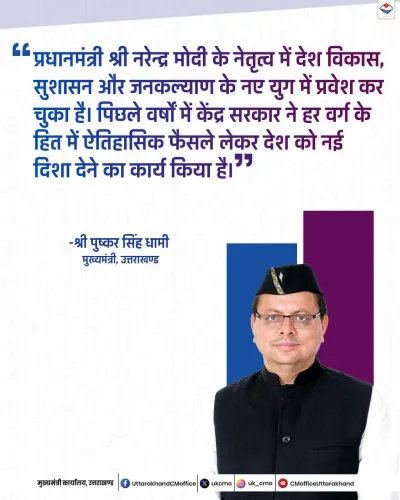
Uttarakhand Chief Minister Pushkar Singh Dhami on Friday, June 12, 2026, credited Prime Minister Narendra Modi's leadership for ensuring welfare benefits reach the last person in the queue, while accusing the Indian National Congress of keeping the poor trapped in a cycle of poverty for decades through vote-bank politics.
Context
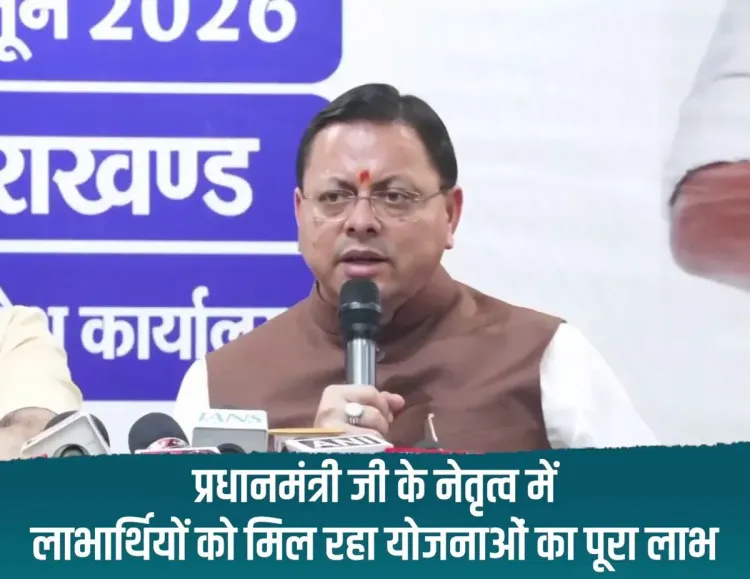
Posting in Hindi on X, CM Dhami wrote that under Modi's 'skilled leadership' (kaushal netritva), 'garib kalyan' — welfare of the poor — has been accorded the highest priority, and development benefits are being delivered to the person standing in the last row. He contrasted this directly with Congress, alleging the party 'did the work of keeping the poor trapped in the vicious cycle of poverty and deprivation' by politicising their name for years.
The post reflects a well-established BJP communication pattern in which state-level leaders amplify the central government's welfare narrative, particularly in the run-up to political cycles.
Policy Backdrop
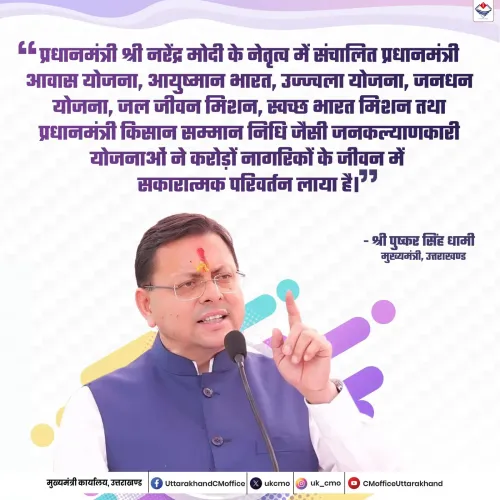
The NDA government has since 2014 expanded the Direct Benefit Transfer (DBT) mechanism to reduce leakages in subsidy delivery, channelling funds and goods directly to beneficiaries' bank accounts and ration cards. The flagship Pradhan Mantri Garib Kalyan Anna Yojana (PMGKAY), launched in March 2020, provided free foodgrains to poor households and was extended multiple times through 2023 as an anti-poverty anchor during and after the pandemic.
NITI Aayog began publishing its Multidimensional Poverty Index from 2021, documenting reductions in deprivation indicators across health, education, and living standards — data the BJP has cited repeatedly to argue that its targeted architecture outperforms earlier models of welfare delivery.
Stakeholders and Impact
The primary beneficiaries of the schemes referenced are poor rural and urban households across India, including in Uttarakhand, where hilly terrain and dispersed populations have historically made last-mile delivery difficult. State governments in BJP-ruled states have been tasked with scheme saturation drives — ensuring every eligible household is enrolled in central programmes.
For the Congress, the charge is a familiar one in parliamentary debates and state election campaigns: that its welfare programmes of the pre-2014 era were marked by leakages, intermediary capture, and an incentive to maintain dependency rather than eliminate poverty.
What's Next
The political salience of welfare metrics is likely to intensify as NITI Aayog prepares updated rounds of its Multidimensional Poverty Index. Any state-level review of scheme saturation in Uttarakhand assembly sessions will test whether the last-mile delivery rhetoric translates into measurable ground-level outcomes — and will give both the ruling party and opposition fresh data to contest.
Point of View
Absent a specific policy trigger, suggests this is part of a sustained cadence of state-level amplification of the Centre's social sector narrative. What gives the statement its edge is the framing of Congress not merely as ineffective but as actively invested in perpetuating poverty — a charge that has grown sharper as BJP seeks to consolidate support among beneficiary households. The broader arc points to welfare delivery becoming an increasingly central axis of electoral competition in states like Uttarakhand, where scheme saturation and last-mile outcomes will be scrutinised closely.
NationPress
26 Oct 2026
Frequently Asked Questions
What did Uttarakhand CM Pushkar Singh Dhami say about PM Modi and welfare?
CM Dhami credited PM Modi's leadership for making welfare of the poor the top priority and ensuring development benefits reach the last person in the queue, posting this on X on June 12, 2026.
What is Pradhan Mantri Garib Kalyan Anna Yojana?
PMGKAY is a central government scheme launched in March 2020 that provides free foodgrains to poor households; it was extended multiple times through 2023 as a flagship anti-poverty measure.
What is Direct Benefit Transfer and how does it help the poor?
Direct Benefit Transfer is a mechanism expanded by the NDA government from 2014 to channel subsidies and welfare payments directly to beneficiaries' bank accounts, reducing leakages and intermediary capture.
Why does BJP accuse Congress of keeping the poor in poverty?
BJP argues that Congress-era welfare programmes were marked by leakages, intermediary capture, and political incentives to maintain dependency rather than eliminate poverty — a charge CM Dhami repeated in his June 12, 2026 post.
What is NITI Aayog's Multidimensional Poverty Index?
It is a report published by NITI Aayog from 2021 onward that measures deprivation across health, education, and living standards, and has been cited by the BJP to document reductions in poverty under central schemes.